


Alchemy
Rory Sutherland
"Alchemy: The Surprising Power of Ideas That Don’t Make Sense" by Rory Sutherland challenges the overreliance on conventional logic in favor of a more nuanced understanding of human behavior. Sutherland introduces the concept of 'alchemy' – the use of counter-intuitive, seemingly irrational solutions to solve problems. He argues that human behavior is often driven by 'psycho-logic' rather than pure rationality, and that relying solely on logic can lead to missed opportunities and flawed decisions. Through a blend of behavioral economics, psychology, and marketing principles, the book explores how 'magic' – counter-intuitive psychological solutions – can create immense value by changing perceptions rather than objective reality. It delves into the power of 'signalling' as a fundamental mechanism for building trust and the concept of 'subconscious hacking,' revealing how we can influence our own behavior and emotions indirectly. Readers will discover the limitations of traditional market research and economic theory, and learn to appreciate the value of counter-intuitive thinking in various fields. The book provides a framework for questioning conventional rationality, designing for individuality, and understanding the hidden motivations that drive human behavior. With endorsements from figures like Nassim Nicholas Taleb and Robert Cialdini, "Alchemy" promises to be an original, humorous, and insightful critique of conventional logic, offering a fresh perspective on decision-making and problem-solving.
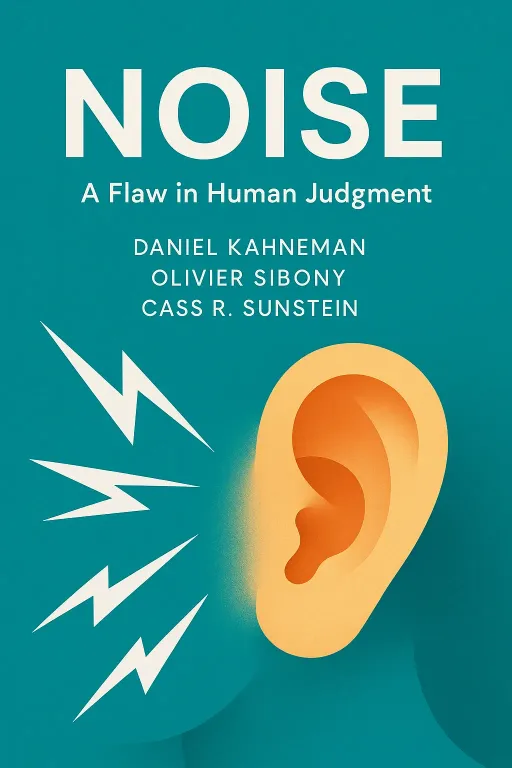
Noise: A Flaw in Human Judgment
Daniel Kahneman
Discover the hidden flaw in human judgment that leads to errors in all walks of life. From medicine to criminal justice, insurance to finance, 'Noise' exposes the shocking extent of unwanted variability in professional judgments and offers practical solutions for reducing noise and improving decision-making in organizations and beyond.
219 Reasons to Rethink Your Daily Routine
Stuart Farrimond
Explore the science behind your daily habits and routines. This book answers everyday questions about your health, productivity, and well-being, offering practical advice to help you live your life to the fullest.
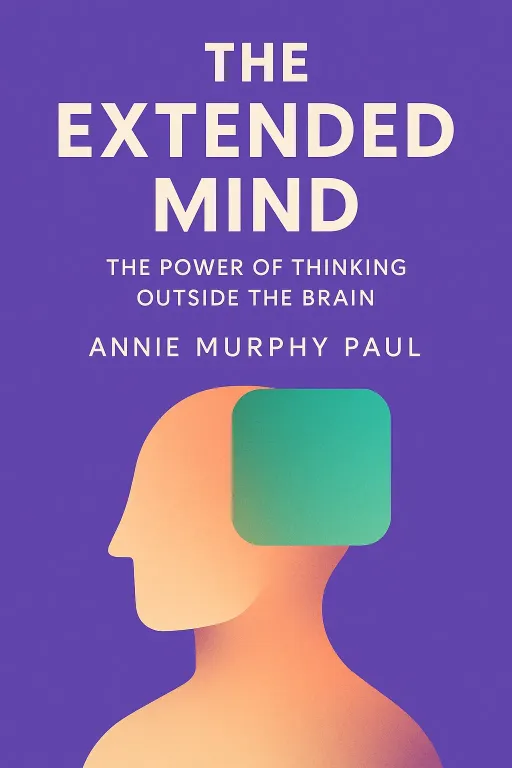
The Extended Mind
Annie Murphy Paul
"The Extended Mind" is a transformative guide to cognition that shatters the age-old assumption that thinking happens only within the confines of our skulls. Science writer Annie Murphy Paul draws on cutting-edge research in neuroscience and psychology to argue that the brain is not an isolated computer, but a biological organ evolved to think with the world around it. Paul introduces the concept of "thinking outside the brain" through three key pillars: embodied cognition (thinking with our bodies, sensations, and gestures), situated cognition (thinking with the spaces and environments we inhabit), and distributed cognition (thinking through our relationships and social networks). The book critiques our modern obsession with "brainbound" productivity—forcing ourselves to sit still and stare at screens—and offers a liberating alternative. By intentionally managing our physical movements, workspaces, and social interactions, Paul shows how we can offload mental processing to the world around us. The Extended Mind provides a practical framework for anyone looking to harness these external resources to become smarter, more creative, and more resilient.
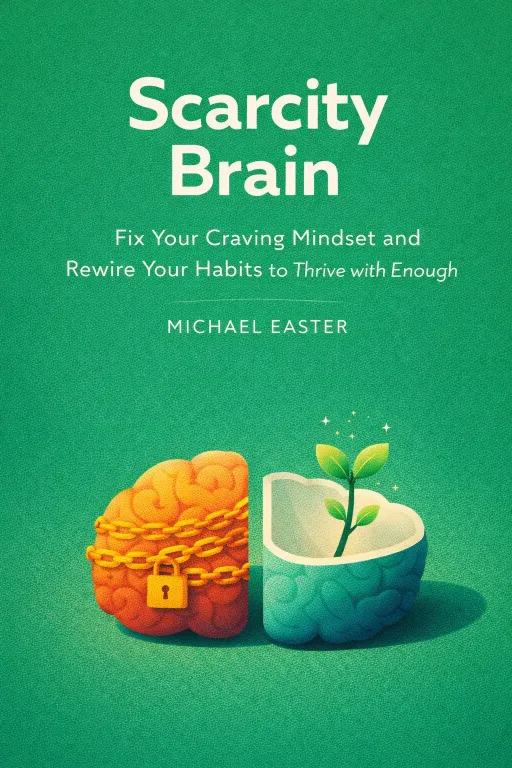
Scarcity Brain
Michael Easter
In a world of overwhelming abundance, why do we constantly crave more, leading to detrimental behaviors like overeating, overbuying, and addiction? Michael Easter, a science journalist, embarks on a global journey to uncover the ancient human behavioral system—the 'scarcity brain'—that once ensured survival but now traps us in a 'scarcity loop.' Through compelling research and real-world examples, from the psychology of slot machines in Las Vegas to drug enforcement in Iraq, this book reveals the three-part mechanism driving our insatiable desires and offers profound insights into how to break free from the cycle of overconsumption to find true satisfaction and unlock our full potential.
Thinking, Fast and Slow
Daniel Kahneman
"Thinking, Fast and Slow" is the intellectual tour de force by Daniel Kahneman, a psychologist who won the Nobel Prize in Economics for his work on decision-making. The book summarizes decades of research to present a unified theory of how the human mind works, challenging the classical economic view that humans are rational actors. Kahneman divides our mental life into two distinct modes: System 1 is fast, intuitive, and emotional; it operates automatically and with little effort (like recognizing a face). System 2 is slower, more deliberative, and logical; it requires conscious effort (like solving a math problem). The central drama of the book is the interaction between these two systems. Kahneman reveals that while System 1 is efficient, it is prone to systematic errors known as cognitive biases—such as the anchoring effect, overconfidence, and loss aversion. System 2 is supposed to monitor these, but it is often lazy and defers to System 1. Rich with examples and puzzles, Thinking, Fast and Slow fundamentally changes how we perceive our own judgments, offering profound insights into corporate strategies, public policy, and our own happiness.
Being Mortal
Atul Gawande
"Being Mortal" is a deeply moving and courageous exploration of aging and death, written by surgeon and New Yorker writer Atul Gawande. Gawande turns his sharp intellect toward a professional failure: modern medicine’s obsession with prolonging life at the cost of the quality of life. The book argues that the medical system treats aging and dying as clinical problems to be fixed, rather than natural processes to be supported. Gawande critiques the design of nursing homes, which he views as institutions that prioritize safety and schedules over the autonomy and dignity of the residents. He vividly contrasts this with alternative models, such as assisted living, that strive to keep "the author of the life story" in charge until the very end. At its core, Being Mortal champions the power of palliative care and the necessity of having "hard conversations." Gawande provides a framework for discussing what matters most to a person when time is short—whether it’s eating ice cream or watching football—proving that the goal is not a good death, but a good life to the very end.
The Righteous Mind
Jonathan Haidt
An exploration of the human mind's moral foundations and how they shape our political and religious beliefs. It delves into why we are so divided and how understanding our moral psychology can help bridge these divides.