

When Everyone Knows and Everyone Knows…
Steven Pinker
"When Everyone Knows and Everyone Knows…" delves into the fascinating concept of common knowledge and its profound impact on human behavior and social dynamics. Drawing from cognitive science, social psychology, game theory, and linguistics, the book explores how shared knowledge shapes everything from our personal relationships to societal structures and even digital phenomena. It examines the paradoxical implications of common knowledge, challenging common sense and revealing the intricate layers of thought involved in coordination and communication. Readers will discover how common knowledge influences a wide range of social interactions, including cooperation, conflict, and emotional expression. Through coordination games, real-world examples, and analyses of social relationships, the book illuminates the subtle mechanisms by which we navigate complex social landscapes. It explores how conspicuous emotional expressions, indirect speech, and strategic communication contribute to the establishment and manipulation of common knowledge, offering insights into the hidden dynamics that govern our interactions. Ultimately, "When Everyone Knows and Everyone Knows…" provides a compelling framework for understanding the underlying forces that shape human behavior and social order. By exploring the cognitive processes and social signals involved in creating and maintaining common knowledge, the book offers readers a new perspective on the complexities of human interaction and the power of shared understanding.
The Master and His Emissary
Iain McGilchrist
Why is man apparently intent on destroying the world we inhabit? And what can we do about it? Drawing on literature, painting, philosophy, music and history, Dr McGilchrist challenges the widespread myth that the 'left-brain' is analytically superior, 'the right-brain' intuitive and emotional, and reveals that each hemisphere has its own distinct world view. The left hemisphere, analytical and narrow, is designed for manipulation of the world; the right, broader and integrative, for understanding it. Yet over the past several centuries, the balance between them has been upset, resulting in a society dominated by the left hemisphere's utilitarian outlook. In "The Master and His Emissary", Iain McGilchrist argues that the left hemisphere, the 'emissary', has usurped the right hemisphere, the 'master', and that this imbalance has profound consequences for Western culture. The left hemisphere is detail-oriented, prefers mechanisms to living things, and is inclined to self-interest, while the right hemisphere has greater breadth, flexibility, and generosity. This division helps explain the origins of music and language, and casts new light on the history of philosophy, as well as on some mental illnesses. This pioneering account sets out to understand the structure of the human brain – the place where mind meets matter. Until recently, the left hemisphere of our brain has been seen as the ‘rational’ side, the superior partner to the right. But is this distinction true? Drawing on a vast body of experimental research, McGilchrist argues while our left brain makes for a wonderful servant, it is a very poor master. As he shows, it is the right side which is the more reliable and insightful. Without it, our world would be mechanistic – stripped of depth, colour and value.
The Psychology of Money
Morgan Housel
"The Psychology of Money" is a collection of nineteen short stories exploring the strange ways people think about money. Written by Morgan Housel, a partner at The Collaborative Fund, the book departs from the standard investment advice that treats finance as a math-based field. Housel argues that financial success is not a hard science. It is a soft skill, where how you behave is more important than what you know. The central premise is that we do not make financial decisions on a spreadsheet. We make them at the dinner table, where personal history, unique worldviews, ego, pride, marketing, and odd incentives are scrambled together. Housel illustrates that two people can see the exact same world yet draw completely different conclusions based on when and where they were born. A key theme in the book is the distinction between getting rich and staying rich. Getting rich requires taking risks, being optimistic, and putting yourself out there. Staying rich requires the exact opposite. It requires fear that what you have made can be taken away from you. It requires frugality and an acceptance that at least some of your success is attributable to luck rather than skill. Housel ultimately posits that the highest dividend money pays is not luxury goods, but control over your time.

Yoga Nidrā Made Easy
Uma Dinsmore-Tuli
Unlock the secrets to effortless rest and rejuvenation with Yoga Nidrā Made Easy. This book offers a simple, accessible guide to the ancient practice of yogic sleep, providing techniques and recipes to improve sleep, relieve stress, and boost vitality and creativity. Discover how to make yoga nidrā your own and experience the profound benefits of deep relaxation and inner peace.
Good Energy
Casey Means
"Good Energy" is a groundbreaking guide to reclaiming your health, written by Dr. Casey Means, a Stanford-trained physician and co-founder of the metabolic health company Levels. In a medical landscape that typically treats symptoms in isolation, Means presents a unified theory: nearly every modern health struggle—from fatigue and depression to diabetes and infertility—stems from the same root cause: metabolic dysfunction. Means explains that our cells are struggling to generate energy efficiently, leading to a state of biological "brownout." She argues that we don't need more medication; we need better metabolic habits. The book demystifies complex biology, showing how our daily choices regarding food, sleep, and stress directly impact our mitochondria, the power plants of our cells. Practical and empowering, Good Energy advocates for using technology, such as Continuous Glucose Monitors (CGMs), to see inside our own bodies. By teaching readers how to interpret their own biomarkers and stabilize their blood sugar, Means offers a roadmap to exit the "sick care" system. It is a manual for generating the limitless vitality needed to live a long, active, and joyful life.

Crime and Punishment
Fyodor Dostoevsky
A gripping psychological thriller set in 19th century Russia, Crime and Punishment follows the tormented Raskolnikov, an impoverished student who commits a brutal murder and grapples with the profound consequences of his actions. Plagued by guilt and paranoia, he embarks on a harrowing journey of self-discovery and redemption, forcing readers to confront the depths of human morality and the complexities of the criminal mind.
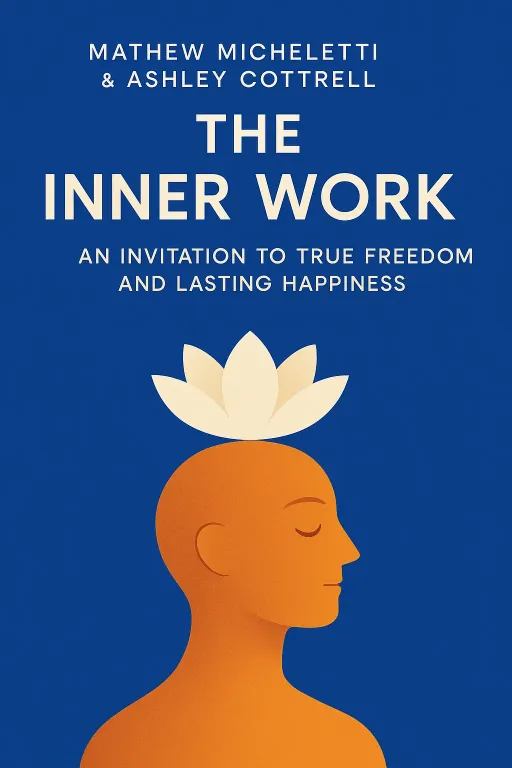
The Inner Work
Mathew Micheletti
Embark on a transformative journey with 'The Inner Work,' an invitation to unlock true freedom and lasting happiness. This book is for those ready to understand themselves on a deeper level, offering practices to overcome obstacles and experience optimal states of existence. Discover how to shed limiting beliefs, embrace your greater destiny, and awaken to the fullness of your potential. Prepare to be triggered, challenged, and ultimately guided towards a life of joy, love, and inner peace.
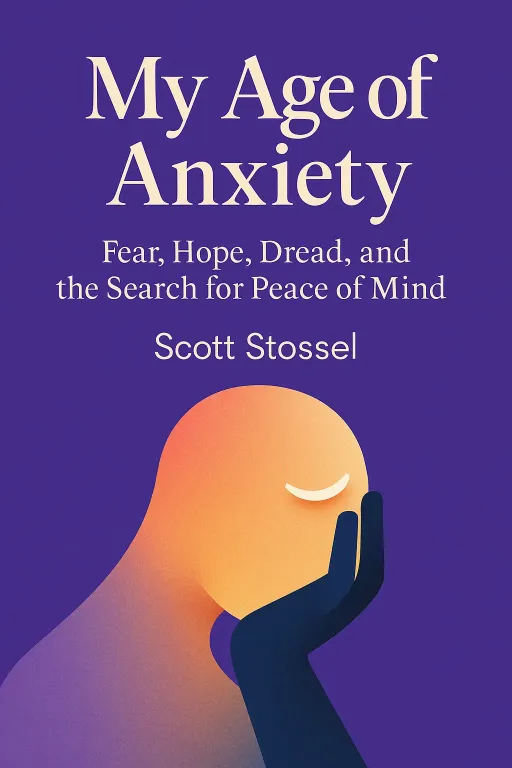
My Age of Anxiety
Scott Stossel
In "My Age of Anxiety," Scott Stossel delves into the pervasive and often misunderstood condition of anxiety. Drawing from his own experiences, he presents a comprehensive exploration of anxiety from medical, cultural, philosophical, and personal perspectives. Stossel's journey covers the history of understanding anxiety, its impact on individuals and society, and the various treatments developed to manage it. A learned, empathetic, and humorous account offering insight into the biological, cultural, and environmental factors that contribute to this widespread affliction.