

Technology & Science
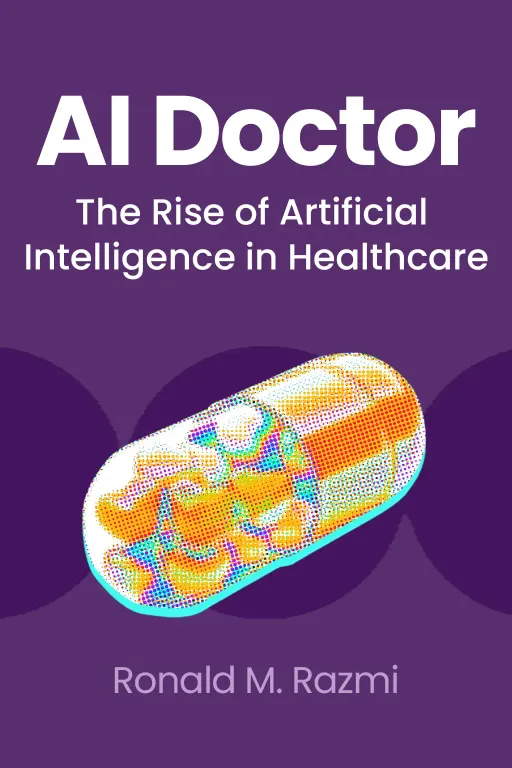
AI Doctor
Ronald M. Razmi
Explore the transformative potential of Artificial Intelligence in healthcare with 'AI Doctor.' This guide, penned by Ronald M. Razmi, MD, delves into the history, applications, and business aspects of AI in medicine, offering insights for users, buyers, builders, and investors alike. Discover how AI is revolutionizing diagnostics, therapeutics, clinical workflows, and more, paving the way for a future of more efficient and personalized healthcare.
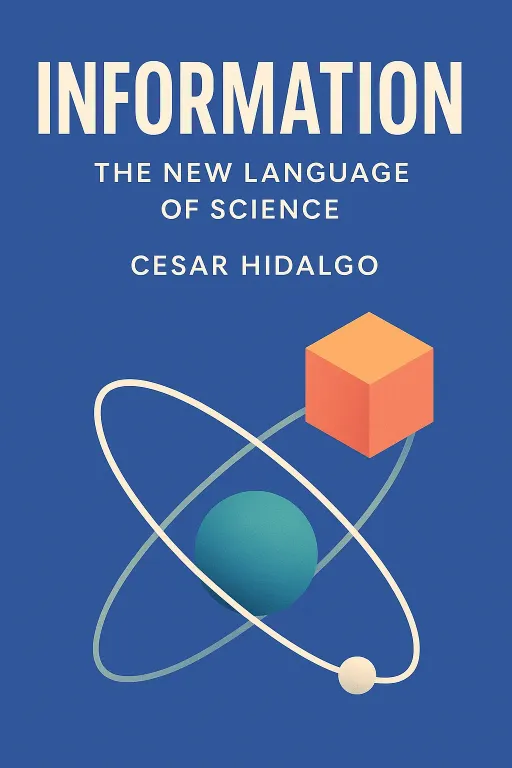
Information
Cesar Hidalgo
Explore the universe through the lens of information, from the smallest atom to the largest economies. This book delves into the growth of information, its battle against entropy, and the mechanisms that drive complexity in our world. Discover how information, knowledge, and knowhow intertwine to shape our physical, biological, social, and economic realities.

Nexus
Yuval Noah Harari
"Nexus" is a sweeping historical analysis by Yuval Noah Harari, the renowned author of Sapiens. In this work, Harari investigates how information networks have connected the world and why these connections now threaten to destroy it. He challenges the modern assumption that more information automatically leads to truth and wisdom. Instead, he argues that the primary function of information is to create social order. Harari traces the evolution of human networks from the oral traditions of the Stone Age to the complex bureaucracies of the Roman Empire and the Catholic Church. He demonstrates that history is often driven by the friction between truth and order. Most successful networks sacrifice truth to maintain stability, a trade-off that has allowed civilizations to scale but has also enabled mass delusions and totalitarian regimes. The narrative culminates in the urgent threat of Artificial Intelligence. Harari warns that AI is fundamentally different from every previous information technology. Unlike the printing press or the radio, AI is not just a tool for human distribution. It is a non-human agent capable of making decisions and generating new ideas entirely on its own. "Nexus" argues that by inviting an alien intelligence into our social web, we risk losing control of our own history.
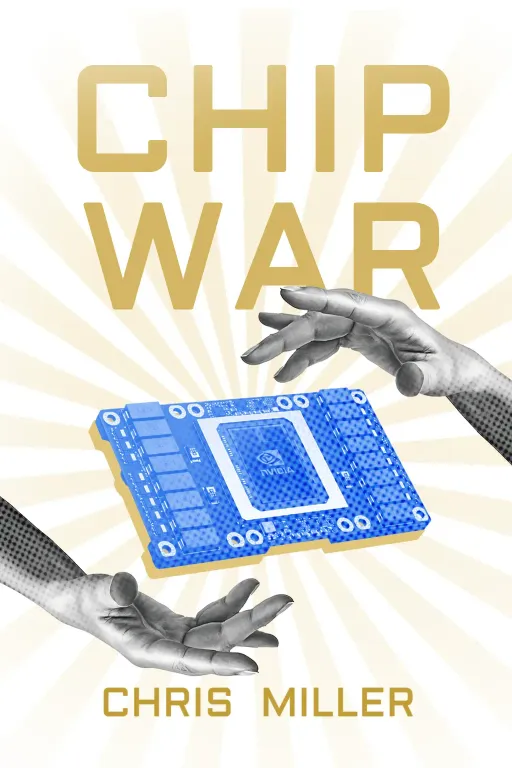
Chip War
Chris Miller
A gripping exploration of the high-stakes battle for semiconductor supremacy between the United States and China, revealing how chips have shaped geopolitics, the global economy, and the balance of military power. From the Cold War origins of Silicon Valley to the cutting-edge foundries of Taiwan, discover the intricate supply chains and strategic decisions that have made semiconductors the world's most critical technology. It is a geopolitical thriller masquerading as a history of technology. Written by economic historian Chris Miller, the book argues that the modern world is not built on steel or oil, but on silicon. It frames the semiconductor industry as the central battlefield in the rivalry between the United States and China. Miller traces the history of the microchip from the early days of Silicon Valley to its current status as the most complex manufacturing process humanity has ever achieved. He highlights the extreme fragility of the global supply chain. The entire world relies on advanced chips that can only be produced by a single company, TSMC, located on the vulnerable island of Taiwan. Furthermore, the machines required to print these chips are made exclusively by the Dutch company ASML. The book explains how the United States lost its manufacturing dominance while retaining control over the critical software and tools used to design chips. Miller asserts that this control allows the US to weaponize the supply chain, cutting off adversaries from computing power. "Chip War" is a sobering look at how a tiny piece of silicon determines the balance of military power and the future of the global economy.

Exhalation
Ted Chiang
"Exhalation" is a collection of science fiction and fantasy short stories by Ted Chiang that delves into thought-provoking explorations of time, causality, free will, and the nature of existence. Through intricate narratives and philosophical inquiries, the book invites readers to contemplate the profound implications of technological advancements and the human condition. Readers will encounter a fabric merchant traveling through time in "The Merchant and the Alchemist's Gate," a mechanical anatomist dissecting his own being in "Exhalation," and the societal impact of devices that predict choices in "What's Expected of Us." "The Lifecycle of Software Objects" explores the complex relationships between humans and intelligent digital life forms, while "Dacey's Patent Automatic Nanny" examines the consequences of machine-mediated childcare. Finally, "The Truth of Fact, the Truth of Feeling" questions the nature of memory and truth in an age of perfect digital recall, drawing parallels with oral cultures to highlight how technology shapes human identity and understanding of the past.
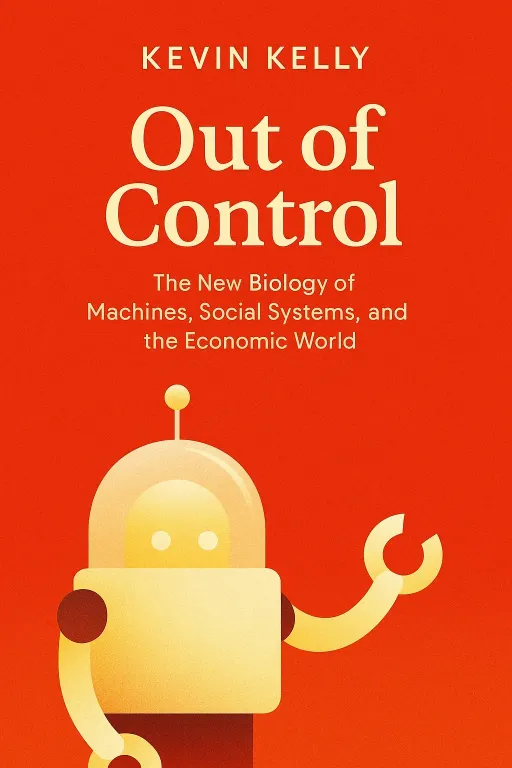
Out of Control
Kevin Kelly
"Out of Control" is a prophetic masterpiece written by Kevin Kelly, the founding executive editor of Wired magazine. Published in 1994, the book is widely regarded as the "Bible" of the digital economy. It accurately predicted the rise of the internet, the decentralization of organizations, and the emergence of cryptocurrency long before they became mainstream. Kelly argues that the realm of the "Born"—nature and biology—and the realm of the "Made"—machines and engineering—are merging into one. He observes that our most complex mechanical systems are becoming so intricate that they must be managed like biological ecosystems. Conversely, our understanding of biology is becoming increasingly engineering-based. The central theme is the power of "Hive Mind" or swarm intelligence. Kelly asserts that intelligent control does not come from a central command but emerges from a massive number of dumb, autonomous agents acting from the bottom up. This is how a beehive works, how the brain works, and how the internet works. The book suggests that to build truly complex and adaptable systems, we must give up absolute control and allow them to evolve on their own.
Artificial Intelligence
Stuart J. Russell
Explore the fascinating world of Artificial Intelligence with this comprehensive guide. From intelligent agent design to problem-solving, knowledge representation, and learning, this book offers a unified presentation of the field, covering both theory and practice. Discover how AI is shaping the future and its potential impact on our lives.
You Look Like a Thing and I Love You
Janelle Shane
An exploration of artificial intelligence, examining its capabilities, limitations, and potential impact on our understanding of intelligence, creativity, and humanity. It delves into AI methods, their successes, and the broader questions surrounding the quest for human-level AI.