

Relationship & Family
The Master and His Emissary
Iain McGilchrist
Why is man apparently intent on destroying the world we inhabit? And what can we do about it? Drawing on literature, painting, philosophy, music and history, Dr McGilchrist challenges the widespread myth that the 'left-brain' is analytically superior, 'the right-brain' intuitive and emotional, and reveals that each hemisphere has its own distinct world view. The left hemisphere, analytical and narrow, is designed for manipulation of the world; the right, broader and integrative, for understanding it. Yet over the past several centuries, the balance between them has been upset, resulting in a society dominated by the left hemisphere's utilitarian outlook. In "The Master and His Emissary", Iain McGilchrist argues that the left hemisphere, the 'emissary', has usurped the right hemisphere, the 'master', and that this imbalance has profound consequences for Western culture. The left hemisphere is detail-oriented, prefers mechanisms to living things, and is inclined to self-interest, while the right hemisphere has greater breadth, flexibility, and generosity. This division helps explain the origins of music and language, and casts new light on the history of philosophy, as well as on some mental illnesses. This pioneering account sets out to understand the structure of the human brain – the place where mind meets matter. Until recently, the left hemisphere of our brain has been seen as the ‘rational’ side, the superior partner to the right. But is this distinction true? Drawing on a vast body of experimental research, McGilchrist argues while our left brain makes for a wonderful servant, it is a very poor master. As he shows, it is the right side which is the more reliable and insightful. Without it, our world would be mechanistic – stripped of depth, colour and value.
The Psychology of Money
Morgan Housel
"The Psychology of Money" is a collection of nineteen short stories exploring the strange ways people think about money. Written by Morgan Housel, a partner at The Collaborative Fund, the book departs from the standard investment advice that treats finance as a math-based field. Housel argues that financial success is not a hard science. It is a soft skill, where how you behave is more important than what you know. The central premise is that we do not make financial decisions on a spreadsheet. We make them at the dinner table, where personal history, unique worldviews, ego, pride, marketing, and odd incentives are scrambled together. Housel illustrates that two people can see the exact same world yet draw completely different conclusions based on when and where they were born. A key theme in the book is the distinction between getting rich and staying rich. Getting rich requires taking risks, being optimistic, and putting yourself out there. Staying rich requires the exact opposite. It requires fear that what you have made can be taken away from you. It requires frugality and an acceptance that at least some of your success is attributable to luck rather than skill. Housel ultimately posits that the highest dividend money pays is not luxury goods, but control over your time.
Never Split the Difference
Chris Voss
"Never Split the Difference" is a high-stakes guide to negotiation written by former FBI international hostage negotiator Chris Voss. Unlike traditional academic theories that focus on logic and compromise, Voss argues that negotiation is a psychological game rooted in emotion. He asserts that splitting the difference is a terrible idea. In a hostage situation, splitting the difference means saving only half the hostages. The book introduces the concept of Tactical Empathy. This is the ability to recognize the perspective of your counterpart and vocalize it to make them feel understood. Voss outlines specific techniques to achieve this, such as Mirroring, which is repeating the last few words someone said, and Labeling, which involves verbally identifying their fears to diffuse them. A key counter-intuitive lesson is the value of the word "No." Voss claims that pushing for "Yes" often leads to counterfeit agreements. "No" provides a sense of safety and control, allowing the real negotiation to begin. The ultimate goal is not to get a "Yes" but to get a "That's Right," which signals that the other party feels fully understood and is ready to collaborate.
Loving Bravely
Alexandra H. Solomon
A guide to understanding yourself and your relationships, offering tools to make healthy and self-aware choices in love. It emphasizes relational self-awareness and provides lessons for personal growth and transformation in intimate relationships.
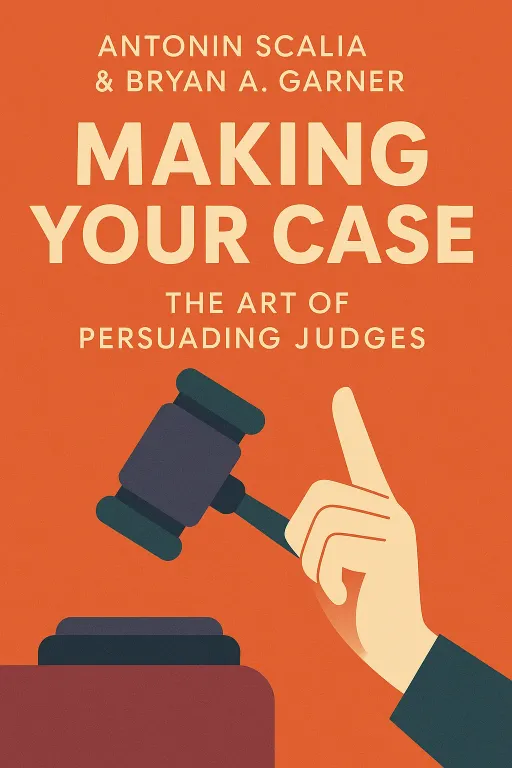
Making Your Case
Antonin Scalia
A comprehensive guide to the art of persuading judges, offering practical advice on argumentation, legal reasoning, brief writing, and oral advocacy. Drawing on the wisdom of legal luminaries throughout history, this book provides invaluable insights for modern practitioners seeking to master the art of judicial persuasion.
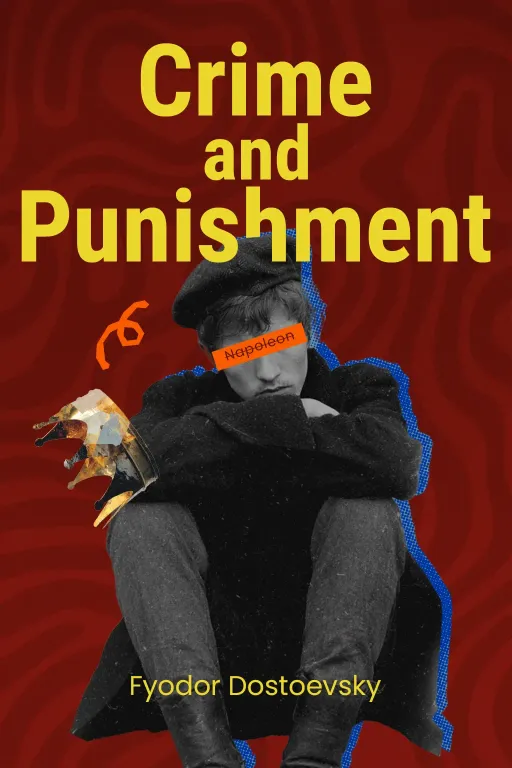
Crime and Punishment
Fyodor Dostoevsky
A gripping psychological thriller set in 19th century Russia, Crime and Punishment follows the tormented Raskolnikov, an impoverished student who commits a brutal murder and grapples with the profound consequences of his actions. Plagued by guilt and paranoia, he embarks on a harrowing journey of self-discovery and redemption, forcing readers to confront the depths of human morality and the complexities of the criminal mind.
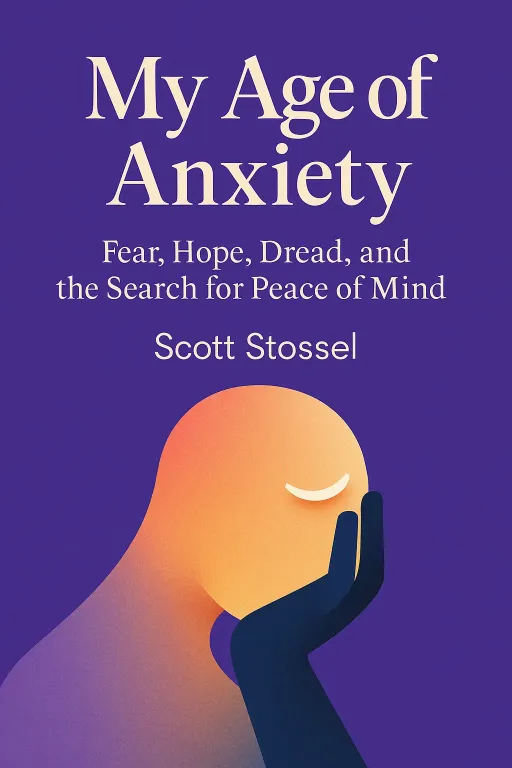
My Age of Anxiety
Scott Stossel
In "My Age of Anxiety," Scott Stossel delves into the pervasive and often misunderstood condition of anxiety. Drawing from his own experiences, he presents a comprehensive exploration of anxiety from medical, cultural, philosophical, and personal perspectives. Stossel's journey covers the history of understanding anxiety, its impact on individuals and society, and the various treatments developed to manage it. A learned, empathetic, and humorous account offering insight into the biological, cultural, and environmental factors that contribute to this widespread affliction.
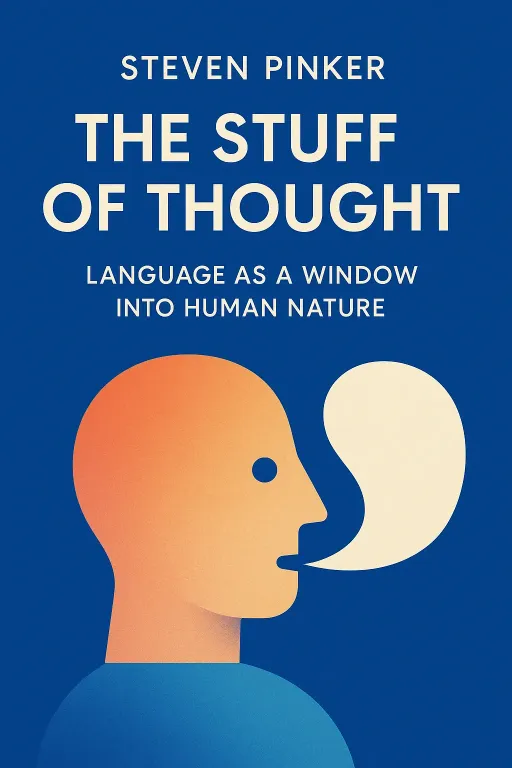
The Stuff of Thought
Steven Pinker
A fascinating exploration of how language shapes our thoughts and perceptions of the world. Steven Pinker delves into the intricacies of semantics and pragmatics, revealing how our words reflect our understanding of reality, emotions, and social relationships. From the billion-dollar debate over the meaning of 'event' to the hidden metaphors embedded in our everyday speech, this book offers a captivating glimpse into the human mind.