

Relationship & Family

Five Stars
Carmine Gallo
Unlock the secrets to persuasive communication and achieve greatness in the modern world. Learn from leaders at Google, Airbnb, and McKinsey, as well as astronauts, scientists, and entrepreneurs, who credit their success to superior communication skills. Discover how to inspire, ignite imagination, and become irreplaceable in an age of automation and artificial intelligence.
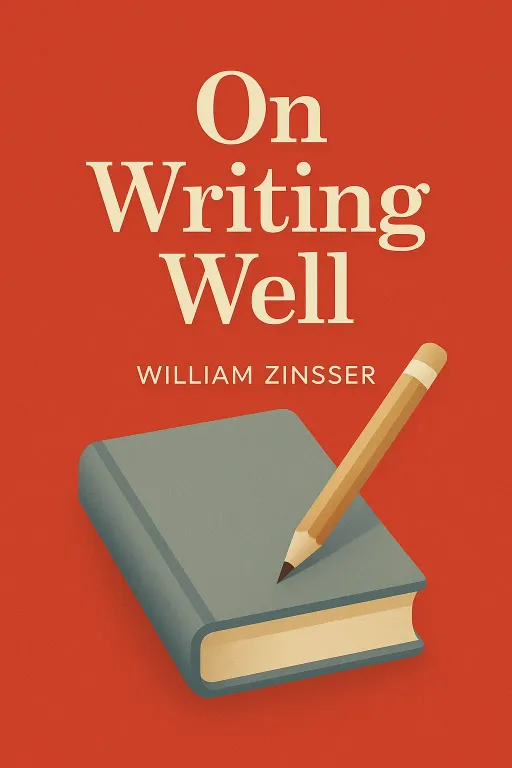
On Writing Well
William Zinsser
A classic guide to writing nonfiction, offering timeless principles and practical advice for achieving clarity, simplicity, and style in your writing. Learn how to eliminate clutter, find your voice, and write with confidence, whether you're a student, writer, or professional.
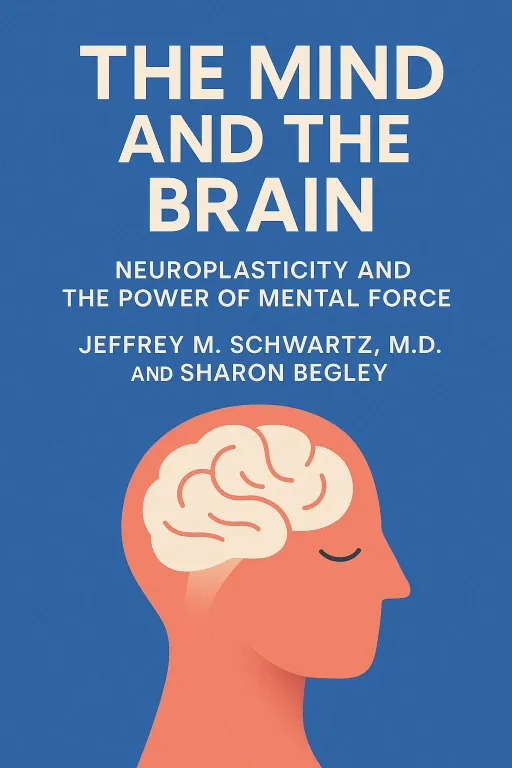
The Mind and the Brain
Jeffrey M. Schwartz
Explore the groundbreaking science of neuroplasticity and the power of the mind to shape the brain. Discover how mental force can influence brain chemistry and unlock new possibilities for treating mental disorders and understanding the connection between mind and matter.
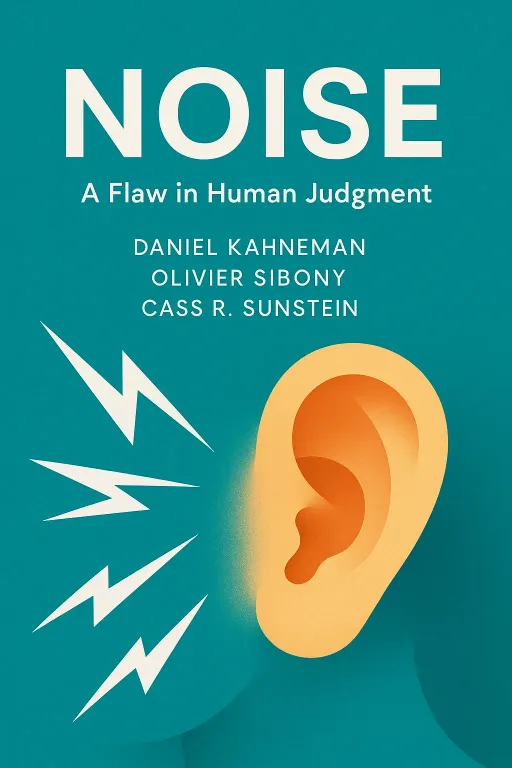
Noise: A Flaw in Human Judgment
Daniel Kahneman
Discover the hidden flaw in human judgment that leads to errors in all walks of life. From medicine to criminal justice, insurance to finance, 'Noise' exposes the shocking extent of unwanted variability in professional judgments and offers practical solutions for reducing noise and improving decision-making in organizations and beyond.

Attached
Amir Levine
Discover the groundbreaking science of adult attachment and learn how it can transform your relationships. Understand your attachment style—secure, anxious, or avoidant—and gain the tools to build stronger, more fulfilling connections with your partner. Break free from destructive patterns and create lasting love.
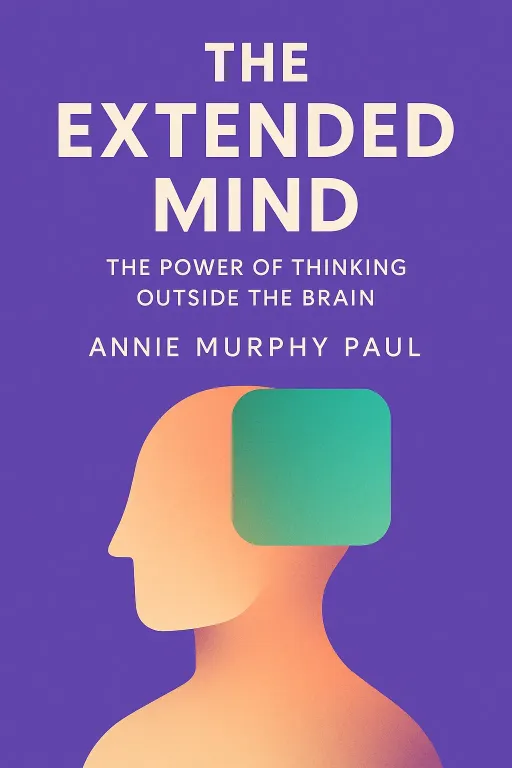
The Extended Mind
Annie Murphy Paul
"The Extended Mind" is a transformative guide to cognition that shatters the age-old assumption that thinking happens only within the confines of our skulls. Science writer Annie Murphy Paul draws on cutting-edge research in neuroscience and psychology to argue that the brain is not an isolated computer, but a biological organ evolved to think with the world around it. Paul introduces the concept of "thinking outside the brain" through three key pillars: embodied cognition (thinking with our bodies, sensations, and gestures), situated cognition (thinking with the spaces and environments we inhabit), and distributed cognition (thinking through our relationships and social networks). The book critiques our modern obsession with "brainbound" productivity—forcing ourselves to sit still and stare at screens—and offers a liberating alternative. By intentionally managing our physical movements, workspaces, and social interactions, Paul shows how we can offload mental processing to the world around us. The Extended Mind provides a practical framework for anyone looking to harness these external resources to become smarter, more creative, and more resilient.
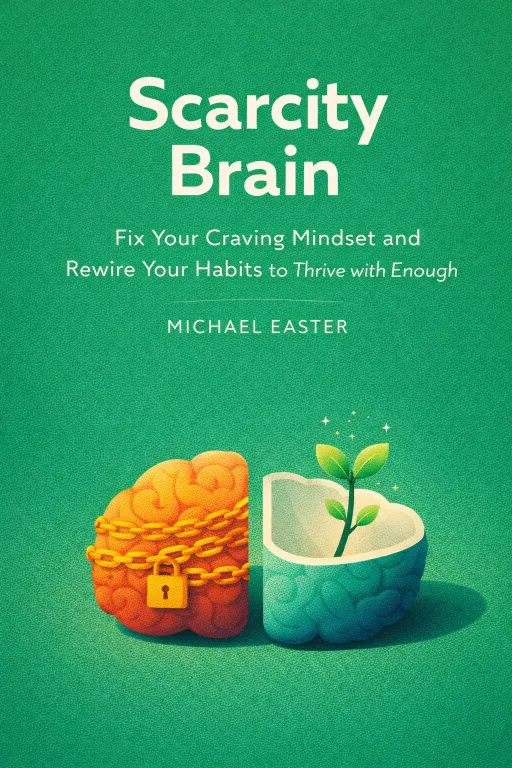
Scarcity Brain
Michael Easter
In a world of overwhelming abundance, why do we constantly crave more, leading to detrimental behaviors like overeating, overbuying, and addiction? Michael Easter, a science journalist, embarks on a global journey to uncover the ancient human behavioral system—the 'scarcity brain'—that once ensured survival but now traps us in a 'scarcity loop.' Through compelling research and real-world examples, from the psychology of slot machines in Las Vegas to drug enforcement in Iraq, this book reveals the three-part mechanism driving our insatiable desires and offers profound insights into how to break free from the cycle of overconsumption to find true satisfaction and unlock our full potential.
Thinking, Fast and Slow
Daniel Kahneman
"Thinking, Fast and Slow" is the intellectual tour de force by Daniel Kahneman, a psychologist who won the Nobel Prize in Economics for his work on decision-making. The book summarizes decades of research to present a unified theory of how the human mind works, challenging the classical economic view that humans are rational actors. Kahneman divides our mental life into two distinct modes: System 1 is fast, intuitive, and emotional; it operates automatically and with little effort (like recognizing a face). System 2 is slower, more deliberative, and logical; it requires conscious effort (like solving a math problem). The central drama of the book is the interaction between these two systems. Kahneman reveals that while System 1 is efficient, it is prone to systematic errors known as cognitive biases—such as the anchoring effect, overconfidence, and loss aversion. System 2 is supposed to monitor these, but it is often lazy and defers to System 1. Rich with examples and puzzles, Thinking, Fast and Slow fundamentally changes how we perceive our own judgments, offering profound insights into corporate strategies, public policy, and our own happiness.