

Economics & Money
Partisan Nation
Paul Pierson
This book offers a profound analysis of the transformation of American politics, arguing that the traditional 'Madisonian' constitutional framework, once a bulwark against intense partisan divisions, now exacerbates them. Authors Paul Pierson and Eric Schickler trace the historical evolution of polarization, from early republics to the contemporary era, highlighting how racial realignment, federal government expansion, and the nationalization of mediating institutions (state parties, interest groups, and media) have created a self-reinforcing cycle of partisan conflict. They reveal how this new constitutional order leads to governmental dysfunction, weakened accountability, and poses significant threats to the stability of American democracy, particularly through the actions of a nationalized and increasingly authoritarian-leaning Republican Party.

Safe Havens for Hate
Tamar Mitts
In 'Safe Havens for Hate,' Tamar Mitts exposes how extremist organizations exploit the uneven landscape of social media content moderation to maintain and amplify their harmful messages. Through a theory of digital resilience, Mitts reveals how these groups adapt by migrating to less-regulated platforms, strategically altering their messaging, and mobilizing supporters across diverse online spaces. This critical analysis delves into the complex interplay between governments, tech companies, and extremist actors, offering vital insights into the future of online harms and the challenges of effective digital regulation.
The Wretched of the Earth
Frantz Fanon
A seminal work of political theory and postcolonial studies, 'The Wretched of the Earth' offers a searing analysis of the psychological and social impact of colonialism and the dynamics of decolonization. Frantz Fanon explores the role of violence in liberation struggles, the challenges of national consciousness, and the pitfalls faced by newly independent nations. With a powerful preface by Jean-Paul Sartre and a foreword by Homi K. Bhabha, this book remains a crucial text for understanding global power structures, identity, and the quest for human liberation.
It Can't Happen Here
Sinclair Lewis
Set in 1936, this chillingly prescient novel explores the potential rise of fascism in America through the eyes of Doremus Jessup, a Vermont newspaper editor. As a charismatic demagogue, Senator Buzz Windrip, gains power by exploiting public fear and discontent, Jessup finds himself confronting the terrifying reality that even in a nation of 'freemen,' tyranny can take root. The excerpts capture a pivotal dinner discussion where nationalist and proto-fascist sentiments are openly espoused, challenging the complacent belief that 'it can't happen here.'
Democracy in Our America
Paul W. Kahn
In the wake of recent political upheavals, this book offers a profound analysis of the state of American democracy, questioning its capacity for self-governance. Drawing on both national political theory and the microcosm of local community life in Killingworth, Connecticut, the author explores the erosion of constitutional norms, the rise of populism, and the decline of civic engagement. It delves into the philosophical underpinnings of American political thought while confronting the stark realities of contemporary polarization, offering a critical examination of whether the nation can recover its foundational principles.
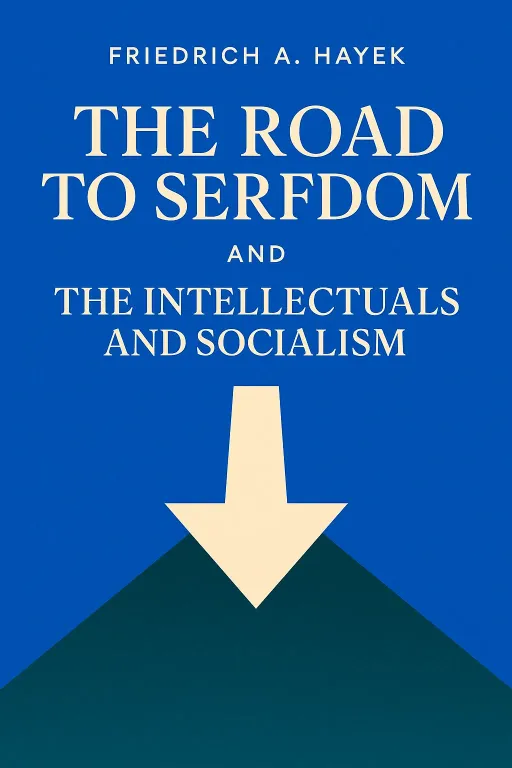
The Road to Serfdom with The Intellectuals and Socialism
Friedrich A. Hayek
A condensed version of Friedrich Hayek's classic critique of collectivism, arguing that central planning inevitably leads to a loss of freedom and the rise of totalitarianism. This edition also includes Hayek's essay 'The Intellectuals and Socialism,' exploring the role of intellectuals in promoting socialist ideas.
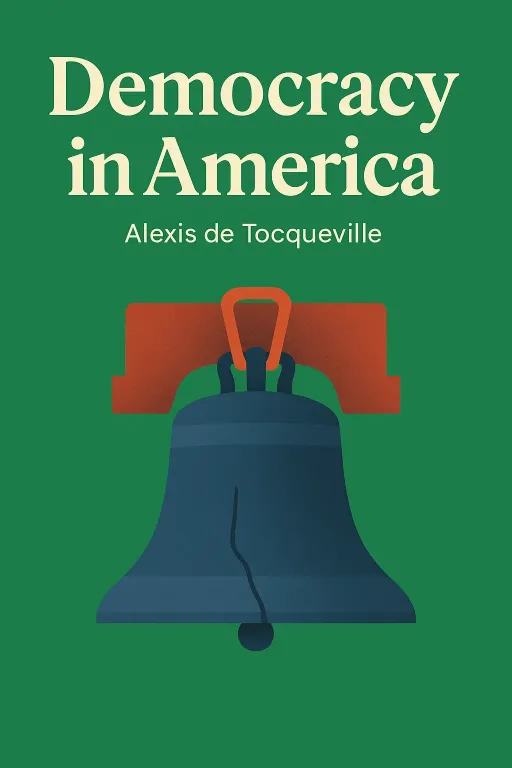
Democracy in America
Alexis De Tocqueville
Alexis de Tocqueville's "Democracy in America" is a profound exploration of American society, politics, and culture in the early 19th century. Tocqueville examines the principles of democracy, equality, and individualism, offering insights into the strengths and potential pitfalls of the American experiment. A timeless analysis of the foundations of modern democracy.
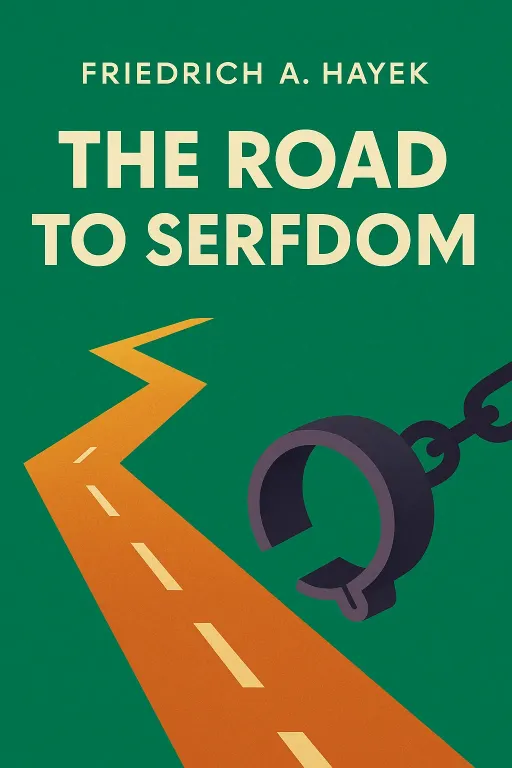
The Road to Serfdom
Friedrich A. Hayek
The Road to Serfdom by Friedrich A. Hayek is a landmark work in political and economic thought that warns about the risks of central economic planning and its impact on individual freedom. Written during World War II and first published in 1944, Hayek argues that well-intentioned efforts to organize an economy through government control can unintentionally strip away personal liberties and pave the way for authoritarian rule. Hayek traces how socialist and collectivist policies—promoted as paths to equality and security—can require ever-greater state intervention, erode democratic institutions, and concentrate power in the hands of a few. He draws connections between centralized planning and the rise of totalitarian regimes, while contrasting this with the benefits of individual choice and market-based coordination. The Road to Serfdom remains a foundational text in classical liberal and free-market thought, influential across economics, political philosophy, and public policy debates about the balance between government action and personal liberty.