

Economics & Money
The Total Money Makeover Workbook
Dave Ramsey
Take control of your finances with The Total Money Makeover Workbook. This workbook provides a step-by-step plan to help you get out of debt, build wealth, and achieve financial freedom. Learn how to face your financial fears, take responsibility for your money, and make lasting changes that will transform your life.
The Velvet Rope Economy
Nelson D. Schwartz
An incisive look at how inequality has become a business model, with companies catering to the wealthy while neglecting the needs of the middle class and the poor, exacerbating social divisions and threatening the very fabric of American society.
The Power Broker
Robert A. Caro
"The Power Broker" is widely considered one of the greatest non-fiction books ever written. In this Pulitzer Prize-winning masterpiece, journalist Robert A. Caro chronicles the life of Robert Moses, the "Master Builder" who shaped the physical reality of New York City and its suburbs more than any elected official in history. Caro uses Moses’ life to study a larger subject: the acquisition and use of power in a democracy. He reveals how Moses, who was never elected to public office, amassed absolute control for 44 years. By manipulating the murky legal structures of "Public Authorities" (like the Triborough Bridge Authority), Moses generated his own revenue streams, freeing him from the oversight of mayors, governors, and voters. The book is a tragedy of arrogance. It details how Moses started as an idealist dreamer building public parks but transformed into a tyrant who displaced half a million people. Caro meticulously documents the human cost of "progress"—from the destruction of vibrant neighborhoods for the Cross Bronx Expressway to the deliberate design of low bridges to keep buses (and low-income minorities) away from Jones Beach.
Prediction Machines
Ajay Agrawal
"Prediction Machines" is a practical framework for understanding artificial intelligence through the lens of basic economics. Written by University of Toronto economists Ajay Agrawal, Joshua Gans, and Avi Goldfarb, the book strips away the sci-fi hype and treats AI as a commodity. It argues that the current revolution is actually just a massive drop in the cost of a single input: prediction. The authors draw a parallel to the invention of electric light. When light became cheap, people did not just use it to see at night; they fundamentally redesigned their cities and workdays. Similarly, as AI drives the cost of prediction down, we will start using it for tasks we never considered prediction problems before. Autonomous driving is framed not as robot intelligence, but as a prediction problem where the car is simply predicting what a good human driver would do next. The most critical insight is the shift in value. As machines master prediction, the economic value of the complementary skill rises. That skill is Judgment. While machines can predict the outcome of a decision, only humans can determine the payoff of that outcome. The book asserts that the future of work lies in determining what we should want, while leaving the calculation of how to get there to the machines.
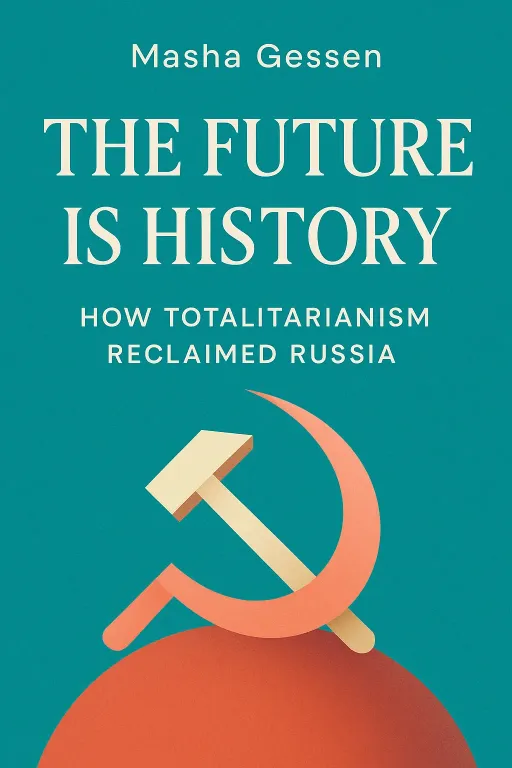
The Future Is History
Masha Gessen
A searing and essential book about Russia today, from one of our most fearless and incisive observers, that tells a chilling story of how a country is condemned to repeat the horrors of its past.
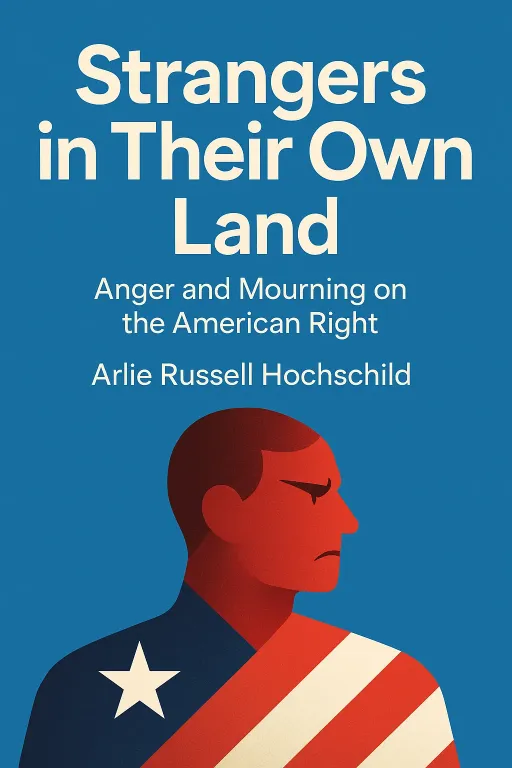
Strangers in Their Own Land
Arlie Russell Hochschild
An exploration into the lives and perspectives of the American right, seeking to understand the emotional roots of their political beliefs. Journey with the author as she crosses the empathy wall to discover the "deep story" that shapes their world view.
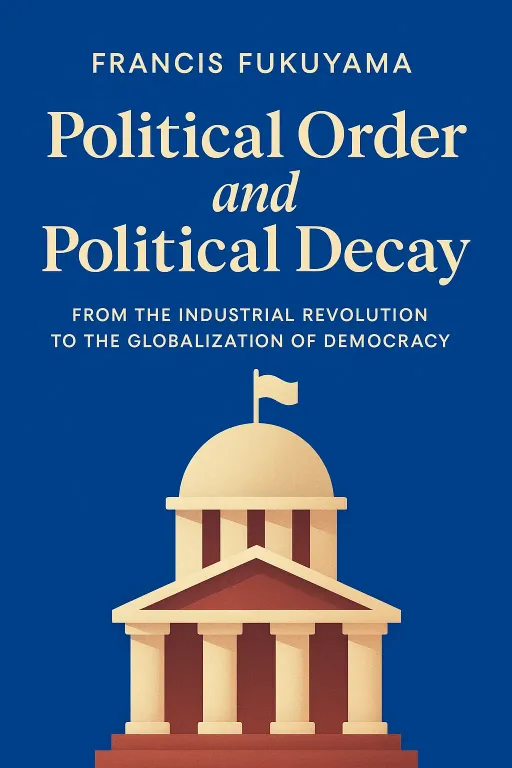
Political Order and Political Decay
Francis Fukuyama
An exploration of political development and decay from the Industrial Revolution to the present, examining the crucial elements of state-building, the rule of law, and democratic accountability. It delves into the challenges faced by both developing and developed nations in achieving and maintaining a balanced political system, and how institutions evolve and sometimes decay over time.