


In Praise of Shadows
Jun'ichirō Tanizaki
"In Praise of Shadows" is a non-fiction exploration of Japanese aesthetics by Jun'ichirō Tanizaki. The book delves into the cultural significance of shadows and darkness in traditional Japanese architecture, art, and daily life. Tanizaki contrasts this appreciation for subtlety and dimness with the Western preference for brightness and sharp illumination, examining the profound cultural implications of these differing aesthetic values. Through Tanizaki's core essay, readers will gain insight into the beauty found in the subdued and the imperfect, as opposed to the Western emphasis on the bright and new. The book includes a foreword by Charles Moore, which discusses the human need to connect with places and how understanding the contrast between light and shadow can offer insights into different cultures. An afterword by Thomas J. Harper contextualizes Tanizaki's essay within his broader literary career and the traditions of Japanese literature. This edition also includes information about the translators, Thomas J. Harper and Edward G. Seidensticker, both experts in Japanese literature. "In Praise of Shadows" offers a unique perspective on aesthetics and cultural values, inviting readers to reconsider their own perceptions of beauty and design.
The Hero With a Thousand Faces
Joseph Campbell
"The Hero With a Thousand Faces" is the seminal work on comparative mythology by Joseph Campbell, a book that forever changed how we understand storytelling and the human experience. Campbell’s central thesis is that despite vast differences in time, culture, and geography, all great human myths share a single, fundamental structure: the Monomyth. Campbell maps this universal narrative—known as the Hero's Journey—through three distinct stages: Separation, Initiation, and Return. The hero ventures forth from the world of common day into a region of supernatural wonder, encounters fabulous forces (the "Road of Trials"), wins a decisive victory, and comes back with the power to bestow boons on their fellow man. Drawing heavily on the depth psychology of Carl Jung, Campbell interprets these myths not merely as adventure stories, but as metaphors for the psychological journey toward self-actualization. Famous for inspiring George Lucas to create Star Wars, this book is a vital guide for writers, artists, and anyone seeking to understand the spiritual potential of their own life. It leaves readers with Campbell's most enduring advice: "Follow your bliss."
Waking Up
Sam Harris
"Waking Up" is a bridge between two seemingly incompatible worlds: rigorous scientific skepticism and the profound experiences of spiritual life. Written by neuroscientist and philosopher Sam Harris—famously known as one of the "Four Horsemen" of New Atheism—this book argues that there is more to understanding reality than just grasping the physical laws of the universe, but that we do not need religion to access it. Harris contends that spirituality is a matter of consciousness, not creed. His central thesis challenges the feeling most of us have of being a "self"—an ego or passenger residing inside our heads, looking out at the world. Drawing on both neuroscience and the contemplative traditions of the East (specifically Dzogchen and Vipassana), he argues that this "self" is an illusion, and the source of much of our psychological suffering. The book serves as a rational guide to meditation, framing it not as a relaxation technique, but as a tool for empirical investigation into the nature of one's own mind. "Waking Up" invites secular readers to reclaim the wisdom of contemplative practice, proving that it is possible to be spiritual without being religious, and to find a deep sense of peace by simply waking up to the reality of the present moment.

Guns, Germs, and Steel
Jared Diamond
"Guns, Germs, and Steel" is a Pulitzer Prize-winning transdisciplinary work by geographer and physiologist Jared Diamond. It dismantles racist theories of history to answer a deceptively simple question posed to the author by a politician in New Guinea: “Why is it that you white people developed so much cargo and brought it to New Guinea, but we black people had little cargo of our own?” Diamond’s answer lies not in biology, but in geography. He argues that Eurasian civilizations conquered the world because they were the lucky beneficiaries of the best environment. They had access to the most domesticatable plants (wheat, barley) and animals (cows, pigs, horses), which allowed for food surpluses. This density enabled the rise of specialized classes—soldiers to wield steel weapons and bureaucrats to organize empires. Crucially, close proximity to livestock bred lethal germs (like smallpox and measles) within Eurasian populations, giving them immunity while wiping out indigenous peoples who had never encountered them. Diamond also highlights the East-West axis of Eurasia, which allowed these crops and technologies to spread rapidly across similar climates, unlike the North-South orientation of the Americas and Africa. It is a unified history of the last 13,000 years, arguing that history followed different courses for different peoples because of differences in their environments, not their biology.
The Origins of Political Order
Francis Fukuyama
An exploration of the historical origins of political institutions, from prehuman times to the eve of the French and American revolutions. This volume delves into the emergence of the state, the rule of law, and accountable government, examining the factors that drive political development and decay across different societies and historical periods.
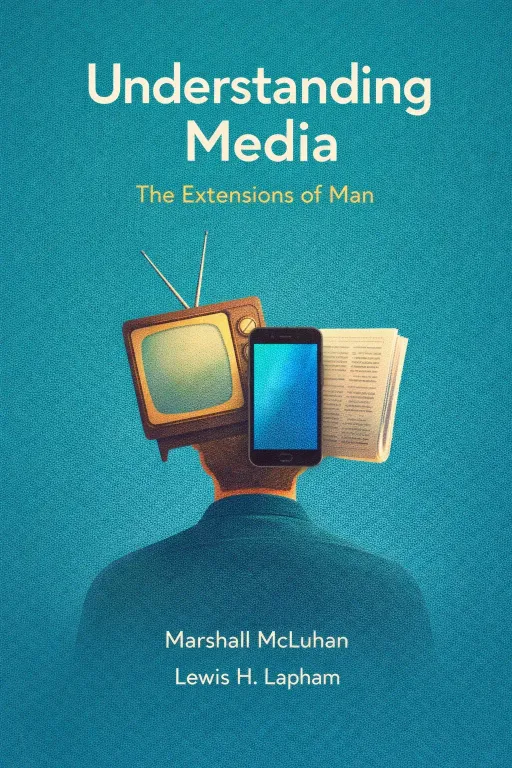
Understanding Media
Marshall McLuhan
"Understanding Media: The Extensions of Man" by Marshall McLuhan is a seminal work in media studies, communication theory, and cultural analysis. The book introduces McLuhan's groundbreaking ideas about how media technologies shape human perception, understanding, and social organization. It challenges readers to look beyond the content of media and consider the profound effects of the medium itself. Readers will explore McLuhan's key concepts, including "the medium is the message," and the distinction between "hot" and "cool" media, understanding how these classifications impact audience participation and psychological engagement. The book delves into the phenomenon of media reversal, where technologies, when pushed to their extremes, transform into their opposites, and examines the human tendency to become entranced by technological extensions, using the Narcissus myth as a central metaphor. Furthermore, it investigates the dynamic and disruptive energy created when different media forms intersect, leading to hybrid forms and accelerated social and psychic change. Through insightful analysis and provocative examples, "Understanding Media" encourages readers to critically examine the ways in which technology mediates our experiences and reshapes our world. It serves as an early warning system, alerting readers to the often-unseen consequences of technological advancements on both individual consciousness and collective culture.
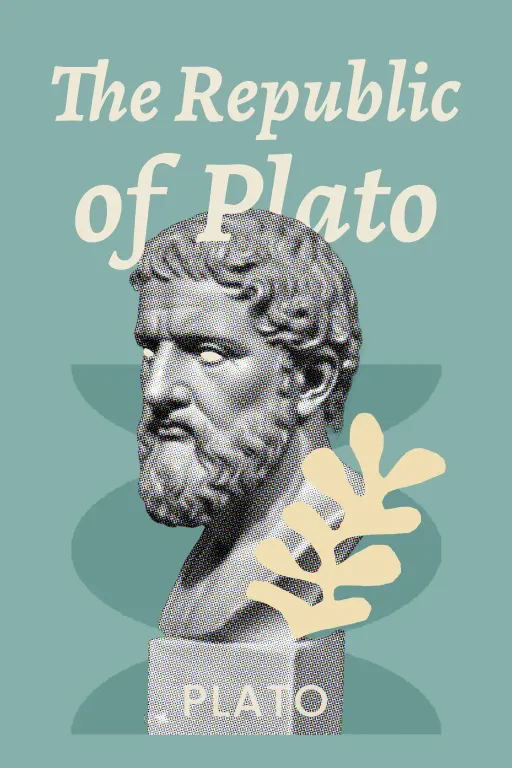
The Republic
Plato
Allan Bloom's acclaimed translation of Plato's Republic, a cornerstone of Western thought, explores fundamental questions of justice, community, and the ideal state. This edition offers a literal translation with notes and an interpretive essay, inviting readers to engage directly with Plato's profound insights into the human condition and the nature of truth. "The Republic" is the foundational text of Western philosophy, written by Plato (around 375 BC). Presented as a Socratic dialogue, it begins with a simple question—What is justice?—and expands into a profound investigation of the ideal state and the human soul. Plato argues that justice is harmony. To define a just individual, he constructs a theoretical "just city" (Kallipolis). He divides this city into three classes: the Producers (craftsmen/farmers), the Auxiliaries (warriors), and the Guardians (rulers). This structure mirrors the tripartite nature of the human soul: Appetite, Spirit, and Reason. Justice occurs when each part performs its own function without interfering with the others, ruled by Reason. The book’s most famous passage is the Allegory of the Cave. Plato depicts humanity as prisoners chained in a cave, watching shadows on a wall and mistaking them for reality. The philosopher’s duty is to break free, ascend to the light (the Form of the Good), and then return to the cave to lead others. This leads to Plato’s most controversial claim: that for a city to be just, it must be ruled by a Philosopher King—someone who loves wisdom more than power.

Tao Te Ching
Lao Tzu
This edition of Lao Tzu's "Tao Te Ching" presents a profound exploration of ancient Chinese philosophy, focusing on the core concepts of Tao (the Way) and Te (Integrity). Divided into two main sections, "Tao Ching" and "Te Ching", the text delves into the nature of existence, the ideal characteristics of a sage, and the principles of effective governance through non-action and humility. Readers will encounter recurring themes of presence and absence, the importance of aligning with natural processes, and the power of embodying the Way in personal conduct. Through 81 chapters, the "Tao Te Ching" offers guidance on understanding the world and one's place within it. This edition further enhances comprehension with a dedicated section on Key Terms, outlining Lao Tzu's central philosophical ideas such as Yu (Presence), Wu (Absence), Tzu-jan (Occurrence appearing of itself), and Wu-wei (Nothing's own doing). These definitions provide context and deeper insight into the text's complex concepts. The book also includes illustrations that reflect the themes and imagery discussed in the Introduction.