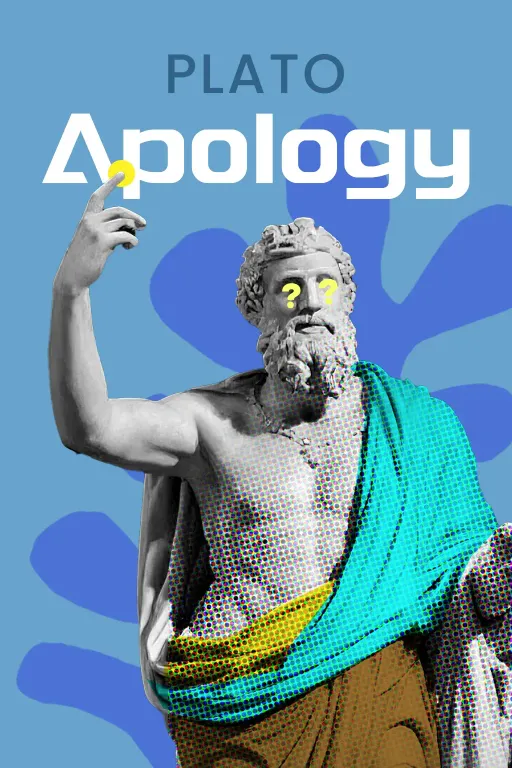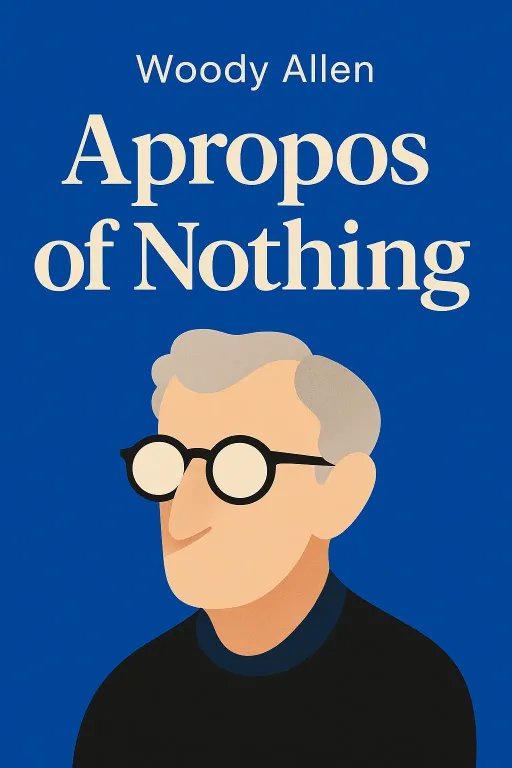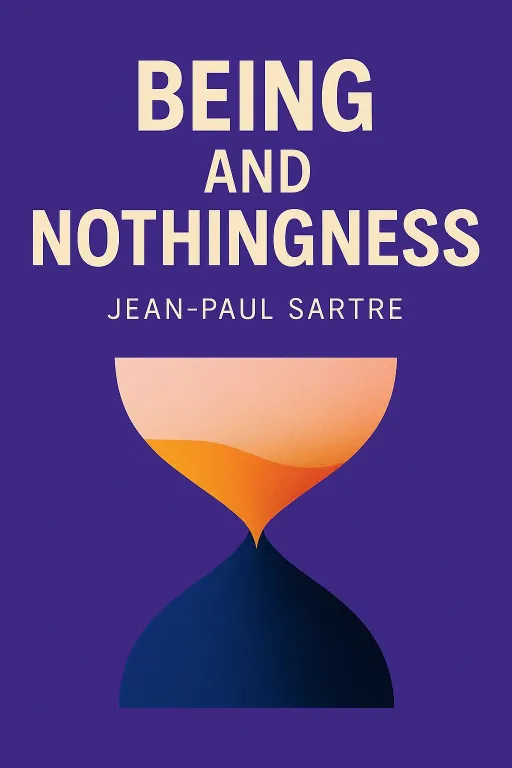
The Law cover

The Law

Frederic Bastiat

A timeless exploration of the role of law in society, Frederic Bastiat's "The Law" delves into the dangers of legal plunder and the perversion of justice. Bastiat champions individual liberty, property rights, and limited government, warning against the seductive allure of socialism and the abuse of state power. Discover the principles of a just and enduring society in this concise yet profound treatise.

Gödel, Escher, Bach cover

Gödel, Escher, Bach

Douglas R. Hofstadter

"Gödel, Escher, Bach"—often called GEB—is a cult classic in the worlds of computer science and artificial intelligence. Written by Douglas Hofstadter, this 1980 Pulitzer Prize winner is not a dry academic text but a playful and mind-bending intellectual journey. Hofstadter weaves together the work of three distinct masters: the logician Kurt Gödel, the artist M.C. Escher, and the composer J.S. Bach. The central theme of the book is the concept of a "Strange Loop." This occurs when a system moves through various levels only to find itself right back where it started. Hofstadter illustrates this using Escher’s staircases that ascend forever and Bach’s musical canons that loop seamlessly back to their beginning. Hofstadter uses these puzzles to explore a profound mystery: how can lifeless matter create a conscious mind? He argues that your sense of "self" is essentially a complex strange loop arising from the firing of neurons in your brain. Filled with wordplay, puzzles, and witty dialogues between Achilles and the Tortoise, reading this book is a rigorous mental workout that will permanently change how you perceive thinking, meaning, and being human.

The Hero With a Thousand Faces cover

The Hero With a Thousand Faces

Joseph Campbell

"The Hero With a Thousand Faces" is the seminal work on comparative mythology by Joseph Campbell, a book that forever changed how we understand storytelling and the human experience. Campbell’s central thesis is that despite vast differences in time, culture, and geography, all great human myths share a single, fundamental structure: the Monomyth. Campbell maps this universal narrative—known as the Hero's Journey—through three distinct stages: Separation, Initiation, and Return. The hero ventures forth from the world of common day into a region of supernatural wonder, encounters fabulous forces (the "Road of Trials"), wins a decisive victory, and comes back with the power to bestow boons on their fellow man. Drawing heavily on the depth psychology of Carl Jung, Campbell interprets these myths not merely as adventure stories, but as metaphors for the psychological journey toward self-actualization. Famous for inspiring George Lucas to create Star Wars, this book is a vital guide for writers, artists, and anyone seeking to understand the spiritual potential of their own life. It leaves readers with Campbell's most enduring advice: "Follow your bliss."

Meditations cover

Meditations

Marcus Aurelius

"Meditations" is a unique masterpiece of philosophy, unique because it was never intended to be a book. It is the private journal of Marcus Aurelius, the Roman Emperor who ruled from 161 to 180 AD. Written largely while on military campaigns, these notes were the Emperor's method for keeping himself sane, humble, and disciplined amidst the chaos of war and plague. It serves as the definitive text on Stoic philosophy in practice. Marcus repeatedly reminds himself of the central Stoic dogma: the Dichotomy of Control. He argues that we have no control over external events—the weather, the opinions of others, or death itself—but we have absolute control over our own minds and how we choose to interpret those events. The book is a manual for building an "Inner Citadel"—a fortress of the mind that no external misfortune can breach. Filled with short, powerful aphorisms, Meditations teaches that the quality of your life is determined by the quality of your thoughts. It remains a timeless guide for anyone seeking to cultivate resilience, emotional stability, and moral strength in a turbulent world.

The Republic cover

The Republic

Plato

Allan Bloom's acclaimed translation of Plato's Republic, a cornerstone of Western thought, explores fundamental questions of justice, community, and the ideal state. This edition offers a literal translation with notes and an interpretive essay, inviting readers to engage directly with Plato's profound insights into the human condition and the nature of truth. "The Republic" is the foundational text of Western philosophy, written by Plato (around 375 BC). Presented as a Socratic dialogue, it begins with a simple question—What is justice?—and expands into a profound investigation of the ideal state and the human soul. Plato argues that justice is harmony. To define a just individual, he constructs a theoretical "just city" (Kallipolis). He divides this city into three classes: the Producers (craftsmen/farmers), the Auxiliaries (warriors), and the Guardians (rulers). This structure mirrors the tripartite nature of the human soul: Appetite, Spirit, and Reason. Justice occurs when each part performs its own function without interfering with the others, ruled by Reason. The book’s most famous passage is the Allegory of the Cave. Plato depicts humanity as prisoners chained in a cave, watching shadows on a wall and mistaking them for reality. The philosopher’s duty is to break free, ascend to the light (the Form of the Good), and then return to the cave to lead others. This leads to Plato’s most controversial claim: that for a city to be just, it must be ruled by a Philosopher King—someone who loves wisdom more than power.

Skin in the Game cover

Skin in the Game

Nassim Nicholas Taleb

"Skin in the Game" is the fifth volume in the Incerto series by Nassim Nicholas Taleb. It serves as the practical application of his previous ideas on risk and uncertainty. The central thesis is that a system can only function properly if the decision-makers bear the consequences of their choices. Taleb argues that symmetry is the foundation of justice and rationality. The book is a scathing critique of the modern interventionista class. Taleb attacks bureaucrats, bankers, and pundits who transfer the downside of their risks to the tax-paying public while keeping the upside for themselves. He labels this group the Intellectual Yet Idiot or IYI. These are people who understand the theory of the world but have no tangible stake in its reality. Taleb also introduces the Silver Rule. Unlike the Golden Rule which tells you to treat others as you want to be treated, the Silver Rule commands that you do not treat others the way you would not like them to treat you. It is a negative constraint designed to prevent harm. The book ultimately asserts that you should never trust the advice of anyone who does not have something to lose if they are wrong.

Bullshit Jobs cover

Bullshit Jobs

David Graeber

"Bullshit Jobs" is a provocative and sharply funny anthropological examination of the modern workplace, written by the late David Graeber, a prominent leader in the Occupy Wall Street movement. The book expands on his viral 2013 essay, investigating a curious economic paradox: In 1930, John Maynard Keynes predicted that technology would allow us to work fifteen-hour weeks. Instead, we are working more than ever, often in roles that seem to serve no purpose. Graeber defines a "bullshit job" as a form of paid employment that is so completely pointless, unnecessary, or pernicious that even the employee cannot justify its existence—though they must pretend otherwise. He classifies these jobs into five distinct taxonomies, including "Flunkies" (who exist only to make their superiors look important) and "Box Tickers" (who create the illusion that an organization is doing something). The book explores the profound psychological toll this takes on the human soul, describing it as "spiritual violence." Graeber argues that our society has developed an inverse relationship between the social value of work and its compensation—caregivers and teachers are paid the least, while those in "bullshit" corporate sectors are paid the most. It is a searing indictment of managerial capitalism and a call to rethink the very nature of labor.

Sapiens: A Brief History of Humankind cover

Sapiens: A Brief History of Humankind

Yuval Noah Harari

Explore the epic history of humankind, from the Stone Age to the present day. Yuval Noah Harari examines how Homo sapiens came to dominate the world, delving into the cognitive, agricultural, and scientific revolutions that shaped our species and its impact on the planet. A thought-provoking journey through the human story.

00:00/00:00