


Bullshit Jobs
David Graeber
"Bullshit Jobs" is a provocative and sharply funny anthropological examination of the modern workplace, written by the late David Graeber, a prominent leader in the Occupy Wall Street movement. The book expands on his viral 2013 essay, investigating a curious economic paradox: In 1930, John Maynard Keynes predicted that technology would allow us to work fifteen-hour weeks. Instead, we are working more than ever, often in roles that seem to serve no purpose. Graeber defines a "bullshit job" as a form of paid employment that is so completely pointless, unnecessary, or pernicious that even the employee cannot justify its existence—though they must pretend otherwise. He classifies these jobs into five distinct taxonomies, including "Flunkies" (who exist only to make their superiors look important) and "Box Tickers" (who create the illusion that an organization is doing something). The book explores the profound psychological toll this takes on the human soul, describing it as "spiritual violence." Graeber argues that our society has developed an inverse relationship between the social value of work and its compensation—caregivers and teachers are paid the least, while those in "bullshit" corporate sectors are paid the most. It is a searing indictment of managerial capitalism and a call to rethink the very nature of labor.

In Praise of Shadows
Jun'ichirō Tanizaki
"In Praise of Shadows" is a non-fiction exploration of Japanese aesthetics by Jun'ichirō Tanizaki. The book delves into the cultural significance of shadows and darkness in traditional Japanese architecture, art, and daily life. Tanizaki contrasts this appreciation for subtlety and dimness with the Western preference for brightness and sharp illumination, examining the profound cultural implications of these differing aesthetic values. Through Tanizaki's core essay, readers will gain insight into the beauty found in the subdued and the imperfect, as opposed to the Western emphasis on the bright and new. The book includes a foreword by Charles Moore, which discusses the human need to connect with places and how understanding the contrast between light and shadow can offer insights into different cultures. An afterword by Thomas J. Harper contextualizes Tanizaki's essay within his broader literary career and the traditions of Japanese literature. This edition also includes information about the translators, Thomas J. Harper and Edward G. Seidensticker, both experts in Japanese literature. "In Praise of Shadows" offers a unique perspective on aesthetics and cultural values, inviting readers to reconsider their own perceptions of beauty and design.
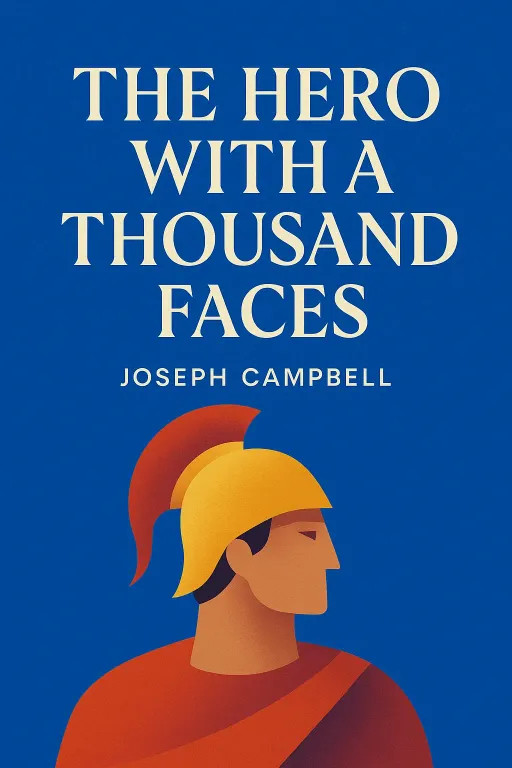
The Hero With a Thousand Faces
Joseph Campbell
"The Hero With a Thousand Faces" is the seminal work on comparative mythology by Joseph Campbell, a book that forever changed how we understand storytelling and the human experience. Campbell’s central thesis is that despite vast differences in time, culture, and geography, all great human myths share a single, fundamental structure: the Monomyth. Campbell maps this universal narrative—known as the Hero's Journey—through three distinct stages: Separation, Initiation, and Return. The hero ventures forth from the world of common day into a region of supernatural wonder, encounters fabulous forces (the "Road of Trials"), wins a decisive victory, and comes back with the power to bestow boons on their fellow man. Drawing heavily on the depth psychology of Carl Jung, Campbell interprets these myths not merely as adventure stories, but as metaphors for the psychological journey toward self-actualization. Famous for inspiring George Lucas to create Star Wars, this book is a vital guide for writers, artists, and anyone seeking to understand the spiritual potential of their own life. It leaves readers with Campbell's most enduring advice: "Follow your bliss."

Waking Up
Sam Harris
"Waking Up" is a bridge between two seemingly incompatible worlds: rigorous scientific skepticism and the profound experiences of spiritual life. Written by neuroscientist and philosopher Sam Harris—famously known as one of the "Four Horsemen" of New Atheism—this book argues that there is more to understanding reality than just grasping the physical laws of the universe, but that we do not need religion to access it. Harris contends that spirituality is a matter of consciousness, not creed. His central thesis challenges the feeling most of us have of being a "self"—an ego or passenger residing inside our heads, looking out at the world. Drawing on both neuroscience and the contemplative traditions of the East (specifically Dzogchen and Vipassana), he argues that this "self" is an illusion, and the source of much of our psychological suffering. The book serves as a rational guide to meditation, framing it not as a relaxation technique, but as a tool for empirical investigation into the nature of one's own mind. "Waking Up" invites secular readers to reclaim the wisdom of contemplative practice, proving that it is possible to be spiritual without being religious, and to find a deep sense of peace by simply waking up to the reality of the present moment.

Guns, Germs, and Steel
Jared Diamond
"Guns, Germs, and Steel" is a Pulitzer Prize-winning transdisciplinary work by geographer and physiologist Jared Diamond. It dismantles racist theories of history to answer a deceptively simple question posed to the author by a politician in New Guinea: “Why is it that you white people developed so much cargo and brought it to New Guinea, but we black people had little cargo of our own?” Diamond’s answer lies not in biology, but in geography. He argues that Eurasian civilizations conquered the world because they were the lucky beneficiaries of the best environment. They had access to the most domesticatable plants (wheat, barley) and animals (cows, pigs, horses), which allowed for food surpluses. This density enabled the rise of specialized classes—soldiers to wield steel weapons and bureaucrats to organize empires. Crucially, close proximity to livestock bred lethal germs (like smallpox and measles) within Eurasian populations, giving them immunity while wiping out indigenous peoples who had never encountered them. Diamond also highlights the East-West axis of Eurasia, which allowed these crops and technologies to spread rapidly across similar climates, unlike the North-South orientation of the Americas and Africa. It is a unified history of the last 13,000 years, arguing that history followed different courses for different peoples because of differences in their environments, not their biology.

The Origins of Political Order
Francis Fukuyama
An exploration of the historical origins of political institutions, from prehuman times to the eve of the French and American revolutions. This volume delves into the emergence of the state, the rule of law, and accountable government, examining the factors that drive political development and decay across different societies and historical periods.
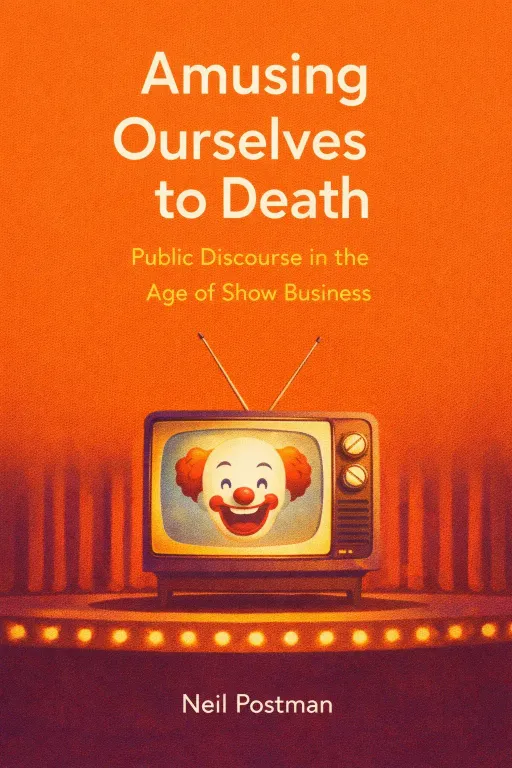
Amusing Ourselves to Death
Neil Postman
In "Amusing Ourselves to Death: Public Discourse in the Age of Show Business," Neil Postman presents a compelling critique of modern media, arguing that its emphasis on entertainment undermines serious public discourse. Drawing a contrast between the dystopian visions of George Orwell and Aldous Huxley, Postman suggests that Huxley's vision of a society controlled by pleasure and triviality is more relevant to contemporary culture. The book explores how the shift towards a television-dominated culture transforms all forms of communication into entertainment, using Las Vegas as a metaphor for this phenomenon. Readers will embark on a historical journey, examining the evolution of communication from oral traditions to print, and its impact on how societies define truth and knowledge. The book delves into the profound influence of the printed word on American culture, highlighting the "Age of Exposition" and the rationality fostered by print-based discourse. Through insightful analysis and historical context, "Amusing Ourselves to Death" challenges readers to consider the ways in which media shapes their understanding of the world and the potential consequences for public life. The Twentieth Anniversary Edition includes reflections from Neil Postman's son, Andrew Postman, on the book's enduring relevance in the age of digital technologies.
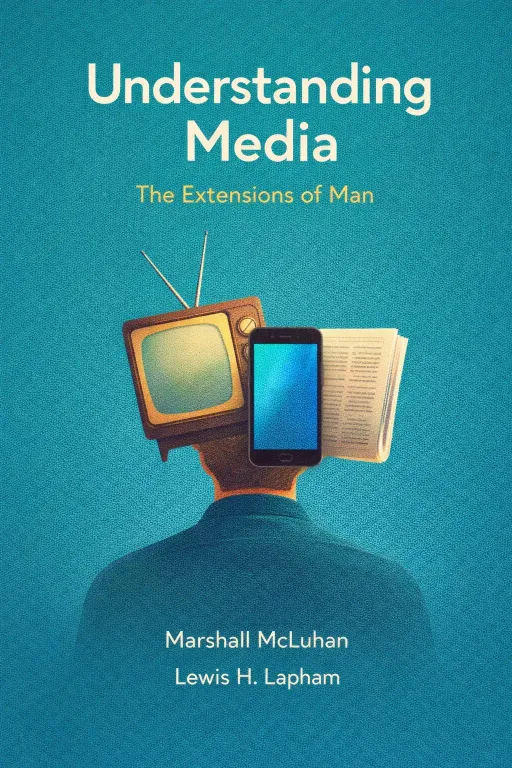
Understanding Media
Marshall McLuhan
"Understanding Media: The Extensions of Man" by Marshall McLuhan is a seminal work in media studies, communication theory, and cultural analysis. The book introduces McLuhan's groundbreaking ideas about how media technologies shape human perception, understanding, and social organization. It challenges readers to look beyond the content of media and consider the profound effects of the medium itself. Readers will explore McLuhan's key concepts, including "the medium is the message," and the distinction between "hot" and "cool" media, understanding how these classifications impact audience participation and psychological engagement. The book delves into the phenomenon of media reversal, where technologies, when pushed to their extremes, transform into their opposites, and examines the human tendency to become entranced by technological extensions, using the Narcissus myth as a central metaphor. Furthermore, it investigates the dynamic and disruptive energy created when different media forms intersect, leading to hybrid forms and accelerated social and psychic change. Through insightful analysis and provocative examples, "Understanding Media" encourages readers to critically examine the ways in which technology mediates our experiences and reshapes our world. It serves as an early warning system, alerting readers to the often-unseen consequences of technological advancements on both individual consciousness and collective culture.