

Technology & Science
The Model Thinker
Scott E. Page
Unlock the power of models and improve your reasoning with 'The Model Thinker.' This book introduces you to a diverse collection of models from various disciplines, providing you with the tools to understand complex phenomena, make better decisions, and navigate the modern world. Learn how to apply these models in your career, community, and personal life, and become a more effective and thoughtful contributor to society.
Genius
James Gleick
Explore the life and groundbreaking scientific contributions of Richard Feynman, the brilliant, iconoclastic physicist who reshaped our understanding of the universe. From his pivotal role in the Manhattan Project to his Nobel Prize-winning work on quantum electrodynamics, delve into the mind of a true genius and discover the man behind the science.
Lifespan
David A. Sinclair
A groundbreaking and provocative exploration of the science of aging, and how we can slow or even reverse the aging process to live longer, healthier lives. Drawing on decades of research, this book challenges conventional wisdom and offers a bold vision for the future of humanity.
The Code Breaker
Walter Isaacson
"The Code Breaker: Jennifer Doudna, Gene Editing, and the Future of the Human Race" by Walter Isaacson explores the revolutionary gene-editing technology known as CRISPR through the lens of the life and work of Jennifer Doudna, one of its key discoverers. The book begins with Doudna's involvement in developing CRISPR-based coronavirus testing during the COVID-19 pandemic and delves into the ethical considerations surrounding gene editing, particularly concerning germline modifications. It sets the stage for understanding the scientific breakthroughs that have shaped our understanding of life itself, comparing the gene revolution to those of the atom and the bit. Readers will trace the historical development of genetics, from Darwin and Mendel's foundational work to the discovery of DNA's structure by Watson and Crick, including the crucial contributions of Rosalind Franklin. The book follows Doudna's personal journey, from her childhood in Hawaii and her early interest in science sparked by "The Double Helix," to her education as a biochemist and her groundbreaking research on RNA. It also recounts the story of the Human Genome Project, driven by James Watson, and highlights RNA's vital role in implementing DNA's genetic code. The book further details Doudna's dedication to unraveling RNA's structure and function, leading to significant discoveries about ribozymes and their catalytic power. Readers will witness her collaboration with Jamie Cate and her commitment to humanitarian science, even in the face of personal loss. Through Doudna's story, the book illuminates the complex scientific, ethical, and personal dimensions of gene editing and its potential impact on the future of humanity.
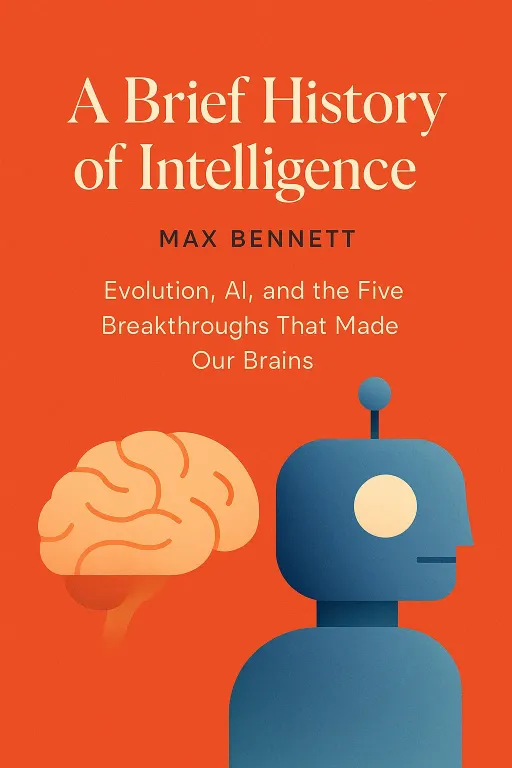
A Brief History of Intelligence
Max Bennett
Explore the evolution of intelligence from the first brains to modern AI. This book uncovers the five major breakthroughs that shaped the human brain, drawing parallels between neuroscience and artificial intelligence. Discover how understanding the brain's evolutionary journey can provide insights into creating human-like AI and understanding the nature of human intelligence itself.
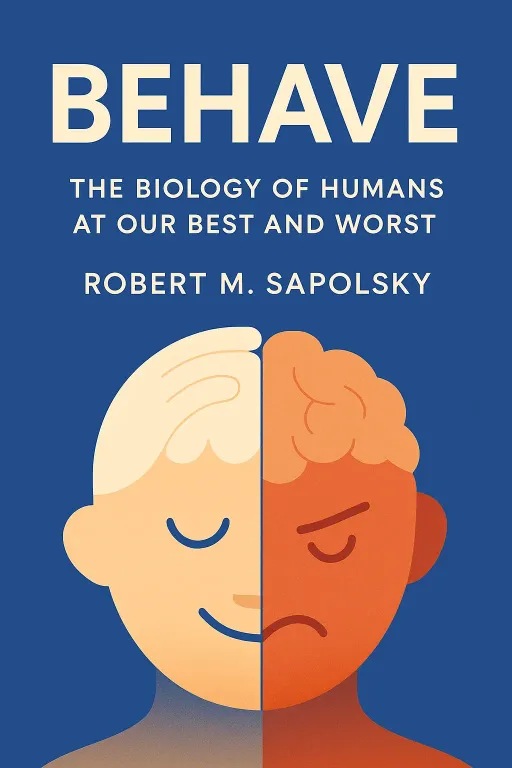
Behave: The Biology of Humans at Our Best and Worst
Robert M. Sapolsky
"Behave" is a magisterial synthesis of human behavior, written by Stanford neurobiologist and primatologist Robert Sapolsky. It attempts to answer a single, massive question: Why do we do the things we do? Sapolsky rejects the idea that any single factor—be it a gene, a hormone, or a childhood trauma—can explain our actions. Instead, he offers a nuanced, multifactorial explanation rooted in the phrase: "It depends." The book is structured as a reverse-chronological journey through time. To explain a specific behavior (like pulling a trigger or touching an arm), Sapolsky looks at what happened in the brain one second before (neurobiology), what happened minutes before (sensory cues), hours before (hormones), and years before (adolescent development). He continues peeling back the layers to centuries past (cultural ancestors) and millennia past (evolutionary pressures). By connecting these disparate threads, Behave dismantles simplistic ideas about "nature vs. nurture." It is a humorous, humane, and incredibly dense exploration of violence, altruism, and the biology of "Us vs. Them," ultimately arguing that while our biology constrains us, it does not condemn us.
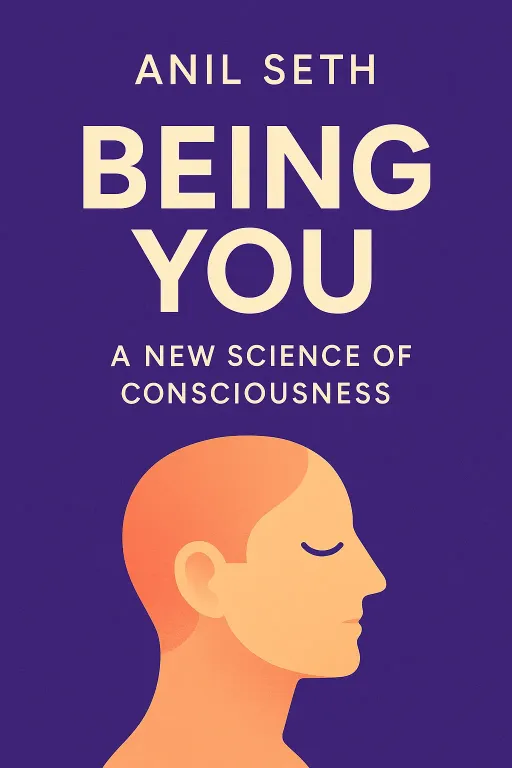
Being You
Anil Seth
"Being You" is a radical new theory of consciousness proposed by Anil Seth, one of the world's leading neuroscientists. Seth challenges the intuitive belief that our brains work like video cameras, passively recording the world around us. Instead, he argues that the brain is a "prediction machine" and that our entire reality is a "controlled hallucination." Seth posits that we do not perceive the world as it is, but as our brain expects it to be. Our sensory organs merely provide error correction for the brain's internal best guesses. When these hallucinations agree with reality, we call it perception; when they don't, we call it hallucination. Central to his theory is the concept of the "Beast Machine." Seth argues that consciousness is not software running on a computer-like brain, but a biological phenomenon deeply rooted in the body's drive to stay alive. Our experiences of "self"—and emotions—are fundamentally linked to interoception (sensing the internal state of the body). Being You offers a biological basis for human experience, suggesting that we are conscious not in spite of our animal nature, but precisely because of it.
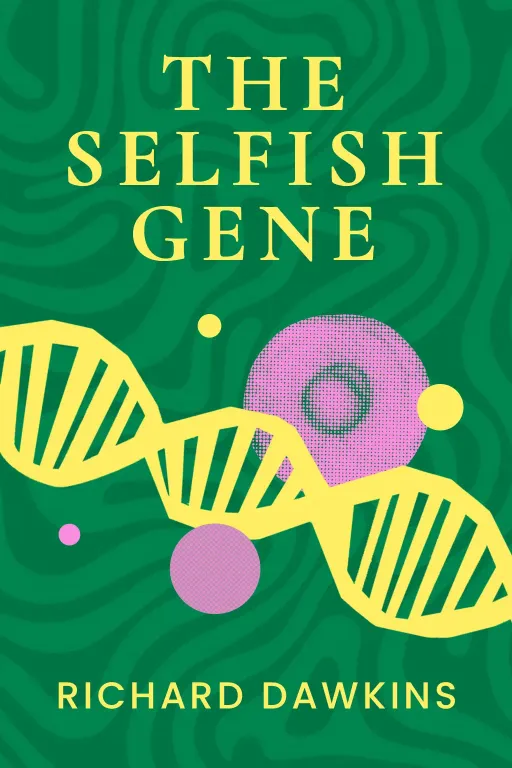
The Selfish Gene
Richard Dawkins
"The Selfish Gene" is a landmark work of science writing that permanently altered our view of evolution. Written by ethologist Richard Dawkins, it asserts that the fundamental unit of natural selection is not the species or the individual, but the gene itself. Dawkins argues that living organisms, including humans, are essentially clumsy "survival machines" built by gene colonies to ensure their own propagation. From this perspective, behaviors that seem altruistic are actually successful strategies for gene survival. For instance, an individual might sacrifice itself to save relatives who carry copies of the same genetic code, ensuring the survival of the genes even if the specific "vehicle" perishes. The book is also famous for introducing the concept of the "meme" to explain human culture. Dawkins proposes that ideas, tunes, and catchphrases replicate and evolve in a pool of human minds much like genes do in the biological pool. Lucid and powerful, The Selfish Gene remains a pivotal text for understanding why life behaves the way it does.