Technology & Science

Material World
Ed Conway
Ed Conway's "Material World: A Substantial Story of Our Past and Future" explores the surprising and profound impact of essential materials on human civilization. The book delves into the history, economics, science, and technology surrounding six key substances: sand, salt, iron, copper, oil, and lithium. Each material is examined in detail, revealing its multifaceted nature and its critical role in shaping our past, present, and future. Readers will embark on a journey through time and across industries, discovering how these materials have influenced everything from ancient societies to modern technological advancements and green energy transitions. The book promises to illuminate the hidden connections between these fundamental elements and the course of human history, offering a new perspective on the world around us. By exploring the extraction, properties, and significance of each material, "Material World" provides a comprehensive understanding of their impact on global geopolitics, environmental sustainability, and the future of our planet.

The Story of the Human Body
Daniel Lieberman
"The Story of the Human Body" is a sweeping evolutionary history written by Daniel Lieberman, chair of the Department of Human Evolutionary Biology at Harvard. It answers a fundamental question: If natural selection is so powerful, why are we so prone to chronic disease? Lieberman argues that while we have evolved to be upright, endurance-adapted survival machines, we are currently living in an environment for which we were never designed. This concept is known as the "Mismatch Hypothesis." Lieberman explains that our bodies are adapted for the Stone Age—a life of scarcity and intense physical activity. However, cultural evolution (farming, industry, and technology) has moved faster than biological evolution. We now inhabit a world of super-abundant calories and sedentary comfort. The result is a plague of "dysevolution"—diseases like type 2 diabetes, heart disease, and osteoporosis that are rare in hunter-gatherer societies but rampant in the modern world. We evolved to crave sugar and conserve energy because those traits once ensured survival; now, they ensure illness. The Story of the Human Body is a lucid, scientific guide that argues we must change our environment, not just our habits, to align with our evolutionary legacy.

The Selfish Gene
Richard Dawkins
"The Selfish Gene" is a landmark work of science writing that permanently altered our view of evolution. Written by ethologist Richard Dawkins, it asserts that the fundamental unit of natural selection is not the species or the individual, but the gene itself. Dawkins argues that living organisms, including humans, are essentially clumsy "survival machines" built by gene colonies to ensure their own propagation. From this perspective, behaviors that seem altruistic are actually successful strategies for gene survival. For instance, an individual might sacrifice itself to save relatives who carry copies of the same genetic code, ensuring the survival of the genes even if the specific "vehicle" perishes. The book is also famous for introducing the concept of the "meme" to explain human culture. Dawkins proposes that ideas, tunes, and catchphrases replicate and evolve in a pool of human minds much like genes do in the biological pool. Lucid and powerful, The Selfish Gene remains a pivotal text for understanding why life behaves the way it does.

Being You
Anil Seth
"Being You" is a radical new theory of consciousness proposed by Anil Seth, one of the world's leading neuroscientists. Seth challenges the intuitive belief that our brains work like video cameras, passively recording the world around us. Instead, he argues that the brain is a "prediction machine" and that our entire reality is a "controlled hallucination." Seth posits that we do not perceive the world as it is, but as our brain expects it to be. Our sensory organs merely provide error correction for the brain's internal best guesses. When these hallucinations agree with reality, we call it perception; when they don't, we call it hallucination. Central to his theory is the concept of the "Beast Machine." Seth argues that consciousness is not software running on a computer-like brain, but a biological phenomenon deeply rooted in the body's drive to stay alive. Our experiences of "self"—and emotions—are fundamentally linked to interoception (sensing the internal state of the body). Being You offers a biological basis for human experience, suggesting that we are conscious not in spite of our animal nature, but precisely because of it.

Behave: The Biology of Humans at Our Best and Worst
Robert M. Sapolsky
"Behave" is a magisterial synthesis of human behavior, written by Stanford neurobiologist and primatologist Robert Sapolsky. It attempts to answer a single, massive question: Why do we do the things we do? Sapolsky rejects the idea that any single factor—be it a gene, a hormone, or a childhood trauma—can explain our actions. Instead, he offers a nuanced, multifactorial explanation rooted in the phrase: "It depends." The book is structured as a reverse-chronological journey through time. To explain a specific behavior (like pulling a trigger or touching an arm), Sapolsky looks at what happened in the brain one second before (neurobiology), what happened minutes before (sensory cues), hours before (hormones), and years before (adolescent development). He continues peeling back the layers to centuries past (cultural ancestors) and millennia past (evolutionary pressures). By connecting these disparate threads, Behave dismantles simplistic ideas about "nature vs. nurture." It is a humorous, humane, and incredibly dense exploration of violence, altruism, and the biology of "Us vs. Them," ultimately arguing that while our biology constrains us, it does not condemn us.

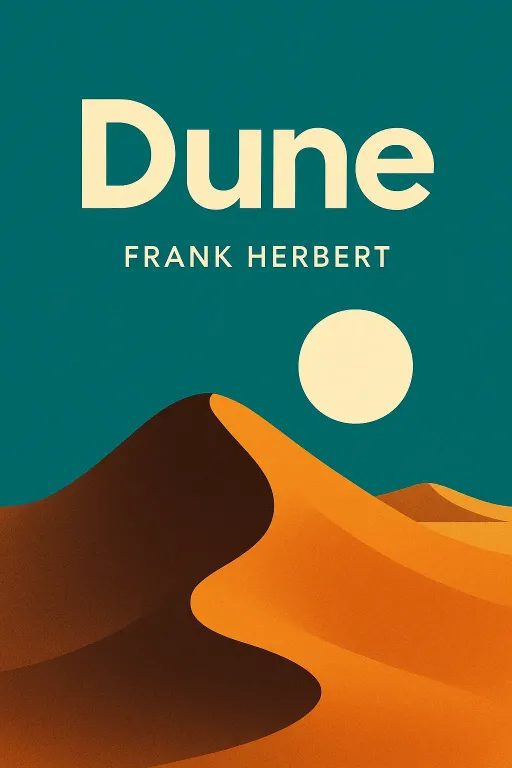
Dune
Frank Herbert
In the far future, on the desert planet Arrakis, a young man named Paul Atreides is caught up in a complex web of political intrigue and ecological disaster as his family takes control of the planet's valuable spice melange. This is only the beginning of his journey.
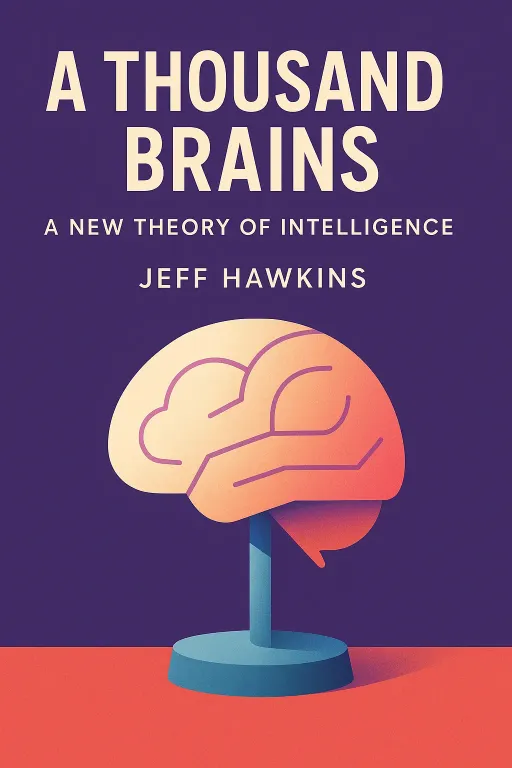
A Thousand Brains
Jeff Hawkins
Explore a groundbreaking new theory of intelligence that explains how the brain works and how truly intelligent machines can be built. Delve into the neocortex, reference frames, and the implications for machine intelligence and the future of humanity.
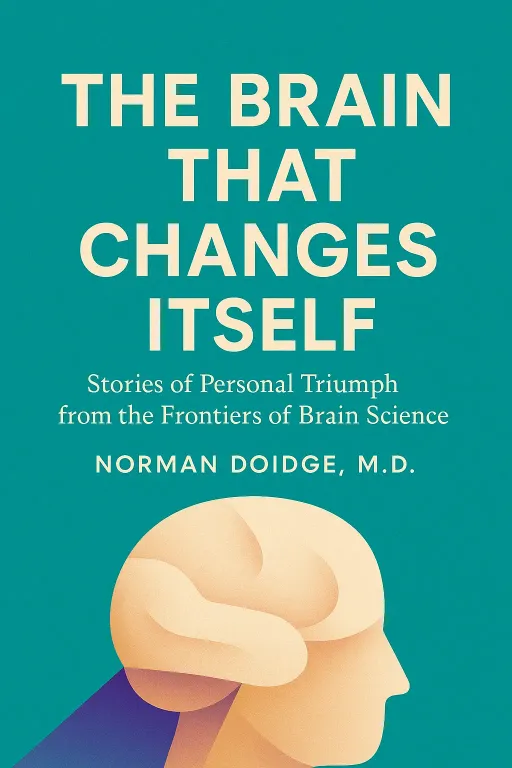
The Brain That Changes Itself
Norman Doidge
Explore the revolutionary discovery that the human brain can change itself through the stories of scientists, doctors, and patients who have experienced astonishing transformations. Without operations or medications, they have tapped into the brain's ability to reorganize and heal, challenging the long-held belief that brain anatomy is fixed.