

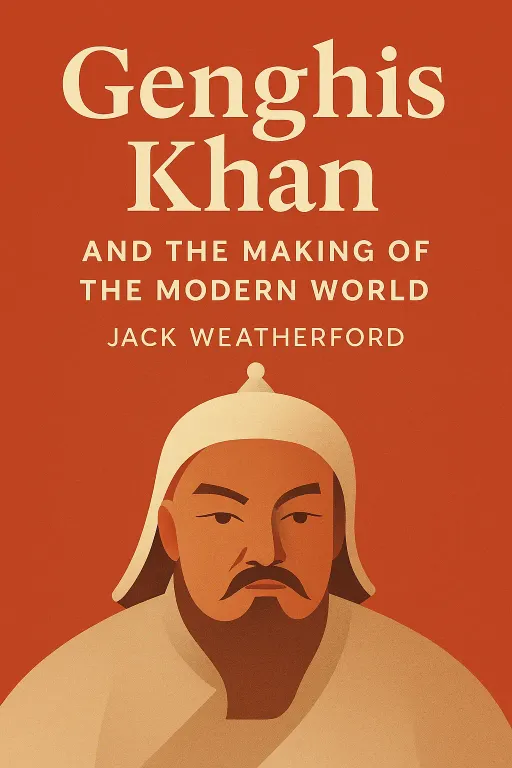
Genghis Khan and the Making of the Modern World
Jack Weatherford
An epic narrative that unveils the profound influence of Genghis Khan and the Mongol Empire on the shaping of the modern world, challenging conventional perceptions and revealing their surprising contributions to global civilization.
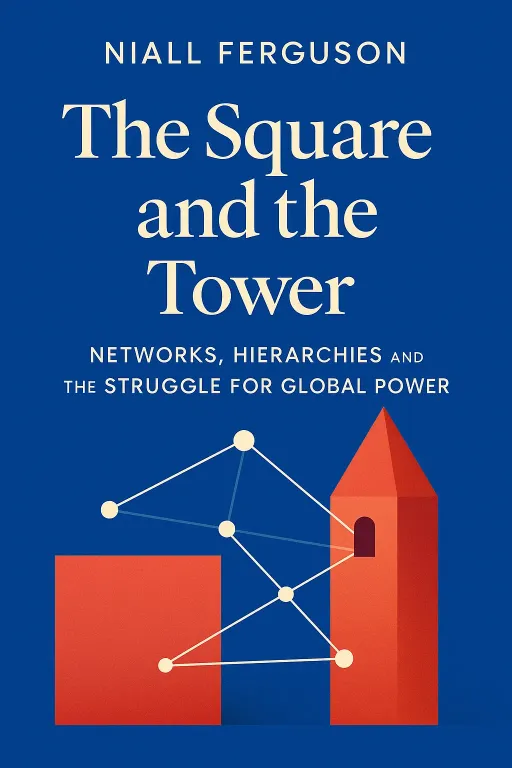
The Square and the Tower
Niall Ferguson
A fascinating exploration of the age-old conflict between networks and hierarchies, and how this tension has shaped the course of history from the Illuminati to the present day. Discover how networks challenge established power structures and the implications for our increasingly interconnected world.
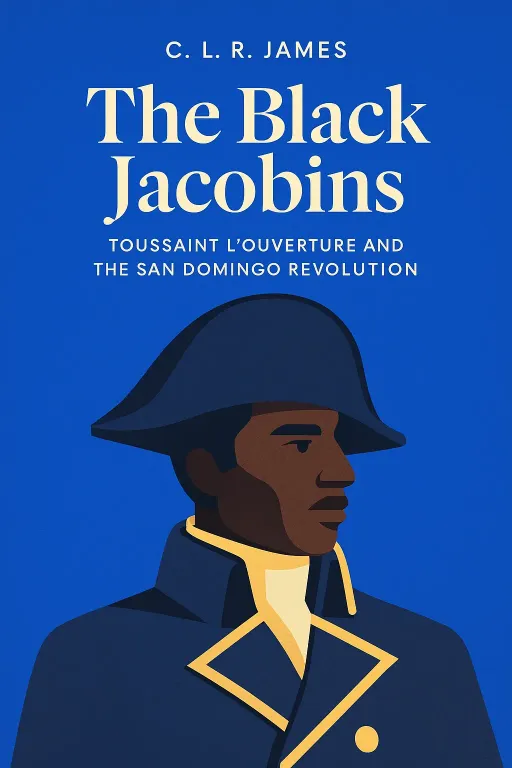
The Black Jacobins
C. L. R. James
A groundbreaking historical account of the Haitian Revolution, focusing on the leadership of Toussaint L'Ouverture and the struggle of enslaved people for freedom and equality. It explores the complex dynamics of race, class, and revolution in the context of the French colonial empire.
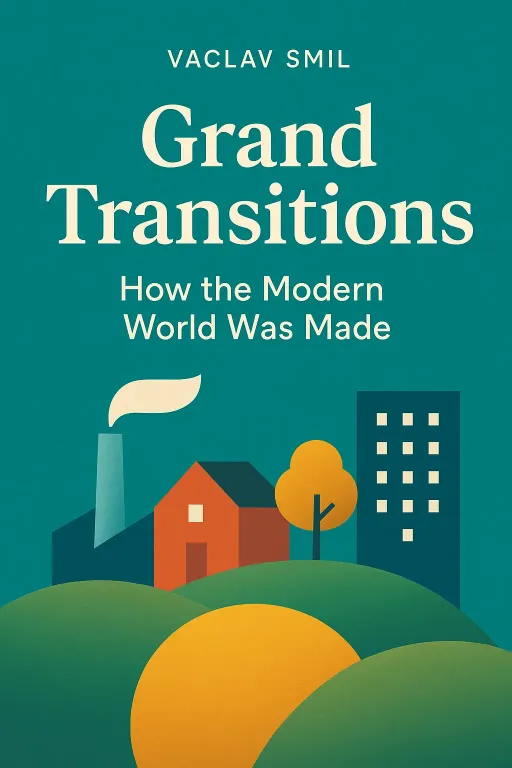
Grand Transitions
Vaclav Smil
An interdisciplinary inquiry into the five fundamental transitions (population, agriculture, energy, economies, and environments) whose interactions have created the modern world. The book recounts how we got to this point in human evolution, how the grand transitions brought about today’s quotidian realities, which are so far beyond yesterday’s imaginations—yet whose benefits are still to reach billions of people in less privileged societies even as the advances we have already achieved imperil the integrity of the biosphere.
Sapiens: A Brief History of Humankind
Yuval Noah Harari
Explore the epic history of humankind, from the Stone Age to the present day. Yuval Noah Harari examines how Homo sapiens came to dominate the world, delving into the cognitive, agricultural, and scientific revolutions that shaped our species and its impact on the planet. A thought-provoking journey through the human story.
Guns, Germs, and Steel
Jared Diamond
"Guns, Germs, and Steel" is a Pulitzer Prize-winning transdisciplinary work by geographer and physiologist Jared Diamond. It dismantles racist theories of history to answer a deceptively simple question posed to the author by a politician in New Guinea: “Why is it that you white people developed so much cargo and brought it to New Guinea, but we black people had little cargo of our own?” Diamond’s answer lies not in biology, but in geography. He argues that Eurasian civilizations conquered the world because they were the lucky beneficiaries of the best environment. They had access to the most domesticatable plants (wheat, barley) and animals (cows, pigs, horses), which allowed for food surpluses. This density enabled the rise of specialized classes—soldiers to wield steel weapons and bureaucrats to organize empires. Crucially, close proximity to livestock bred lethal germs (like smallpox and measles) within Eurasian populations, giving them immunity while wiping out indigenous peoples who had never encountered them. Diamond also highlights the East-West axis of Eurasia, which allowed these crops and technologies to spread rapidly across similar climates, unlike the North-South orientation of the Americas and Africa. It is a unified history of the last 13,000 years, arguing that history followed different courses for different peoples because of differences in their environments, not their biology.
America's Shakespeare
James Shapiro
Explore the intriguing relationship between Shakespeare's works and American history, revealing how the plays have been interpreted and used to reflect and confront the nation's deepest divisions. From racial tensions to political conflicts, discover how Shakespeare's timeless themes continue to resonate in a divided America.
An Emancipation of the Mind
Matthew Stewart
This book offers a groundbreaking intellectual history of the American struggle over slavery, revealing how radical European philosophy, particularly German thought, profoundly influenced key figures like Frederick Douglass, Abraham Lincoln, and Theodore Parker. It challenges conventional narratives by exposing the deep complicity of American Christianity in perpetuating slavery and highlighting the 'infidelity' of abolitionists. Through an examination of the 'worldwide commerce in ideas' and the politico-theological crisis of the era, the book argues that the Civil War was not merely a conflict over states' rights but a culmination of a global intellectual movement to refound America on principles of universal freedom and reason.