Navigating Uncertainty with Integrity: A Leader's Dual Compass
Golden Hook & Introduction
SECTION
Nova: Most leaders think crisis management starts when chaos hits. They wait for the storm. But what if I told you the truly great ones are already halfway through that crisis before it even begins? And the other half, the part that seals their legacy, is about how they act when no one's looking.
Atlas: Whoa, Nova, that's a bold claim. Halfway through before it begins? Sounds like a superpower. Are we talking about crystal balls or just really good spreadsheets? Because for our listeners who are constantly putting out fires, that idea might feel a little... aspirational.
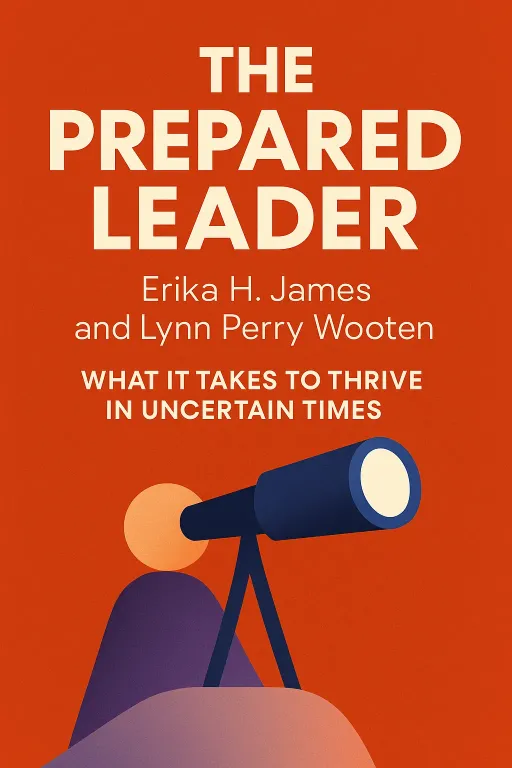
Nova: Not aspirational, Atlas, foundational. Today, we're blending two powerful leadership philosophies that, together, create this kind of strategic foresight and unwavering ethical core. We're talking about "The Prepared Leader" by Erika H. James and Lynn Perry Wooten, and "The High Road" by the legendary John C. Maxwell.
Atlas: Two titans! I know Maxwell's work is practically leadership gospel for so many, but tell me more about "The Prepared Leader."
Nova: Well, Erika H. James, for one, is a trailblazer – the first African-American dean of an Ivy League business school, Wharton. Her insights come from a truly unique vantage point, shaping leaders in diverse and often turbulent environments. She and Wooten argue that true resilience isn't just bouncing back; it's about anticipating the bounce, and even the fall, before it happens.
Atlas: That makes sense. For anyone driven by developing others and seeking impact, understanding that proactive edge is huge. It's about building capacity, not just reacting to catastrophe.
Nova: Exactly. And Maxwell, with his decades of wisdom, reminds us that even with the best preparation, the journey is meaningless without a strong moral compass. He champions ethical conduct and respect, even amidst division, arguing that internal integrity is the bedrock upon which all external success is built.
Atlas: So we're talking about the ultimate leadership dual compass: one needle pointing to future challenges, the other to unshakeable values. I’m ready. Where do we begin?
Proactive Preparedness & Resilience
SECTION
Nova: Let's start with that first needle, the one from "The Prepared Leader." The core idea here is strategic foresight. It’s about moving beyond reactive crisis management to proactive scenario planning. Most organizations wait for a problem to hit them over the head. James and Wooten suggest we should be looking for the "weak signals" long before they become deafening alarms.
Atlas: Weak signals? Like a faint whisper of a storm on the horizon when everyone else is still enjoying the sunshine? How do you even hear those whispers when the daily grind is already so loud?
Nova: It requires a shift in mindset, and a deliberate practice. Think of it like a "pre-mortem." Instead of a post-mortem where you analyze what went wrong, a pre-mortem asks: "Imagine it's a year from now, and our biggest project has failed spectacularly. What went wrong?" This forces you to identify potential pitfalls before they materialize.
Atlas: That sounds rough, but also incredibly smart. I imagine a lot of our listeners, especially those focused on strategic planning, are always trying to get ahead. But what does that look like in practice? Can you give us an example?
Nova: Absolutely. Imagine a tech company a decade ago. They saw the early signs of increasing data regulations and consumer privacy concerns – weak signals, right? While competitors focused solely on rapid growth, this company invested heavily in building a robust, privacy-by-design infrastructure and a transparent communication protocol for data handling. They even ran simulated data breach scenarios, like a fire drill for their digital assets.
Atlas: So they were essentially preparing for a crisis that hadn't even clearly defined itself yet.
Nova: Precisely. Fast forward a few years. A smaller, but significant, data incident occurs. Because they had already invested in superior cybersecurity, had a clear communication plan, and had even practiced their response, they were able to contain the breach quickly, communicate openly with their customers, and recover with minimal reputational damage. Meanwhile, other companies, caught flat-footed by similar incidents, faced massive fines, public outrage, and plummeting stock prices. Their proactive investment wasn't just about security; it was about building trust and maintaining long-term viability.
Atlas: That's a perfect example of what you meant by being "halfway through the crisis before it even begins." For our listeners who are navigating complex teams and trying to develop future leaders, how do they instill this kind of foresight in their own organizations? It can feel overwhelming to predict everything.
Nova: It's not about predicting everything; it's about cultivating a "challenge network" and diverse perspectives. Encourage dissent, invite outside experts, and actively seek out people who will question assumptions. James and Wooten emphasize that leaders need to foster an environment where bad news travels fast and where people aren't afraid to point out potential icebergs. It's about designing a system that makes those weak signals audible.
Atlas: So, it's not just the leader's job to be the oracle, but to build an organizational culture that collectively scans the horizon. That's a powerful shift.
Ethical Leadership & Cultivating Trust
SECTION
Nova: And while preparing for the external storm is crucial, what about the internal climate? Because a ship, no matter how sturdy, will sink if its crew turns on each other. This naturally leads us to John C. Maxwell's "The High Road," which reminds us that integrity and ethical conduct aren't just nice-to-haves; they are the invisible infrastructure of sustainable leadership.
Atlas: The invisible infrastructure. I like that. But Nova, in a world that often rewards ruthless tactics or quick wins, isn't taking "the high road" sometimes seen as naive? Especially when you're trying to achieve ambitious goals or, for our visionary leaders, trying to align vision with action.
Nova: That's the common misconception, isn't it? Maxwell would argue that short-term ruthlessness might get you a quick victory, but it erodes the very foundation of trust and respect that allows for long-term influence. He posits that true leadership is about leading people, not just them. It’s about building a legacy, not just hitting quarterly targets.
Atlas: Can you give an example of how that plays out in a tough situation? Because it's easy to be ethical when things are going well.
Nova: Exactly. Let's take a non-profit organization facing significant budget cuts, a truly difficult situation. One leader, driven by expediency, makes unilateral decisions, cutting programs and staff behind closed doors, hoping to present a "done deal" to avoid pushback. The outcome? Immediate resentment, low morale, and a mass exodus of key talent, even among those who weren't cut. The organization survives financially, but its spirit and capacity are severely damaged.
Atlas: That sounds like a recipe for disaster in terms of developing future leaders. You've just taught them that transparency and trust are optional.
Nova: Precisely. Now, imagine another leader in the same situation. This leader chooses transparency from day one. They share the grim financial realities with the entire team, involve them in difficult discussions about potential solutions, and prioritize ethical treatment even when difficult decisions like downsizing are made. They communicate openly about certain choices are being made and they will support those affected.
Atlas: That's a much harder path, I imagine. It requires vulnerability.
Nova: It does. But the outcome is dramatically different. While painful, the team understands the necessity. They might not like the decisions, but they respect the process and the integrity of their leader. Morale, though challenged, remains intact, and remaining staff feel a renewed sense of loyalty and commitment. They emerge from the crisis with their culture strengthened, not shattered, because trust was maintained. Maxwell would say that's the "high road" – it’s not just about avoiding bad things, but actively building good things, like trust and respect, even when it's hard.
Atlas: That's actually really inspiring. It shows that true strength isn't about being unyielding, but about being unwavering in your values. For our listeners who are striving to be empathetic catalysts, how can they actively foster this culture of trust daily, beyond just crisis moments?
Nova: Maxwell emphasizes the power of small, consistent actions. It's about listening deeply, admitting mistakes, giving credit generously, and always treating people with dignity, regardless of their position. It's about aligning your words with your actions, day in and day out. That consistency builds a reservoir of trust that becomes invaluable when the storms inevitably arrive.
Synthesis & Takeaways
SECTION
Nova: So, bringing these two powerful ideas together, Atlas. "The Prepared Leader" by James and Wooten gives you the map and helps you build a sturdy vessel for the future. Maxwell's "The High Road" provides the compass and ensures you have a unified, trusting crew.
Atlas: I see it. True resilience isn't just about external defenses or clever strategies. It's about an internal cohesion built on unwavering trust and integrity. Without that internal strength, even the best plans can unravel.
Nova: Exactly. Leaders who master both preparedness and integrity create organizations that not only survive disruption but actually on it. They become magnets for talent, because people want to work for leaders who are both competent and ethical. They build a legacy of impact and trust, not just a list of achievements.
Atlas: That’s a powerful thought. For someone who wants to cultivate their team's growth and truly make an impact, these aren't just concepts; they're essential tools. Maybe the 20 minutes of focused learning our listeners schedule daily could be spent mapping out potential storms, and then reflecting on their internal compass. What kind of leader do I want to be the storm hits, not just it hits?
Nova: Precisely. It’s about building a future where your organization isn't just agile, but also has a soul. That's the mark of a truly visionary leader.
Atlas: Well said, Nova. This has been incredibly insightful.
Nova: My pleasure, Atlas. Always a journey with you.
Nova: This is Aibrary. Congratulations on your growth!