

Economics & Money
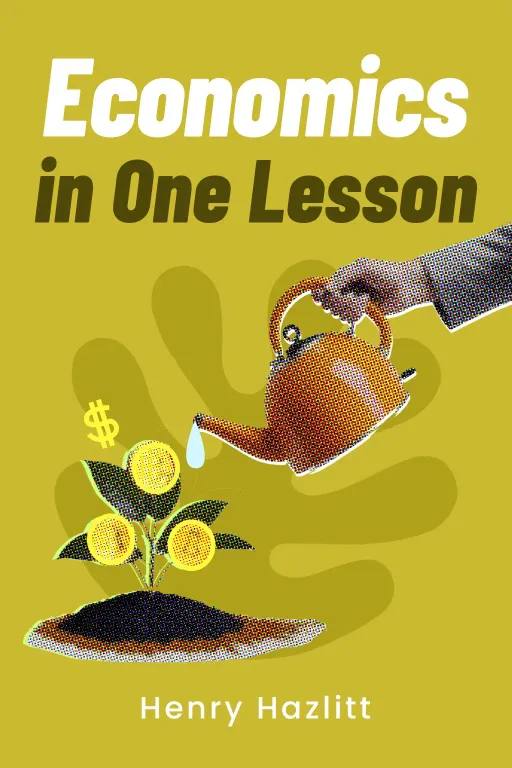
Economics in One Lesson
Henry Hazlitt
An enduring classic, this book dissects economic fallacies that have become prevalent, influencing government policies worldwide. It emphasizes the importance of considering the long-term effects of economic actions on all groups, not just the immediate consequences on a select few. A must-read for understanding basic economic principles and avoiding common pitfalls.
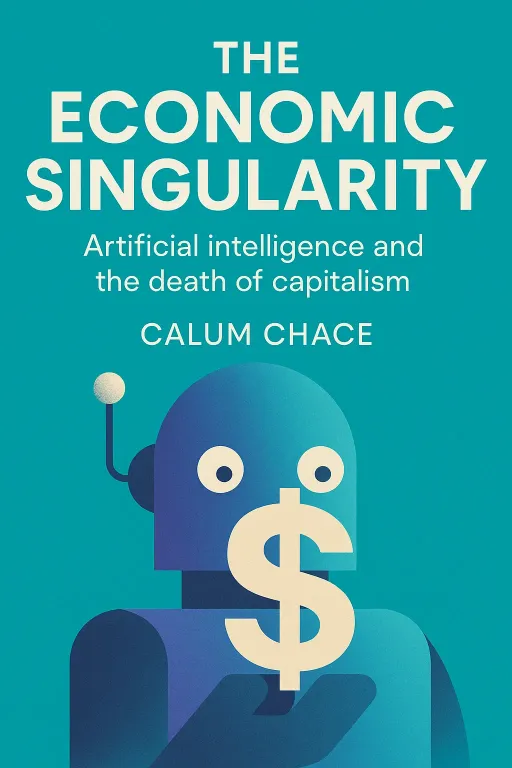
The Economic Singularity
Calum Chace
An exploration of how artificial intelligence and automation may lead to an economic singularity, potentially disrupting capitalism and requiring new economic models. The book examines the challenges and opportunities presented by technological unemployment and the need for innovative solutions like universal basic income to navigate this transition.
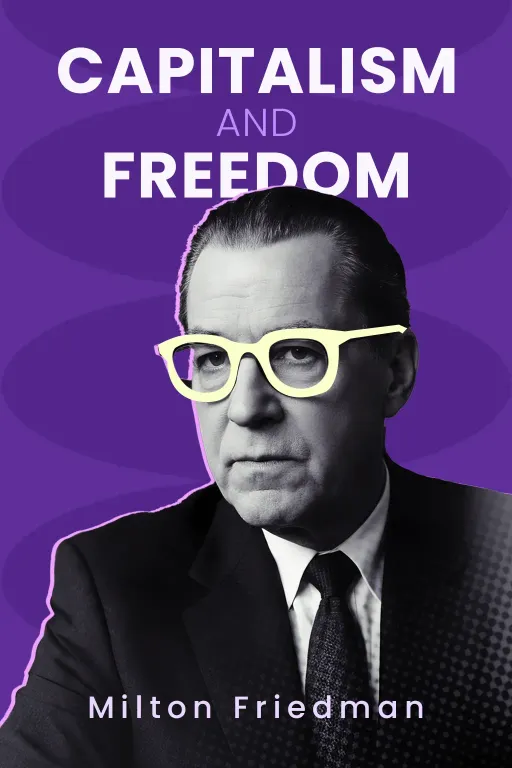
Capitalism and Freedom
Milton Friedman
A seminal work by Nobel laureate Milton Friedman, "Capitalism and Freedom" makes a case for competitive capitalism as a foundation for economic and political freedom. Friedman elegantly argues that economic freedom is not only an end in itself but also a necessary means to achieve political freedom, offering a compelling vision for a society dedicated to liberty.
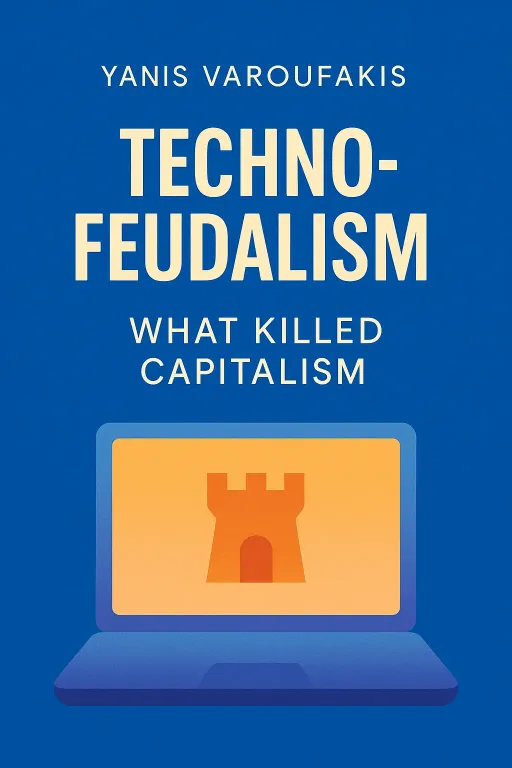
Technofeudalism
Yanis Varoufakis
A provocative exploration of how capitalism has been superseded by technofeudalism, where digital platforms function as fiefdoms and rent replaces profit, fundamentally altering our economies and societies. Discover how this shift impacts everything from global power dynamics to individual autonomy.
Why Nations Fail
Daron Acemoglu
Why Nations Fail by Daron Acemoglu and James A. Robinson is a sweeping explanation of why some countries achieve lasting prosperity while others remain trapped in poverty. Rejecting geography, culture, or ignorance as primary causes, the authors argue that the decisive factor is institutions—specifically whether political and economic systems are inclusive or extractive. Inclusive institutions protect property rights, enforce the rule of law, and create incentives for innovation and participation across society. Extractive institutions, by contrast, concentrate power and wealth in the hands of a few, stifling competition and blocking broad-based growth. Through vivid historical case studies—from North and South Korea to colonial Latin America, medieval Venice, and modern Africa—the book shows how small institutional differences can compound over centuries into vast gaps in wealth and stability. What makes Why Nations Fail influential is not just its ambition, but its clarity: prosperity is not accidental, nor is poverty inevitable. Economic success depends on political choices, power struggles, and the institutions they produce. For readers seeking a framework to understand global inequality, state failure, and long-run development, this book offers one of the most durable and widely debated explanations of our modern world.
The Hidden Wealth of Nations
Gabriel Zucman
An exposé of tax havens and their impact on global wealth inequality and democratic societies. Gabriel Zucman uncovers the hidden mechanisms of offshore finance, revealing the staggering amount of wealth concealed in tax havens and proposing concrete solutions for greater transparency and fairness in international taxation.
The Evolution of Money
David Orrell
Explore the fascinating history and future of money in this insightful book. From ancient credit systems to modern cybercurrencies, discover how money has shaped societies and continues to evolve in the digital age. Uncover the power dynamics, instabilities, and potential for new currency systems that could revolutionize our world.
Ours Was the Shining Future
David Leonhardt
A compelling exploration of the rise and fall of the American Dream, examining the economic, political, and cultural forces that have shaped the nation's trajectory over the past century. From the post-Depression era of shared prosperity to the current era of stagnation and inequality, this book uncovers the key factors that have driven the American experience, offering insights into how we can reclaim a brighter future.