

Stop Guessing, Start Building: The Guide to AI Product-Market Fit
Golden Hook & Introduction
SECTION
Nova: What if I told you the biggest reason AI projects fail isn't a lack of brilliant engineers, or cutting-edge algorithms, but something far more fundamental?
Atlas: My first thought is always the tech. So, you're saying it's not the code, but something else entirely?
Nova: Exactly, Atlas. And it's a truth laid bare in a book that's quickly becoming essential for anyone building in the AI space:. It's a relatively new guide, but it synthesizes decades of product wisdom, offering a fresh perspective on a problem that's costing companies billions.
Atlas: Intriguing. So, it's not just another tech book, but a bridge between product strategy and AI implementation, specifically for our AI builders and architects listening?
The AI Product-Market Fit Paradox: The "Working Backwards" and Continuous Discovery Mindset
SECTION
Nova: Precisely. The book argues that many AI projects are technically brilliant but utterly directionless, like a Ferrari stuck in traffic. The core issue? We often build we truly understand the problem. It's a profound disconnect with real-world needs.
Atlas: Oh, I know that feeling. It's like having a hammer and looking for a nail, instead of finding a problem and then asking if a hammer is even the right tool.
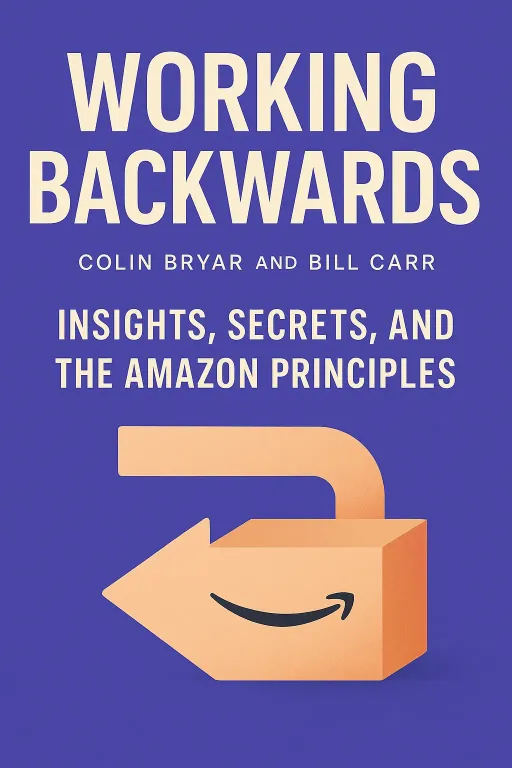
Nova: Exactly! And the book brings in powerful frameworks to combat this. First, it champions Amazon's "Working Backwards" principle, popularized by folks like Colin Bryar and Bill Carr. This isn't just a catchy phrase; it's a foundational strategy for complex product development.
Atlas: Hold on, Amazon's "Working Backwards"? That sounds like a paradox. How do you work backwards when you're trying to innovate something completely new with AI? Aren't you supposed to be looking forward?
Nova: It’s brilliant in its simplicity. Before they write a single line of code, before they even concept the technical architecture, Amazon drafts the for the finished product. Imagine announcing your AI solution to the world it exists.
Atlas: A press release? That sounds like marketing fluff. How does that help an engineer building a complex AI model? My first instinct as an architect is to dive into the technical specifications.
Nova: It forces clarity. What's the customer benefit? What problem does it solve? What's the 'aha!' moment? This isn't just about marketing; it's a rigorous validation exercise. It forces you to articulate the before you're lost in the technical weeds. It’s a way to ensure the AI isn't just cool or technically impressive, but genuinely and solves a real pain point.
Atlas: I see. So, instead of starting with a cool algorithm, you start with the customer's delight. That's a massive shift in mindset for a lot of builders, especially those who love the technical challenge for its own sake. It’s like designing a house from the feeling you want the occupants to have, rather than just the materials you have available.
Nova: It totally is. And it ties directly into the second critical insight from the book, drawing on Marty Cagan’s acclaimed work in "Inspired." Cagan emphasizes continuous discovery and validation. He argues that product teams must iterate on customer, not just features.
Atlas: Continuous discovery? That sounds like endless meetings. For an architect trying to build something tangible, that might feel like a delay in getting to the actual construction.
Nova: It’s the opposite of delay; it's acceleration. It means product teams are constantly interacting with potential users, understanding their struggles, and validating hypotheses. For AI, this is crucial because the capabilities are so vast and often abstract. You need to ensure your AI isn't just of doing something, but that doing that thing. You're constantly asking: 'Is this AI solution truly by a customer need, or just a cool tech demo?'
Atlas: So, it’s not about building a fancy neural network and then hoping someone finds a use for it. It's about finding a deep, persistent customer problem and then asking, 'Can AI solve better than anything else, and will people actually to use it?' That's a fundamental reorientation.
Nova: Exactly! And that continuous feedback loop, that constant pulse-check with your users, helps you pivot, refine, and ultimately build an AI product that customers genuinely need. It reduces wasted effort, minimizes the risk of technical debt on unused features, and drastically increases adoption. These aren't just theoretical concepts; they're battle-tested strategies that differentiate successful products from those that gather dust on a server. It’s about building AI that customers genuinely need, not just what engineers build.
Atlas: That's a powerful point. It’s about building a bridge between the incredible potential of AI and the very human problems it can solve. It feels like a way to prevent building a mansion on quicksand, ensuring the foundation is solid before you even pour the concrete.
Practical Application & Tiny Step
SECTION
Nova: And the book provides a tiny, yet incredibly impactful, step for anyone listening right now, for any pragmatist or architect who wants to apply this immediately.
Atlas: I'm all ears. For our listeners who are architects or pragmatists, they're always asking, "What's the I can do?" What's the tangible action?
Nova: For your next AI project, before you write a single line of code, before you even sketch out the architecture, before you even choose your framework, draft a one-page press release. Describe its launch, its core functionality, and most importantly, the customer benefits. Articulate it as if it's already a resounding success.
Atlas: A one-page press release. That’s tangible. So, it forces you to distill the ultimate impact and value proposition into something understandable, even for someone who isn't a technical expert. It's like you're pitching your future self, or your future customer, to clearly define the win.
Nova: Precisely. It’s a low-cost, high-leverage way to force clarity and validate assumptions. You start with the desired outcome, not the technical input. It's the ultimate reality check before you invest significant time and resources into building something that might not resonate. It also helps you articulate the "why" to stakeholders and potential users, making your vision much clearer from day one.
Atlas: I love that. It’s a proactive measure against what the book calls a "disconnect with real-world needs." It makes the abstract goal of 'impact' concrete, right at the start. It’s a fantastic way to ensure you're building something that truly matters.
Synthesis & Takeaways
SECTION
Nova: So, what we're really talking about today is shifting our perspective from 'What can AI do?' to 'What problem AI solve, and how will we know if it does?' It’s a profound reorientation.
Atlas: It's about building with purpose, not just proficiency. It's a call to deeply understand the 'why' behind our 'what.' For anyone building in AI, this isn't just a best practice; it's survival in a rapidly evolving, often over-hyped, landscape.
Nova: Absolutely. The book reminds us that true innovation isn't just about creating something new; it's about creating something new that matters, that solves a genuine human or business problem. It’s about rigorous validation, continuous discovery, and a relentless focus on the user. Without that, even the most groundbreaking AI risks becoming just another brilliant solution looking for a problem. It’s the difference between a technological marvel and a product that truly changes lives.
Atlas: That's actually really inspiring. It grounds the incredible potential of AI in real human needs, making it less about the technology itself and more about its profound application. It's about building solutions that genuinely elevate and improve lives, not just demonstrate technical prowess.
Nova: That's the goal. And for anyone looking to build AI with real impact, that one-page press release is your tiny step towards enormous clarity, ensuring your next project is a hit, not a miss.
Atlas: Fantastic advice. This has been an incredibly insightful discussion.
Nova: This is Aibrary. Congratulations on your growth!









