

Balancing Performance with Personal Integrity
Golden Hook & Introduction
SECTION
Nova: Atlas, quick game. Five words each. Jack Welch’s.
Atlas: Ruthless efficiency, top talent, results.
Nova: Ooh, solid. Now, Stephen Covey’s.
Atlas: Character first, then everything else.
Nova: And right there, my friend, is the beautiful tension we’re diving into today. Two titans of business thought, each with a profoundly different take on what makes individuals and organizations truly thrive.
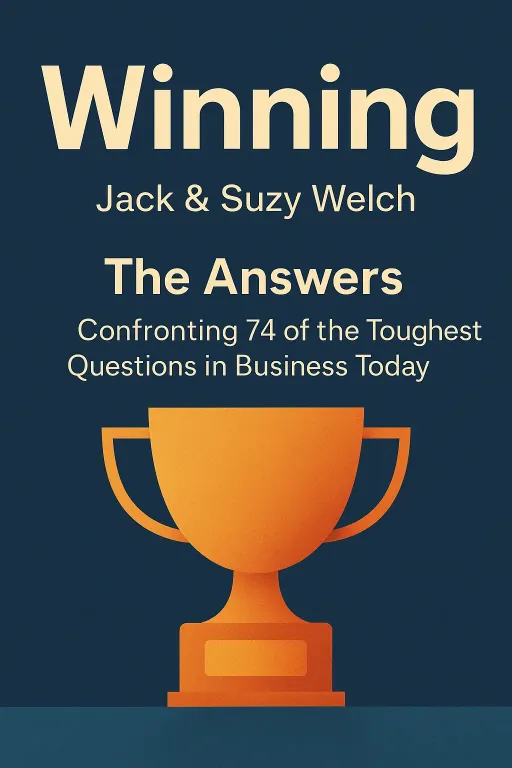
Atlas: Exactly. You’ve got Welch, whose book became practically a bible for corporate America, especially in the early 2000s. He was the CEO of GE, a legendary figure, and his ideas on differentiation—literally ranking employees and rewarding the best while letting go of the bottom—were incredibly influential, though not without their detractors.
Nova: Absolutely. Welch’s approach, often dubbed "rank and yank" by critics, was celebrated for driving unparalleled performance at GE, but it also sparked intense debate about its human cost and long-term sustainability. It was a philosophy born from a desire for relentless competitive advantage.
Atlas: And then you have Covey, whose has sold tens of millions of copies worldwide and continues to shape personal and professional development. It’s a book that emerged from his work as a management consultant and educator, synthesizing timeless principles into a holistic framework. It’s revered for its focus on internal change before external success.
Nova: Two very different architects of success. Today, we’re going to dissect their core philosophies and ask a crucial question: How do you balance the relentless pursuit of performance with the quiet, foundational work of building personal integrity and character? For any strategist, builder, or visionary out there, this isn't just theory; it's the bedrock of sustainable success.
The Relentless Pursuit of Performance: Jack Welch's Differentiation
SECTION
Nova: So let’s kick things off with Jack Welch and his concept of "differentiation." Imagine a corporate environment where clarity is king, and everyone knows exactly where they stand. Welch advocated for a system where you identify your top 20% of performers, your vital 70% in the middle, and your bottom 10%.
Atlas: Okay, but isn't that a bit… brutal? For someone trying to build resilient organizations and scalable success, that kind of system sounds like it could foster a lot of fear and instability.
Nova: That’s a common critique, and it's valid. Welch believed in radical candor. He argued that it’s actually to tell people where they stand, rather than letting them flounder. The top 20% were lavished with rewards, opportunities, and recognition. The middle 70% were coached, developed, and given every chance to improve. And the bottom 10%?
Atlas: They were managed out, right? Given the boot.
Nova: Precisely. His rationale was that keeping underperformers was a disservice to them, to the company, and to the top performers who carried the load. He saw it as a way to continuously raise the bar, to create a culture where mediocrity simply wasn't tolerated. He believed this constant culling was essential for a company to remain agile and dominant in the marketplace.
Atlas: I can see the strategic logic for driving short-term results and optimizing operations. You're ruthlessly cutting dead weight, freeing up resources, and motivating your stars. It’s a very clear, almost mechanical approach to performance. But what about the long-term impact on team dynamics? Does it build trust or erode it?
Nova: That’s where the debate truly heats up. Proponents would say it builds a meritocracy, where everyone knows hard work and excellence are truly valued. It creates a highly competitive, results-driven environment that can achieve incredible things. Think of GE under Welch, a sprawling conglomerate that became incredibly profitable and innovative for a time. He genuinely believed he was creating a high-performance machine.
Atlas: Right, like a finely tuned engine. But engines also need maintenance, and they can burn out. I’ve been thinking about how this plays out in real-world business models. If you're constantly looking over your shoulder, worried about being in that bottom 10%, does that foster collaboration and innovation, or does it encourage people to hoard information and focus only on their individual metrics?
Nova: That’s the critical question, isn't it? Welch’s system, when implemented poorly, could indeed lead to a cutthroat environment where internal competition overshadows collaboration. It could stifle risk-taking, because failure could land you in that bottom tier. The nuance Welch often stressed, but which was sometimes lost in translation, was that the differentiation had to be fair, transparent, and accompanied by robust development for the middle 70%. It wasn’t just about firing; it was about elevating everyone else.
Atlas: So it's about the as much as the. A system designed for clarity could, ironically, create a lot of ambiguity and anxiety if not managed with extreme care and integrity. It’s a strategic choice with massive cultural implications.
Building from Within: Stephen Covey's Private Victory and Character Foundation
SECTION
Nova: Which brings us beautifully to Stephen Covey, who offers a vastly different lens. Where Welch focused on external performance metrics and outcomes, Covey zoomed in on the internal architecture of the individual. He argued that true public success – in your career, your relationships, your impact – is fundamentally built on what he called the "Private Victory."
Atlas: In other words, before you can win externally, you have to win internally. That resonates with someone driven by growth and building efficient systems, because a system is only as good as the people operating it. But how does this "private victory" translate into tangible business results? For a visionary looking at financial acumen, how do these personal habits fuel sustainable growth?
Nova: That’s the genius of Covey. He outlines three habits that constitute the Private Victory: Be Proactive, Begin with the End in Mind, and Put First Things First. "Being Proactive" is about taking responsibility for your life, your choices, and your responses, rather than being a victim of circumstance. It’s about initiative, not just reacting to external stimuli.
Atlas: That makes sense. A leader who is constantly reactive is going to be incredibly inefficient. Proactivity sounds like a foundational element for any effective system.
Nova: Exactly. Then there’s "Begin with the End in Mind." This is about having a clear vision, a personal mission statement. Knowing what truly matters to you, what your core values are, and what you want your life and work to ultimately stand for. It's about defining your destination before you start the journey.
Atlas: So you're saying, for a business model innovator, this habit is like writing the business plan before you start coding? Or defining the company culture before you hire the first employee?
Nova: Precisely! It's about designing your life and your work with intentionality, rather than just drifting along. And finally, "Put First Things First." This is about disciplined execution, prioritizing what's truly important over what's merely urgent. It’s the habit of self-management, of aligning your daily actions with your deepest values and long-term vision.
Atlas: So, Covey is essentially saying that self-mastery, personal discipline, and a clear internal compass are prerequisites for any kind of lasting external success. It’s a character-based approach. But in a fast-paced market, where agility and rapid response are key, can you afford to spend all that time on introspection and character development?
Nova: That’s the core of the challenge. Covey would argue that you can't afford to. He believed that attempting to achieve public victories – like team success, market dominance, or financial wealth – without first establishing a strong foundation of personal character and self-mastery is like trying to build a magnificent house on a shaky foundation. It might look good for a while, but it will eventually crumble.
Atlas: That’s a great analogy. It suggests that while Welch's approach might deliver immediate, powerful results, Covey is talking about the kind of deep, sustainable growth that prevents burnout and fosters genuine resilience within an organization. It’s not just about what you, but who you that ultimately defines your impact.
Synthesis & Takeaways
SECTION
Nova: So, we have Welch, the master of external performance, pushing for differentiation and results. And Covey, the champion of internal character, laying the groundwork for personal integrity. The question for our listeners, for the strategists and builders out there, becomes: How do you integrate these two powerful philosophies?
Atlas: That’s the million-dollar question, isn't it? For someone focused on building resilient organizations and scalable success, it seems like you need both the clear performance metrics of Welch and the foundational character work of Covey. A high-performing team without integrity is a ticking time bomb. A highly principled team without clear performance goals might just be a very nice, ineffective group.
Nova: Exactly. The ultimate takeaway here, as the book content suggests, is to reflect on your own team culture. Does it prioritize short-term results at all costs, potentially creating a Welchian environment without the nuance? Or does it invest in the long-term character development of its members, understanding that true effectiveness springs from within, as Covey would argue?
Atlas: It’s a constant balancing act. You need to differentiate effectively, to reward your top talent and ensure accountability. But you also need to nurture the character and proactivity of every team member, so that the success you build is not just fast, but fundamentally strong and sustainable. It’s about building a system where people can thrive, not just survive.
Nova: And that's the strategic challenge: designing a culture where high standards aren't just met, but where they're met by people who are deeply committed, principled, and growing. It's about recognizing that the "Private Victory" isn't just for individuals; it's the collective strength of an organization.
Atlas: So, for our listeners, it's not about choosing one or the other. It’s about asking: How can we foster a culture that demands peak performance cultivates deep personal integrity? What small step can you take this week to bring more intentional character development into your performance discussions?
Nova: Precisely. It’s about understanding that while results are crucial, they are ultimately a byproduct of the people and the principles that drive them. This is Aibrary. Congratulations on your growth!









