The Art of Exceptional Guest Experiences
Golden Hook & Introduction
SECTION
Nova: Atlas, if I say "customer service," what's the first image that pops into your head? Give me a five-word review.
Atlas: Oh, I know that feeling. Hmm… "Automated menus, hold music, sigh."
Nova: Ha! Accurate, if a little bleak. And that's exactly why we need to talk about hospitality that goes beyond "service." Because today, we're diving into two books that redefine what it means to truly care for your guests, your clients, your community.
Atlas: You’re talking about moving past the transactional, right? Like, not just fixing a problem, but preventing one, or even creating delight?
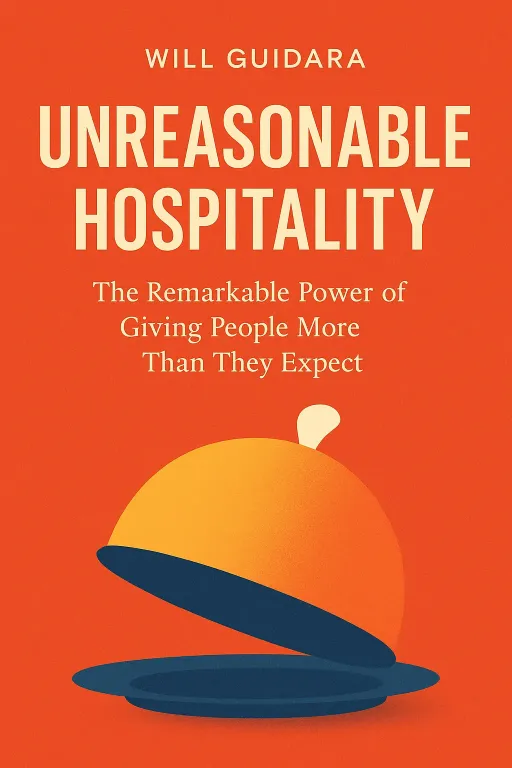
Nova: Exactly! We're exploring the philosophy of "unreasonable hospitality" from Will Guidara's groundbreaking book of the same name, and the meticulous systems behind "practical magic" as revealed in Ted Kinni's "Be Our Guest," which dissects Disney's legendary approach.
Atlas: So you're saying we're going from Michelin-starred dining to the Happiest Place on Earth? That's quite the spectrum.
Nova: It is! And the connection is crucial. Guidara, for example, took Eleven Madison Park from a respected but struggling restaurant to one of the world's best, earning three Michelin stars and top global rankings, not just through culinary excellence, but by making every guest feel truly seen and valued. His story of transforming that restaurant is legendary in the hospitality world.
Atlas: Wow. That's actually really inspiring. I imagine a lot of our listeners, especially those in leadership roles, are constantly looking for ways to elevate their team's impact beyond just meeting expectations. How do these two seemingly different philosophies—one about spontaneous generosity, the other about meticulous systems—actually converge?
Nova: That's the million-dollar question, Atlas. And it’s where the magic truly happens.
The Philosophy of Unreasonable Hospitality
SECTION
Nova: Let's start with Guidara and this idea of "unreasonable hospitality." It’s a mindset shift. He argues that service is about executing a transaction flawlessly—getting the order right, delivering on time. Hospitality, on the other hand, is about how you make people.
Atlas: I can see that. It's the difference between being efficient and being empathetic. But "unreasonable"? That sounds a bit out there. Like, are we talking about giving away the farm?
Nova: Not at all! What he means by "unreasonable" is going beyond what's expected, what's financially logical in the short term, to create an unforgettable emotional connection. It’s about generosity and anticipating unexpressed needs. Not just giving them what they ask for, but what they didn't even realize they wanted.
Atlas: Can you give an example? Like how does that actually play out in a high-pressure environment?
Nova: Absolutely. There's a famous story from Eleven Madison Park. A guest mentioned, almost in passing, how much he missed the hot dogs from a specific street vendor he used to frequent in New York. Later in the meal, a server appeared with a perfect, steaming hot dog from that very vendor.
Atlas: Whoa. That’s incredible. How did they even do that? Did someone just run out and buy one in the middle of a dinner service?
Nova: Precisely. A staff member left the restaurant, went to the vendor, bought the hot dog, and brought it back. This wasn't on the menu, it wasn't profitable, but it created a story that guest would tell for years. That’s unreasonable hospitality. It’s about making a memory, not just serving a meal.
Atlas: That gives me chills. Honestly, that sounds like my Monday mornings trying to anticipate my team's needs, but on a whole other level. For our listeners who are managing high-pressure teams, this concept might feel impossible to implement. How do you empower staff to make those spontaneous, "unreasonable" decisions without chaos, or without management constantly having to sign off on every creative gesture?
Nova: That’s where Guidara introduces brilliant practical frameworks. He talks about the "15/5 rule." If a guest is within 15 feet, you make eye contact and smile. If they're within 5 feet, you say hello. It's a simple, consistent prompt for human connection. But more importantly, he championed a "no-reservations" mindset for problem-solving.
Atlas: "No-reservations" for problem-solving? What does that mean?
Nova: It means staff are empowered to solve problems and create moments of delight without needing to ask for permission. They trust their team to make good decisions, even if it means a small cost or stepping outside the usual script. It's a culture of immediate, generous action.
Atlas: That’s a great way to put it. So, basically, you’re saying that the staff isn't just serving food; they're actively looking for opportunities to create joy and connection? And the leadership trusts them to do it?
Nova: Exactly. It’s about creating an environment where employees feel valued enough to extend that same value to the guests, knowing they’re supported. That’s the core of transforming a transaction into an experience. It's a leadership challenge to build that trust and empowerment.
The Systems Behind Practical Magic
SECTION
Nova: Now, while Guidara focuses on these spontaneous, emotional acts, it doesn't mean you can just wing it. Even magic needs a foundation. And that’s where Disney comes in with their "practical magic," as detailed in "Be Our Guest."
Atlas: Right, like, the hot dog story is amazing, but you can't build a whole business on spontaneous hot dog runs, can you? There has to be a system.
Nova: Exactly! Disney is the master of systematized excellence. They have four key standards that underpin everything they do: Safety, Courtesy, Show, and Efficiency. These aren't just buzzwords; they're the bedrock of every cast member's training and every operational decision.
Atlas: That makes sense, but how does "Show" relate to hospitality? I usually think of that for, well, a show.
Nova: It's fundamental. Disney recognizes that the entire park, from the moment you step onto the property, is a performance. Every cast member, every detail, contributes to the "show." This means meticulous attention to detail—the cleanliness of the parks, the consistent character interactions, the immersive theming. It's all designed to transport you, to create an experience that feels magical.
Atlas: So, it's like a grand, consistent narrative that everyone is a part of. And I imagine that requires incredible alignment and training.
Nova: Absolutely. Disney empowers its cast members, but within a very clear, consistent framework. They use storytelling to reinforce values, constantly sharing examples of exceptional service. They also have robust feedback loops, constantly measuring guest satisfaction and iterating on their processes. It's a continuous improvement culture.
Atlas: I’m curious, then, how do these two ideas—Guidara’s "unreasonable" and Disney’s "practical"—actually work together for someone trying to elevate their team or customer experience? It sounds like one is about breaking rules, and the other is about meticulously following them.
Nova: That’s an insightful observation, Atlas. The breakthrough moment comes when you realize they aren't contradictory; they're complementary. Disney's relentless focus on Safety, Courtesy, Show, and Efficiency creates the upon which Guidara’s "unreasonable" acts can truly shine.
Atlas: So, the consistent excellence of Disney provides the trust and expectation that allows the unexpected, delightful moments to land with even more impact?
Nova: Precisely. If guests are constantly dealing with dirty parks, rude staff, or inefficient processes, a spontaneous hot dog might be a nice gesture, but it won't fundamentally transform their perception. Disney ensures the baseline is always exceptional, which then creates the space for those "unreasonable" moments of genuine connection and surprise to elevate the experience from great to unforgettable.
Atlas: That’s actually really inspiring. So, it's not about choosing between meticulous systems or spontaneous generosity. It's about building a robust, reliable engine that allows for and encourages those moments of unexpected delight. That’s going to resonate with anyone who struggles with balancing innovation and consistency.
Synthesis & Takeaways
SECTION
Nova: Ultimately, both books are urging us to move beyond the transactional. Guidara shows us the power of emotional connection, of generosity that surprises and delights. Kinni shows us how to build a consistent, high-quality environment where those emotional connections can flourish and be reliable.
Atlas: It sounds like it's less about "customer service" and more about "experience design" and "human connection," powered by a culture that values both the grand gesture and the consistent groundwork.
Nova: Exactly. The deep question we started with—how can your hotel move beyond efficient service to create "unreasonable" emotional connections—is answered by combining these two powerful philosophies. It's about fostering a culture where every team member is empowered and encouraged to anticipate needs, to be generous, and to contribute to a meticulously crafted "show" every single day. It’s about transforming a simple exchange into a cherished memory.
Atlas: And that, I think, is the true mark of a visionary leader and an empathetic manager: understanding that the little details and the big, surprising moments are all part of the same grand experience. It's about making people feel something profound.
Nova: Absolutely. That’s how you build loyalty, create advocates, and truly make an impact. It's about designing experiences that resonate long after the transaction is over. Think about how you can blend the reliability of Disney with the delightful surprise of Eleven Madison Park. This is Aibrary. Congratulations on your growth!