

The Human Element: Building Resilient Teams in a Digital Age.
Golden Hook & Introduction
SECTION
Nova: What if the very idea of a 'strong leader' is actually making your team weaker? And what if giving up control, surrendering some of that traditional authority, is the most powerful thing you can do to innovate and build resilience?
Atlas: Whoa, Nova. That's a pretty bold statement, especially in today's fast-paced digital world where everyone's looking for that charismatic visionary to lead the charge. Are you saying the traditional hero-leader is, dare I say, obsolete?
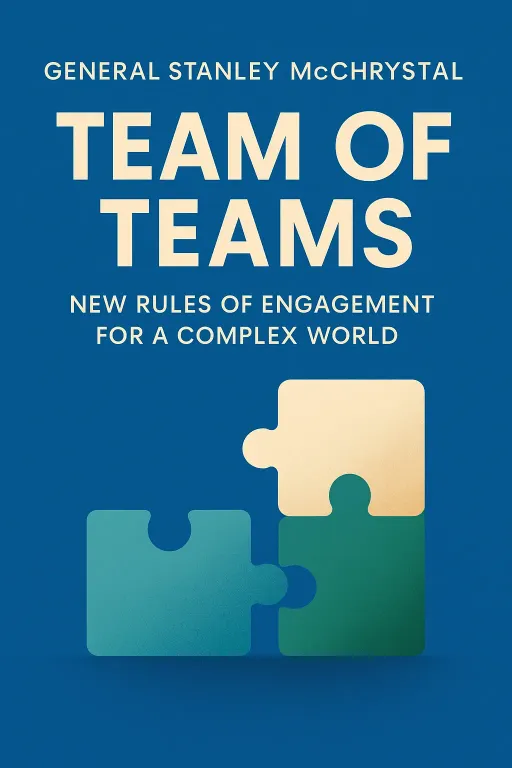
Nova: Not obsolete, Atlas, but perhaps redefined. We're talking about a paradigm shift in how we build and lead teams, moving from command-and-control to something far more distributed and dynamic. Today, we're diving into two incredibly insightful books that redefine leadership for our complex world: by General Stanley McChrystal and by L. David Marquet. What’s fascinating is that both authors come from hyper-hierarchical organizations – the US military's special operations and a nuclear submarine – yet they arrived at strikingly similar conclusions about radical empowerment.
Atlas: That's a powerful commonality, isn't it? You'd think those environments would be the places to experiment with decentralizing authority. Normally, it's all about strict protocols and chain of command. So, how did these highly structured worlds stumble upon such a counter-intuitive truth?
Nova: Exactly! It wasn't by choice, Atlas, it was by necessity. And that necessity leads us straight into our first deep dive…
The 'Team of Teams' Revolution: Decentralizing for Agility
SECTION
Nova: Imagine the early 2000s in Iraq. General Stanley McChrystal commanded the Joint Special Operations Task Force. They were an elite, highly trained unit, but they were consistently being outmaneuvered by Al-Qaeda. McChrystal described it as trying to fight a swarm with a highly efficient, but ultimately slow, dinosaur. Their enemy was decentralized, agile, and constantly adapting.
Atlas: So, the traditional military structure, which is designed for precision and overwhelming force, was actually a liability against a fluid, networked threat? That’s a brutal wakeup call. For a digital strategist, that sounds a lot like trying to fight a nimble startup with an established, but bureaucratic, corporate giant.
Nova: Precisely. McChrystal realized they were optimized for efficiency, for "perfecting the clock," but what they needed was speed and adaptability, "optimizing the stopwatch." The problem wasn't a lack of talent or resources; it was a lack of and across their own vast organization. They had silos, even among special ops units, which meant critical intelligence wasn't flowing fast enough to those who needed to act on it.
Atlas: That’s incredibly relatable. In many organizations, especially digital ones, you have brilliant teams, but they often operate in their own bubbles. So, how did McChrystal break down those walls in such a high-stakes environment? What was the radical shift?
Nova: He instituted two core principles: and. For shared consciousness, he started daily, almost unprecedented, "Operations and Intelligence" briefings. Hundreds of people, from analysts to special forces operators, would connect virtually, sharing every piece of intelligence, every operational update. Everyone, from the lowest ranks to the highest, had access to the same, unfiltered information.
Atlas: That sounds like a recipe for information overload, especially for a digital strategist trying to cut through the noise. How do you ensure people absorb what’s critical without drowning in data? And wasn't there massive pushback? Giving everyone access to everything feels… risky.
Nova: It was incredibly risky, and yes, there was significant pushback. But McChrystal argued that the risk of acting on incomplete information was far greater. The sheer volume forced people to learn what was relevant to their specific role, and the shared context allowed them to see the bigger picture. It built a collective understanding of the enemy, the mission, and each other's capabilities. It wasn't about dictating tasks; it was about equipping everyone to understand they were doing what they were doing.
Atlas: So, it's less about "telling people what to do" and more about "showing people the whole board," so they can make intelligent moves themselves. That leads into "Empowered Execution," I assume?
Nova: Absolutely. Once everyone had shared consciousness, the next step was trusting them to act on it. McChrystal pushed decision-making authority down to the lowest possible levels. Instead of waiting for layers of approval, small teams on the ground, who had the most current information and understood the context, were empowered to make critical, real-time decisions. They built trust by fostering competence and then granting autonomy. The goal was for operators to act quickly and intelligently without constant supervision.
Atlas: That's a huge leap, particularly for a military culture built on strict hierarchy. For our listeners managing diverse digital teams, often remote, how do you build that level of shared consciousness and trust when you're not even in the same room, or even the same time zone? It feels like the ultimate challenge for sustained innovation.
Nova: It is. It requires intentional platforms for information sharing – not just reporting, but genuine dialogue. It demands leaders who are willing to be vulnerable, to admit they don't have all the answers, and to actively solicit input. And it means pushing decision rights down, even for seemingly small things, to build that muscle of ownership and trust. It’s about creating an engine where everyone contributes to navigating complex strategic challenges.
Leader-Leader Model: Cultivating Ownership and Intent-Based Leadership
SECTION
Atlas: That idea of pushing decision-making down and building trust resonates so deeply with the challenges digital strategists face. It's not just about efficiency; it's about fostering innovation. And that naturally leads us to the second key idea we need to talk about, which often acts as a counterpoint to what we just discussed, but ultimately reinforces it. How do you that kind of empowerment, Nova?
Nova: That's where Captain L. David Marquet's experience on the USS Santa Fe comes in, a struggling nuclear submarine that was consistently ranked last in performance. Marquet was set to command a different submarine, but a last-minute change put him on the Santa Fe. He arrived to find a demoralized crew, accustomed to being told exactly what to do.
Atlas: A nuclear submarine where the captain intentionally gives up control? That sounds like a Hollywood movie, but also utterly terrifying. How do you trust people enough to do that in an environment where a single mistake could be catastrophic? Or in a multi-million dollar digital campaign, where a single misstep can cost a company dearly?
Nova: That's the brilliance of his "leader-leader" model. Marquet realized that the "leader-follower" model, where the leader gives orders and the followers execute, creates dependency and stifles initiative. His crew was technically competent, but they lacked ownership and the ability to think for themselves. So, he flipped the script. Instead of giving orders, he started saying, "I intend to..."
Atlas: "I intend to..."? What does that even mean in the context of a submarine captain? It sounds almost passive.
Nova: It's anything but passive, Atlas. It's about shifting responsibility the chain of command, not down. Instead of Marquet telling a junior officer, "Turn left," he'd ask, "What are your intentions?" The officer would then say, "I intend to turn left." This simple phrase forced the officer to actively think, to confirm their understanding, and to take ownership of the decision. Marquet would then ask questions like, "What are the implications of that intention?" or "Have you considered X, Y, or Z?"
Atlas: So, he wasn't just delegating tasks; he was delegating genuine authority and demanding full comprehension. It's like turning every team member into a miniature CEO, responsible for their domain. But how do you ensure they have the competence to back up their intentions?
Nova: That’s the crucial part. Marquet explicitly states that competence must precede control. He invested heavily in training and development, ensuring his crew deeply understood the submarine's systems and their operational context. He created an environment where it was safe to admit "I don't know" and encouraged continuous learning. Once the competence was there, the "I intend to..." framework allowed them to exercise that competence. It transformed his crew from passive executors to proactive problem-solvers.
Atlas: That's a profound shift. It’s not just about empowering people; it’s about them to be empowered by building their knowledge and confidence. For a digital strategist, this means not just giving a team member a task, but ensuring they understand the behind it, the 'why,' and then trusting them to figure out the 'how.' It boosts morale, sure, but I imagine it also unlocks a huge amount of untapped innovation.
Nova: Exactly! The Santa Fe went from worst to first in performance, with unprecedented retention rates. The leader-leader model proved that by cultivating an environment where everyone feels like a leader, capable of making informed decisions and taking ownership, you create a resilient, high-performing team. It's about pushing intelligence responsibility to the edges, where the information often resides.
Synthesis & Takeaways
SECTION
Nova: When you look at McChrystal's "Team of Teams" and Marquet's "Leader-Leader" model, the common thread is clear: true resilience and innovation in complex, rapidly changing environments don't come from a single hero at the top. They come from a network of empowered, informed individuals who share a common purpose.
Atlas: Absolutely. It's about creating a culture where information flows freely, where people are encouraged to think critically, and where decision-making isn't hoarded but distributed. The digital strategist of today isn't just managing projects; they're building the very architecture of collaboration and empowerment within their teams.
Nova: It’s a profound realization: the human element, specifically through radical empowerment and shared consciousness, is the ultimate lever for building resilient, innovative teams. We often think of leadership as being in control, but these examples show us that the most effective leaders are often those who master the art of control, in service of a greater, shared outcome.
Atlas: That's actually really inspiring. It means leadership isn't a position; it's an action, one that cultivates competence and trust in others. So, for our listeners, what's one tiny step they could take right now to start moving towards this "team of teams" or "leader-leader" model?
Nova: Here's a challenge, directly from the lessons we've discussed: identify one decision-making process in your team—even a seemingly small one—that you could push further down to empower team members and increase their ownership. It could be how a specific task is approached, how a client communication is drafted, or even how a team meeting agenda is set. Start small, build that trust, and watch the ripple effect.
Atlas: I love that. It’s about being deliberate in decentralizing, not just hoping it happens. A powerful concept for anyone looking to make a true impact in their organization.
Nova: This is Aibrary. Congratulations on your growth!









