Stop Building Silos, Start Building Bridges: The Guide to Collaborative Culture
Golden Hook & Introduction
SECTION
Nova: Atlas, five words. Give me your five-word review of traditional corporate hierarchies.
Atlas: Slow. Siloed. Stressful. Stifling. Seriously, obsolete.
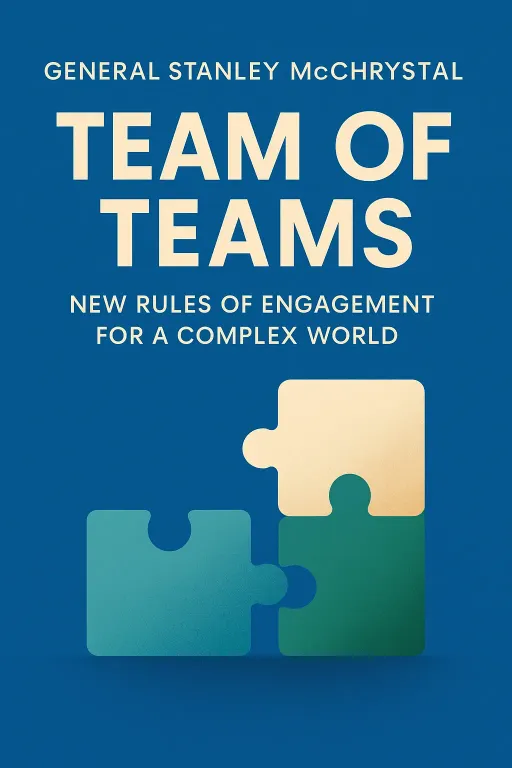
Nova: Ooh, strong words! And that's exactly what we're tackling today, diving into the groundbreaking ideas from "Team of Teams" by General Stanley McChrystal and "Turn the Ship Around!" by L. David Marquet.
Atlas: Two books, two military leaders, both challenging the very command-and-control structures they were trained in. That's a pretty radical shift, isn't it?
Nova: It’s absolutely radical. And what's fascinating is that these aren't just theoretical concepts. McChrystal, a four-star general, and Marquet, a submarine commander, both led real-world transformations in some of the most hierarchical organizations imaginable. They had to adapt or fail.
Atlas: That makes me wonder, if the military, with its strict chains of command, can rethink hierarchy, what does that mean for the rest of us?
The Inefficiency of Hierarchy: Why Silos Slow You Down
SECTION
Nova: Well, it means we need to face a cold, hard fact: traditional hierarchical structures often hinder innovation and adaptability. They create silos, slowing down decision-making to a crawl. Think of your average large organization. You've got marketing, engineering, sales, all operating in their own lanes.
Atlas: Right, like different departments, each with its own goals and metrics. But wait, aren't hierarchies supposed to be efficient? Clear lines of command, everyone knows their place? That's the conventional wisdom, isn't it? Especially for a strategic builder who values clarity.
Nova: That’s the classic view, yes. But McChrystal’s insight, honed during his time commanding the Joint Special Operations Task Force in Iraq, was that the world had changed. In an environment where threats were decentralized and moved at lightning speed, a slow, top-down command structure was a liability. Information would get stuck, decisions would take too long, and opportunities would vanish.
Atlas: So, the very thing designed for order—the hierarchy—ends up causing chaos and missed opportunities because it can't keep up? That’s going to resonate with anyone who struggles with navigating complex problems and the messy middle.
Nova: Exactly. Imagine a company trying to launch a new product. The engineers develop something brilliant, but marketing doesn't fully understand its unique features because they were never in the loop on the daily challenges. Sales makes promises that engineering can't deliver on because they weren't part of the initial design conversation. You end up with a product that's technically sound but fails in the market because of these internal disconnects.
Atlas: That sounds like a nightmare. It’s like everyone’s running their own race, but they’re all on different tracks. How do you even begin to fix something so ingrained in how we operate?
Building Shared Consciousness & Leader-Leader Structures
SECTION
Nova: That's where McChrystal's "Team of Teams" concept comes in. He realized they needed to transform from a top-down command structure to a network of empowered teams. The core idea is "shared consciousness" and "decentralized execution."
Atlas: Shared consciousness? What does that even mean in a practical sense? Is it just more meetings?
Nova: Not at all. It's about radical transparency and a pervasive understanding of the entire operational landscape. McChrystal's JSOTF started holding these daily "Operational Updates" where every team, from intelligence to logistics, shared their latest insights. Critically, even the most junior members were present, and they could ask questions.
Atlas: So, everyone knows what everyone else is doing, and why? That's a massive shift. I imagine a lot of our listeners, especially visionary leaders, might be thinking: "How do you maintain control and discipline in a high-stakes environment if everyone's making decisions?"
Nova: That’s the key. It's not about chaos; it's about empowering those closest to the problem to make real-time decisions, informed by that shared consciousness. And L. David Marquet takes this even further with his "leader-leader" model in "Turn the Ship Around!"
Atlas: Ah, Marquet. The nuclear submarine commander. That book is widely acclaimed and has really impacted leadership thinking.
Nova: It has, and for good reason! Marquet took command of the USS Santa Fe, a nuclear submarine with a struggling crew and low morale. His initial approach was traditional: give orders. But he soon realized he didn't know the submarine's complex systems as intimately as his crew did. He couldn't give truly informed orders.
Atlas: So what did he do? Did he just… delegate more?
Nova: He did something far more profound. He shifted from a "leader-follower" model to a "leader-leader" model. Instead of his crew asking for permission, he trained them to say, "Captain, I intend to flood the torpedo tube." They weren't asking if they do it; they were stating their.
Atlas: So, it's not just about sharing information, it's about shifting the locus of authority to the front line? That's a huge leap for anyone in a leadership role, especially for someone who's driven by purpose and impact, and worries about things going off the rails. How do you trust your team to make the decisions?
Nova: That's where competence and clarity of intent come in. Marquet didn't just give control away; he invested heavily in training his crew to be highly competent, and he ensured they understood the mission's overall intent. This allowed them to make informed decisions that aligned with the larger goals, without needing constant oversight. It's about pushing decision-making authority down to the people with the most information and expertise.
Atlas: That’s a powerful idea. It sounds like it fosters incredible ownership and engagement from the team, transforming rigid command into agile, collaborative networks. It’s definitely an adaptive organizational structure.
Synthesis & Takeaways
SECTION
Nova: Exactly. McChrystal's shared consciousness creates the context for rapid, informed decision-making, and Marquet's leader-leader model provides the mechanism for that decentralized execution. It's about moving from a mindset where only the top thinks and decides, to one where everyone is empowered to lead.
Atlas: So, for our listeners, especially those building something meaningful and navigating complex problems, this isn't just about 'delegation,' is it? It's about fundamentally reshaping how we view leadership and team dynamics to build resilience and agility into their startup's DNA. It's about creating a movement.
Nova: Absolutely. It's about building bridges, not silos. And the tiny step we want to leave you with today, something you can do right now: Identify one decision you usually make at work. Just one. How could you empower your team to make that decision instead? Not just execute it, but it.
Atlas: That's a powerful challenge. Start small, but think big about the trust and capability you're building. It's about creating a movement, not just managing a team. I imagine this would help leaders embrace that messy middle you always talk about, knowing their team is equipped to navigate it.
Nova: It absolutely would. It’s the essence of visionary leadership in action.
Nova: This is Aibrary. Congratulations on your growth!