Empowering Your Team: Building Self-Sustaining Organizations
Golden Hook & Introduction
SECTION
Nova: Atlas, I was talking to a friend the other day who runs a fairly large team, and they were lamenting that no matter how much they delegate, they still feel like they're the only one truly steering the ship. Every decision, every problem, circles back to them.
Atlas: Oh, I know that feeling. It's like you're playing whack-a-mole with tasks, and the hammer is permanently glued to your hand. You try to empower, but it often feels like you're just handing over tasks without truly handing over ownership.
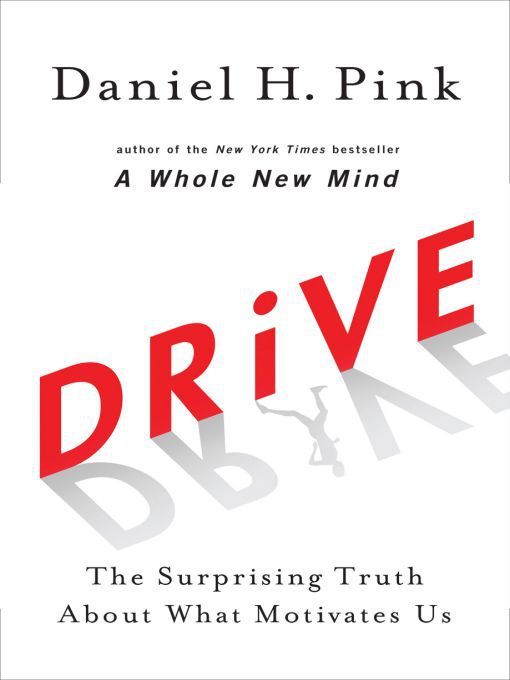
Nova: Exactly! And it made me think of two incredible books that really flip that script on its head. Today, we're diving into the powerful ideas from Daniel Pink's "Drive: The Surprising Truth About What Motivates Us" and L. David Marquet's "Turn the Ship Around!: A True Story of Turning Followers into Leaders at U. S. S. Santa Fe."
Atlas: Ah, two titans of the modern leadership landscape! Pink, a former speechwriter turned bestselling author, really shook up how we think about motivation, moving beyond the simple 'if-then' rewards. And Marquet's story, a submarine captain, is just legendary. His book stemmed directly from his experience on the USS Santa Fe, a nuclear submarine that went from worst to first in the fleet under his radical leadership. It’s not just theory; it’s a battle-tested approach.
Nova: It’s the perfect pairing to understand the engine of empowerment, and then the practical blueprint to build a self-sustaining organization.
The Engine of Empowerment: Autonomy, Mastery, Purpose
SECTION
Nova: So, let's start with Pink's "Drive." He makes this incredibly compelling argument that for knowledge workers, for anyone doing creative or complex tasks, the old carrot-and-stick motivators actually.
Atlas: That sounds a bit out there, doesn't it? Rewards and punishments have been the bedrock of management for centuries. Why would they suddenly stop working, or even work against us?
Nova: Well, Pink reveals that for work that requires even rudimentary cognitive skill, higher incentives actually lead to performance. He cites fascinating studies, like the candle problem experiment, where people were given a candle, thumbtacks, and matches, and asked to fix the candle to the wall so it wouldn't drip wax on the table.
Atlas: Oh, I know this one! The traditional solution is to empty the thumbtack box, tack the box to the wall, and then put the candle in the box. It requires seeing the box as a platform, not just a container.
Nova: Precisely. And what the researchers found was that when they offered monetary rewards for solving it quickly, people took to solve it. The extrinsic reward narrowed their focus, making it harder to think creatively about the problem.
Atlas: That’s fascinating! So, the pressure of the reward actually stifled the very creativity needed to find the solution. It's like trying to bribe a painter to create a masterpiece; the very act of offering money might make them less inspired.
Nova: Exactly! Instead, Pink argues that true, sustainable motivation for complex work comes from three intrinsic elements: autonomy, mastery, and purpose. Autonomy is our desire to direct our own lives. Mastery is our urge to get better and better at something that matters. And purpose is the yearning to do what we do in the service of something larger than ourselves.
Atlas: I imagine a lot of our listeners, especially those leading teams, might hear 'autonomy' and immediately think 'chaos.' How do you give people autonomy without losing control or direction? Isn't there a fine line between empowerment and just… undirected activity?
Nova: That's the million-dollar question, and Pink is quick to clarify. Autonomy isn't about working alone or rejecting accountability. It's about freedom over four T's: Task, Time, Technique, and Team. So, it's about they do, they do it, they do it, and they do it with. It's about giving employees control over these aspects, within clear boundaries and shared goals.
Atlas: Okay, so it’s not a free-for-all. It’s structured freedom. And the 'mastery' part resonates deeply with anyone who’s ever tried to get really good at something, whether it’s coding or playing an instrument. That inherent drive to improve, to push your own boundaries.
Nova: And it’s asymptotic, meaning you can always get better, but you never quite reach perfection. That endless pursuit keeps us engaged. Think about open-source software projects. People contribute thousands of hours for no pay, driven purely by mastery and purpose. They want to build something amazing, and they want to contribute to a larger good.
Atlas: That’s a perfect example of purpose in action. It’s not just about the code; it's about the community, the utility, the impact. So, if we’re moving away from traditional incentives, what does this mean for leaders trying to motivate their teams today? How do you actually foster autonomy, mastery, and purpose?
Nova: Pink suggests creating environments where these intrinsic motivators can flourish. It means giving people challenges that are just beyond their current skill level to encourage mastery, allowing them choice in how they approach their work, and always connecting their daily tasks to the organization's larger mission – its purpose. It's about cultivating an environment where individuals feel a deep sense of ownership and are equipped to lead from where they stand.
Practical Steps to a Leader-Leader Culture
SECTION
Atlas: And that naturally leads us into Marquet’s "Turn the Ship Around!" because if Pink gives us the 'why' behind intrinsic motivation, Marquet gives us the 'how' to operationalize it in a high-stakes, hierarchical environment like a nuclear submarine.
Nova: Absolutely. Marquet inherited the USS Santa Fe, which was, frankly, a mess. Low morale, poor performance, high turnover. The conventional wisdom would be for him to come in, take charge, and issue orders. But he did the opposite. He implemented a 'leader-leader' model.
Atlas: This sounds counterintuitive, especially on a submarine where split-second decisions can mean life or death. My instinct would be that you need a clear chain of command, not a bunch of people 'leading from where they stand.'
Nova: That’s the brilliance of it! His predecessor, Captain Coe, emphasized the 'leader-follower' model. The crew was trained to follow orders, even if they knew a better way or saw a problem. Marquet realized this was creating a culture of dependency and disengagement. He wanted people to and, not just obey.
Atlas: So, how did he do that without, you know, sinking the submarine? What’s the core mechanism of this leader-leader model?
Nova: His principle was: "Don't give orders, give intent." Instead of saying, "Paint the hull," he'd say, "I intend to paint the hull to improve corrosion resistance." This simple shift allowed his crew to understand the behind the task. If something went wrong, or a better way emerged, they could adapt and still fulfill the intent, even if it meant deviating from the original "order."
Atlas: Oh, I like that. It’s like giving someone the destination on a map, but letting them choose the route, rather than giving them turn-by-turn directions. It respects their intelligence and capability.
Nova: Exactly. He also implemented a radical practice: "I intend to…." Instead of asking for permission, his officers would state their intention. "Captain, I intend to take the submarine to periscope depth." Marquet's role then shifted from delegating tasks to delegating. He would listen, and if he had concerns, he’d ask questions to ensure they had thought through the implications. But the ultimate decision and responsibility rested with the person making the declaration.
Atlas: That’s a huge psychological shift! It moves from "Tell me what to do" to "Here's what I'm going to do, and here's why." It forces competence and clear thinking at every level. It sounds like he was essentially building a team of mini-CEOs, each responsible for their domain.
Nova: Precisely. He emphasized technical competence, clarity of purpose, and courage to act. He built a culture where people felt safe to make decisions, even to make mistakes, as long as they learned from them. The result? The Santa Fe became the most awarded ship in the fleet, with unprecedented levels of morale and performance.
Atlas: That’s actually really inspiring. For our listeners who are strategic innovators and empathetic architects, this isn't just about efficiency; it's about building a truly resilient and engaged organization. It’s about cultivating a deep sense of ownership.
Nova: And it transcends simple delegation. It's about cultivating an environment where individuals truly feel empowered and equipped to lead from where they stand, rather than waiting for instructions. It’s about building a team that doesn't just execute, but innovates and problem-solves proactively.
Atlas: So, for a leader listening right now, thinking about their own team, what's a tiny step they can take this week to start moving towards this 'leader-leader' model?
Nova: Marquet's approach suggests identifying just one task you usually micromanage or delegate with too much instruction. This week, delegate it with full autonomy. Provide only the desired outcome and the resources, but the method. Then, step back and trust your team to figure out the 'how.' It's about starting small and building that muscle of distributed control.
Synthesis & Takeaways
SECTION
Atlas: So, what we've really uncovered today is that true empowerment isn't just a buzzword. It's a profound shift in mindset, both for leaders and team members. It’s about understanding that motivation comes from within, not from external pressures, and that leadership can and should be distributed.
Nova: Absolutely. Pink shows us that when you tap into people's innate desires for autonomy, mastery, and purpose, you unleash a powerful engine of engagement. And Marquet gives us the blueprint for how to operationalize that, even in the most rigid of environments, by shifting from 'leader-follower' to 'leader-leader' and fostering a culture of intent and initiative.
Atlas: It’s a powerful combination. It really highlights that the most effective organizations aren't those with the smartest leader at the top, but those that cultivate the most leaders at every level. It’s about embracing the vulnerability of letting go, to achieve more profound control and impact.
Nova: And that’s the deep insight. The control you gain by giving up control is far more profound and sustainable than any hierarchical command. It builds a team that thrives on challenges, innovates effortlessly, and takes genuine ownership.
Atlas: So, for all the resilient leaders and strategic innovators out there, consider this: what small piece of control can you deliberately and intentionally surrender this week? What intent can you share, and then trust your team to execute?
Nova: Because when you empower others, you don't just build a better team; you build a more resilient, more innovative, and ultimately, a more human organization.
Atlas: This is Aibrary. Congratulations on your growth!