Beyond Your Org Chart: Harnessing Informal Networks for Agent Adoption.
Golden Hook & Introduction
SECTION
Nova: You know, it's a funny thing about brilliant technology. We pour countless hours into optimizing algorithms, perfecting architectures, and then... it just sits there. Gathering digital dust.
Atlas: Oh, I know that feeling. Like launching a rocket to Mars, only to realize nobody wants to get on board. But isn't it usually because the tech wasn't quite right, or the use case wasn't clear?
Nova: That's the common wisdom, isn't it? That if your Agent system is smart enough, fast enough, and solves a real problem, it just naturally get adopted. But what if I told you that often, the failure isn't in the code, or even the use case, but in something far more… human? Something invisible on your org chart?
Atlas: Invisible? Now you've got my attention. For architects and engineers, we live by visible structures. What are we missing here?
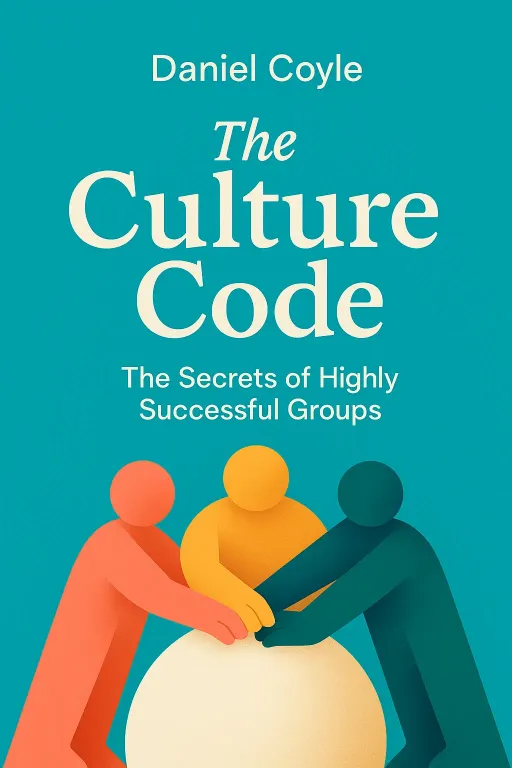
Nova: We're missing the invisible architecture of human connection and trust. Today, we're diving into how formal structures often fall short in driving true adoption of cutting-edge tech, like Agent systems, and why the real power lies in understanding and leveraging the informal networks and shared psychological safety within teams. We’re going to draw on some incredible insights from Daniel Coyle’s widely acclaimed book, "The Culture Code," where he dissects what makes highly cohesive groups tick, and L. David Marquet’s "Turn the Ship Around!", a fascinating account of radical leadership transformation on a nuclear submarine.
Atlas: A submarine? And culture codes? This sounds like a masterclass in breaking down silos, which, let's be honest, is every architect's daily battle. I'm curious how these seemingly disparate fields connect to making our Agent systems actually work in the wild.
The Inadequacy of Formal Structures for Agent Adoption
SECTION
Nova: Think about it: every organization has an official org chart. Lines of authority, departments, reporting structures. And when a new Agent system comes along, the typical approach is a top-down mandate: "Here's the new tool, everyone use it!" But the cold fact is, formal structures often fall catastrophically short in driving true, enthusiastic adoption.
Atlas: Okay, but why? We put in the work. We design the pipelines, we ensure scalability, we demonstrate the ROI. Why isn't that enough to get people to just… switch over and embrace it?
Nova: Because formal structures, by their very nature, are designed for efficiency and control, not necessarily for organic innovation or emotional buy-in. They can create a sense of obligation, not ownership. Imagine a scenario: a brilliant new Agent-powered anomaly detection system is rolled out. It’s technically superior, catches more errors, saves money. But adoption lags. People stick to their old, less efficient methods.
Atlas: I can definitely relate. We’ve all seen that happen. There’s always resistance to change, right? But is it just resistance, or something deeper?
Nova: It’s deeper. It’s about the underlying human psychology. If the mandate comes down from on high, and people don't feel a sense of safety to voice concerns, or if they don't feel a personal stake in its success, they'll often comply superficially, or find workarounds. It becomes "their system," not "our system." This is where a "leader-follower" model can actually impede progress. People follow instructions, but they don't champion the innovation.
Atlas: So, it's not just about features, it's about feelings? That's going to resonate with anyone who struggles with getting a new framework implemented. But how does an engineer or an architect 'engineer' feelings into a deployment strategy? That sounds a bit out there for our typical sprint planning.
Nova: It's not about engineering feelings directly, but engineering the where those feelings, like trust and ownership, can flourish. For example, in a classic top-down rollout, if an engineer finds a bug in the new Agent system or struggles with its integration, they might hesitate to speak up if they fear being seen as incompetent or slowing down the project. That silence is the death knell of true adoption.
Harnessing Informal Networks and Psychological Safety
SECTION
Nova: And that naturally leads us to the second key idea we need to talk about, which often acts as the counterpoint to what we just discussed: harnessing informal networks and cultivating psychological safety. This is where Daniel Coyle’s "The Culture Code" provides a masterclass. Coyle, with his background studying elite sports teams and creative organizations, identified three key skills of highly cohesive groups.
Atlas: Okay, 'psychological safety' – that sounds like a buzzword we hear a lot. What does it actually like in a team trying to integrate a new Agent framework? Give me a scenario, a tangible example.
Nova: Absolutely. Coyle’s first skill is building safety – creating an environment of psychological safety. This means team members feel secure enough to take risks, ask "dumb" questions, admit mistakes, and even challenge the status quo without fear of punishment or humiliation. For an Agent framework integration, this might look like a team where an engineer can say, "I'm really struggling to get this Agent to parse context correctly, and I think our initial data labeling might be flawed," without fearing reprimand. Or a junior architect proposing an alternative integration pattern, knowing their idea will be heard respectfully, even if it’s ultimately not used.
Atlas: Wow. That's a powerful distinction. Because in many high-stakes tech environments, pushing back or admitting struggle can feel like career suicide. So, psychological safety allows for vulnerability, which then leads to... what exactly?
Nova: Which leads directly to Coyle’s second skill: sharing vulnerability. When people feel safe, they’re willing to be vulnerable, to expose their weaknesses, to ask for help. This doesn't just build trust; it actually accelerates problem-solving and innovation. Imagine a team trying to optimize an Agent's decision-making logic. If everyone is pretending to understand everything perfectly, critical issues remain hidden. But if a senior developer admits, "I'm not entirely sure how this specific transformer model handles adversarial inputs, can someone help me dig into the papers?"—that vulnerability opens the door for collective learning and a more robust solution.
Atlas: I can see how that changes the dynamic entirely. It's like having an open-source mindset within your own team, where everyone contributes to debugging not just the code, but the process itself. So, safety and vulnerability. What’s the third skill?
Nova: The third is establishing purpose. This isn't just about the company's mission statement; it's about a clear, shared understanding of the team is doing what it's doing, and how their individual contributions fit into that larger goal. For Agent adoption, it means everyone understands how this new Agent system isn't just a tech toy, but a critical component for delivering tangible business value, or improving user experience, or solving a specific, impactful problem. When purpose is clear, people are intrinsically motivated to overcome hurdles.
Atlas: That makes perfect sense. It’s the difference between being told to use an Agent versus understanding how this Agent helps you create value yourself. It's about empowering people, which brings to mind L. David Marquet's work.
Nova: Exactly! Marquet’s "Turn the Ship Around!" is a phenomenal real-world case study of these principles in action. He took command of a nuclear submarine, the USS Santa Fe, that was dead last in every performance metric. Instead of issuing commands, he implemented a "leader-leader" model, shifting from traditional leader-follower dynamics to distributing ownership and decision-making authority down to the lowest ranks.
Atlas: That's a huge shift from how most tech projects are run! How do you even begin to 'turn the ship' in an existing organization without causing chaos? What's the 'tiny step' an architect can take to even begin to foster this kind of radical ownership?
Nova: Marquet started by empowering his crew to say, "I intend to..." rather than "Permission to..." He gave them the context, the training, and then the authority to make decisions. For Agent adoption, this means shifting from "You use this Agent" to "How do intend to integrate this Agent into your workflow to achieve X goal?" It’s about cultivating an environment where innovation and adoption flourish organically because people feel they own the solution, not just operate it. This creates a powerful sense of agency.
Synthesis & Takeaways
SECTION
Nova: So, bringing it all together: psychological safety, as outlined by Coyle, provides the emotional and social ground for vulnerability and honest feedback. Marquet’s leader-leader model provides the agency and distributed ownership. Combine those two, and you create a powerful, self-sustaining loop where Agent technologies aren't just adopted, they're championed and innovated upon from within the team.
Atlas: That’s actually really inspiring. For our listeners who are full-stack engineers, architects, and value creators, that shift from "mandate" to "empowerment" is critical. It’s what allows them to break boundaries and integrate tech with business, rather than just building in isolation. So, what’s the immediate, actionable "tiny step" our listeners can take tomorrow morning?
Nova: The tiny step is to identify one existing team within your organization and brainstorm a way to foster a sense of psychological safety or shared vulnerability to introduce a new Agent tool. It could be as simple as starting a meeting by asking everyone to share one challenge they're facing, or explicitly stating, "No idea is a bad idea here."
Atlas: I love that. Start small, build trust, and then watch the innovation bloom. Because ultimately, high-performance Agent system design isn't just about the algorithms; it's about the humans building and using them. When people feel safe to experiment, to fail fast, and to own the solution, that’s when you truly unlock the power of Agent tech.
Nova: Absolutely. It's about shifting your approach from top-down implementation to fostering environments where Agent technologies are embraced and championed from within the team, leading to more robust, user-centric, and ultimately, more valuable systems.
Atlas: What a powerful perspective. Thank you for that, Nova.
Nova: My pleasure, Atlas.
Nova: This is Aibrary. Congratulations on your growth!