The Network Effect Trap: Why Your Culture Needs a Stronger Core
Golden Hook & Introduction
SECTION
Nova: Forget the foosball tables. Ditch the free snacks. If your company culture is just about perks, you're missing the entire point. In fact, you're probably building a house of cards.
Atlas: Whoa, Nova, that's a bold claim right out of the gate! Are you saying all those 'best places to work' lists are completely misguided? Because I imagine a lot of our listeners, especially those designing with purpose, might be thinking, "But what about employee happiness?"
Nova: Absolutely not misguided, Atlas. But they often highlight symptoms, not the underlying cause. Today, we're diving into, a powerful look at why a truly strong culture isn't a luxury; it's the bedrock of any successful strategy. It's a guide for those who seek mastery in building robust systems, not just pretty facades.
Atlas: Right, like understanding the foundational principles. Because in the early stages, where dynamics are complex, you can't afford to get the core wrong. So, tell us, what the real secret sauce?
Nova: Exactly. Today we'll dive deep into this from two perspectives. First, we'll explore what truly constitutes a strong, resilient culture, moving beyond the superficial. Then, we'll discuss how you can strategically map and elevate your team's collective mindset and effectiveness.
Beyond Perks: The Core Ingredients of a Thriving Culture
SECTION
Nova: So, let's shatter that illusion right away. The cold, hard fact is that building a strong culture isn't about perks or ping-pong tables. It's about shared values and clear communication. Without that solid cultural foundation, even brilliant strategies falter, leaving your team adrift and unmotivated.
Atlas: Okay, but isn't that a bit abstract? "Shared values" can sound like corporate jargon. How do you actually that, especially for a team that's highly analytical and driven by measurable outcomes?
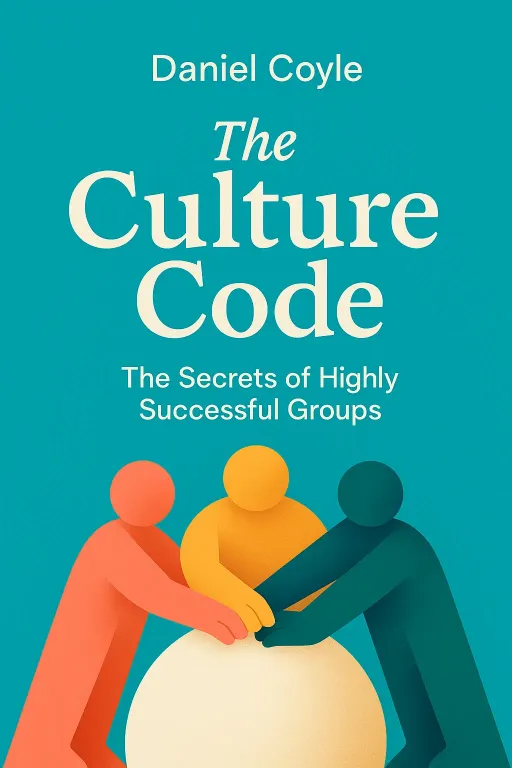
Nova: That's where Daniel Coyle's acclaimed work,, becomes a guiding light. He shows how successful groups—and he studied everything from Pixar to the Navy SEALs—foster three critical elements: psychological safety, shared vulnerability, and a clear sense of purpose. It’s not about being 'nice'; it's about creating an environment where individuals feel safe enough to contribute, to challenge, and to grow without fear of retribution.
Atlas: Psychological safety. I can see how that's crucial. I imagine for anyone in a high-stakes environment, where the pressure is intense, the ability to speak up without fear is make or break. But how do you that? It sounds more like an organic outcome than something you design.
Nova: It's intentional design, Atlas. Take, for example, a project team I once observed. They were brilliant, individually. Top-tier engineers, strategists, all the talent you could ask for. But the leader had an unspoken rule: never bring up a problem without a solution. Sounds proactive, right?
Atlas: On the surface, yes. Very results-oriented.
Nova: But what happened was, people stopped bringing up problems. They'd wait until an issue was a full-blown crisis, because then they'd have a clearer path to a solution. The environment, despite its high-achievers, lacked psychological safety. No one felt safe enough to admit early uncertainty or to voice a nascent concern that didn't yet have a neat answer. The result? Missed deadlines, costly reworks, and eventually, burnout.
Atlas: Oh man, that's a classic trap. So, the intention was good, but the execution created a culture of silence around risk. It's like building a complex system where the error reporting mechanism is actually penalized. What's the antidote, then?
Nova: The antidote is actively encouraging dissent, celebrating honest mistakes as learning opportunities, and leaders modeling vulnerability. Coyle talks about shared vulnerability – leaders admitting their own uncertainties, asking for help. It signals to the team, "It's okay not to know everything; we're in this together." And purpose? It's not just a mission statement; it's the deeply felt belief that what you're doing matters. When people truly believe in the 'why', they'll weather the 'how' and 'what.'
Atlas: That resonates with anyone driven by understanding foundational principles. If you don't have a clear 'why,' the 'what' and 'how' become purely transactional. So, psychological safety, shared vulnerability, clear purpose. These are the invisible threads holding the fabric together, right?
Nova: Absolutely. And when those threads fray, the entire fabric unravels, no matter how shiny the office space or how many free kombuchas are in the fridge.
Mapping Your Tribe: Strategically Elevating Your Organizational Culture
SECTION
Nova: Knowing those core ingredients is one thing. But then, how do you actually and a culture intentionally? Because culture isn't static. It's a living, breathing entity.
Atlas: Right. For someone who likes to design with purpose, the idea of "accidental growth" for something as critical as culture is almost terrifying. You need a blueprint, a system.
Nova: And that's where Dave Logan's provides an invaluable framework. Logan identifies five distinct stages of tribal culture, ranging from alienated to world-changing. Understanding your current stage helps you strategically elevate your team's collective mindset and effectiveness.
Atlas: Five stages? Can you give us a quick overview? Because I'm curious how you identify which stage your team is in. Is it like a diagnostic tool?
Nova: It very much is. Imagine a ladder. Stage one is "Life Sucks." Think street gangs or truly dysfunctional workplaces. "We are great" versus "Life Sucks". It's about how people talk about themselves, their team, and their competitors.
Atlas: So, it's about the dominant narrative within the group. That makes sense. It's like understanding the operating system of the collective mindset.
Nova: Precisely. Let's focus on two common ones in the corporate world. Many organizations operate at Stage Three: "I'm great" and "You're not." It's characterized by individualistic, competitive behavior. People focus on their own success, often at the expense of others. They might hoard information, or subtly undermine colleagues to look better.
Atlas: Oh, I've been there. That kind of environment, while sometimes driving individual performance, can absolutely cripple overall team effectiveness, especially when you need complex problem-solving. It's the antithesis of the shared vulnerability you mentioned earlier.
Nova: Exactly. But then you have Stage Four: "We are great." This is where collaboration truly kicks in. Teams rally around a shared vision, celebrating collective achievements. There's a strong sense of camaraderie and mutual support. People focus on the team's success, genuinely wanting to help each other succeed because they understand that their individual success is tied to the group's.
Atlas: That's a huge leap from "I'm great." How do you push a team from that individualistic "I'm great" mindset to a "we are great" collective? For someone optimizing complex early-stage dynamics, that's the million-dollar question.
Nova: It's not a single lever, but consistent reinforcement. Leaders at Stage Three might praise individual heroes, inadvertently reinforcing ego-driven behavior. To move to Stage Four, leaders need to shift the language. Start celebrating team wins, highlight collaborative efforts, and actively call out instances of people supporting each other. It’s about changing the story people tell themselves about their work and their colleagues. And it requires leaders to model it. It's intentional design and consistent reinforcement of core principles, not accidental growth.
Atlas: So, it's about changing the reward system, but not just financially. It's about rewarding the that fosters the culture you want. That's a fundamental principle for any system.
Synthesis & Takeaways
SECTION
Nova: Precisely. The core insight here, from both Coyle and Logan, is that culture isn't a nebulous, unmanageable thing. It's a strategic asset that can be intentionally designed, nurtured, and elevated. It's about moving beyond superficial fixes and diving into the foundational elements that truly make a team resilient, innovative, and deeply effective.
Atlas: That gives me chills, honestly. It takes the idea of culture from a 'soft skill' to a critical strategic lever. For anyone seeking mastery, understanding these foundational principles of human interaction within a system is just as important as the technical architecture. It's the human operating system.
Nova: And the beauty is, you can start today. Our tiny step for listeners is this: Observe a recent team interaction. Identify one element of psychological safety or shared purpose that was present, or noticeably absent. Just observe, without judgment, and see what patterns emerge.
Atlas: That's a powerful way to begin. Because once you see it, you can't unsee it. And for those focused on understanding market and team psychology, this kind of observation is the first step towards true optimization. It’s about trusting your inner wisdom, even in the subtle observations.
Nova: Indeed. Culture isn't just felt; it's built, brick by intentional brick. And the payoff is a team that can navigate any trap, any challenge, because its core is strong.
Atlas: A truly resilient architecture.
Nova: This is Aibrary. Congratulations on your growth!