

The Network Effect Trap: Why Your Culture Needs a Stronger Core
Golden Hook & Introduction
SECTION
Nova: Forget the beanbags and the kombucha on tap. If your company's culture feels like a house of cards, it's probably because you're building on perks instead of principles. We're talking about a trap that ensnares even the smartest organizations.
Atlas: Whoa, a trap? That's a bold claim, Nova. Most people think great offices and endless snacks culture. What do you mean by building on perks instead of principles? Isn't that just good employee retention?
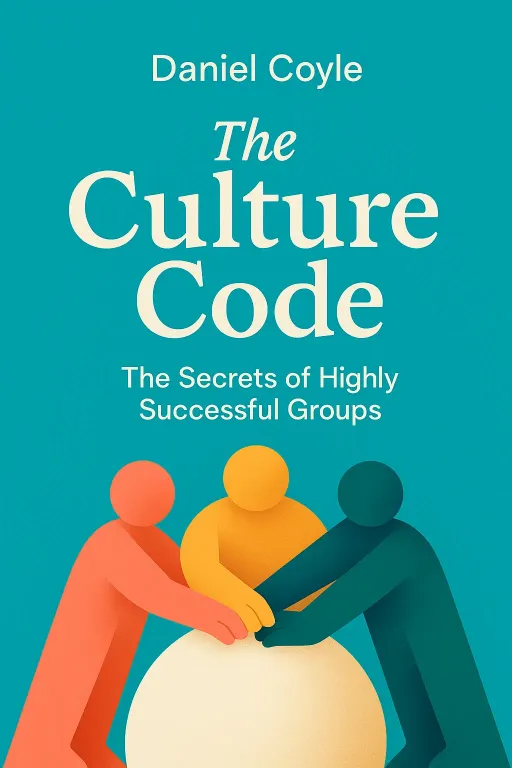
Nova: It’s the difference between a sugar rush and true, sustainable energy, Atlas. Today, we're diving into the profound insights from works like Daniel Coyle’s "The Culture Code" and Dave Logan’s "Tribal Leadership." You know, Coyle spent years reverse-engineering belonging, meticulously studying everything from Navy SEALs to Pixar to figure out what truly makes high-performing groups click. And Logan? He didn't just theorize; he mapped out his five stages of tribal culture after analyzing 24,000 people across 24 organizations. This isn't just theory; it's deeply researched, actionable wisdom.
Atlas: That's a massive dataset. So, you're saying these aren't just feel-good books, but actual blueprints for foundational strength? That's definitely something an architect of strategy would want to understand.
The Myth of Perks and the Power of Shared Values
SECTION
Nova: Absolutely. The cold, hard fact, as our source today puts it, is that building a strong culture isn't about perks or ping-pong tables. It's about shared values and clear communication. Without a solid cultural foundation, even the most brilliant strategies can falter. Your team ends up adrift and unmotivated, no matter how cool the office slide is.
Atlas: But Nova, everyone they have values. They're usually laminated and stuck on a wall somewhere. Aren't they just decorative sometimes? How do you make them? Because for a strategist, 'clear communication' around abstract values can feel like a contradiction.
Nova: That's the crux of it! It’s about intentional design and consistent reinforcement, not accidental growth. Imagine a building. You can paint it a beautiful color, add a fancy roof, but if the foundation is weak, that building is going to crumble. Values are your foundation. If they're not clearly communicated, lived, and reinforced daily, they're just marketing slogans. Think of a company that offers incredible benefits, yet has a revolving door of talent. Contrast that with a smaller, perhaps less flashy organization where people stay for decades because they genuinely believe in what they're doing and how they treat each other. That's the power of foundational values.
Atlas: So it's not just about listing them, it's about them being truly and. That makes sense. It's about the consistent behavior, not just the stated ideal. So, for our listeners, what's a tiny step they could take right now to figure out if their values are genuinely shared or just decorative?
Nova: Excellent question. The book suggests this: observe a recent team interaction. Pick one. Now, identify one element of psychological safety or shared purpose that was present, or noticeably absent. It's a quick diagnostic. Are people truly collaborating, or are they just going through the motions? Is there a sense of collective ownership, or is everyone just focused on their individual tasks?
The Architecture of Psychological Safety and Purpose
SECTION
Nova: And once you have those core values, how do you actually get people to them, to be truly engaged? That's where Coyle's "Culture Code" comes in, illuminating the architecture of psychological safety, shared vulnerability, and clear purpose. These elements create an environment where individuals feel safe to contribute and grow.
Atlas: Psychological safety... that sounds a bit squishy to someone who's focused on hard numbers and results. How does 'vulnerability' translate into actual performance for a strategist or an architect trying to build something impactful? I can imagine some listeners thinking this is just about being soft.
Nova: Ah, but it's the opposite of soft, Atlas. It's about creating the conditions for radical candor and rapid learning. Think about Google's Project Aristotle. They studied hundreds of their teams to figure out what made some excel and others falter. The number one factor? Not individual talent or compensation, but psychological safety. Teams with high psychological safety felt safe to take risks, to admit mistakes, to challenge the status quo without fear of humiliation or punishment. They innovated faster, solved problems more effectively, and were more resilient. That's tangible performance.
Atlas: So, it's not just about being 'nice'; it's about creating the conditions for critical feedback, for experimentation, for truly pushing boundaries without fear of reprisal. I imagine that's crucial in early-stage dynamics where every decision is high-stakes and failure is often part of the learning process. It's about maximizing learning velocity.
Nova: Precisely. It’s about creating a petri dish for growth. Coyle tells stories of successful improv groups, where the core rule is "yes, and..." It’s about building on ideas, not shutting them down. It's about a clear sense of purpose that unites everyone, making individual contributions feel meaningful within a larger, shared mission. That's a powerful system at play.
Mapping Your Tribal Stage: From Alienation to World-Changing Impact
SECTION
Nova: And if you want to know where your team right now, and where it be, Dave Logan gives us a powerful roadmap with "Tribal Leadership." He identifies five distinct stages of tribal culture, from alienated to world-changing. Understanding your current stage helps you strategically elevate your team's collective mindset and effectiveness.
Atlas: Five stages, huh? For someone who likes to design with purpose, understanding these stages sounds like a diagnostic tool. But how do you actually a team from one stage to the next, especially if they're stuck in a "my life sucks" mentality? That sounds like a monumental task.
Nova: It can be, but it’s about strategic influence. Logan's stages progress from "life sucks", to "my life sucks", to "I'm great", to "we're great", and finally to "life is great". The key is to shift the language and focus. If you have a team stuck at stage two, you don't just tell them to be happy. You help them find common ground, shift their language from complaint to shared challenge, and guide them towards a sense of individual competence.
Atlas: So it's about influencing the collective mindset, understanding the current reality, and then strategically introducing language and purpose that elevate the entire group. That's a system at play, a behavioral economic lever even, to shift perceptions and motivations. It's not just about a leader saying "be better," it's about shaping the environment.
Nova: Exactly. It's about identifying the prevailing narratives within your team and then intentionally crafting new ones that promote collaboration, shared success, and a sense of collective purpose. It's about building a language of "we" over "me." This is how you move beyond just having smart individuals to having a truly intelligent and impactful collective.
Synthesis & Takeaways
SECTION
Nova: So, bringing it all together, Atlas, what we've discovered is that the "Network Effect Trap" is real. It's the pitfall of believing superficial fixes can build deep culture. Instead, true cultural strength, the kind that creates resilient and high-performing organizations, comes from the intentional design and consistent reinforcement of core principles.
Atlas: And for the strategists and architects listening, this isn't soft HR. This is fundamental infrastructure. Your values are your foundation, psychological safety is your structural integrity, and understanding your tribal stage is your roadmap for scaling and optimizing. It's about building an organization that can adapt, innovate, and even attract the kind of talent that secures future funding, because people want to be part of something truly great.
Nova: Absolutely. And as the growth recommendations for our listeners suggest: trust your inner wisdom. Your vision is a powerful guide. This is about being the architect of a culture that truly thrives.
Atlas: And Nova, you also mentioned the "tiny step" earlier. I think it's worth reiterating as a call to action.
Nova: Indeed. Just observe a recent team interaction. Identify one element of psychological safety or shared purpose that was present, or noticeably absent. It's a simple act of awareness that can spark profound change. Start there.
Atlas: That’s a powerful start. It moves beyond just thinking about culture to actually seeing it in action.
Nova: This is Aibrary. Congratulations on your growth!









