The Network Effect Trap: Why Your Culture Needs a Stronger Core
Golden Hook & Introduction
SECTION
Nova: Forget the fancy office perks, the free snacks, and the foosball tables. What if all those 'cool' cultural elements are actually distracting us from what truly builds a world-changing team?
Atlas: Whoa, Nova, are you saying my unlimited kombucha tap is a lie? Because I've been told that's peak culture.
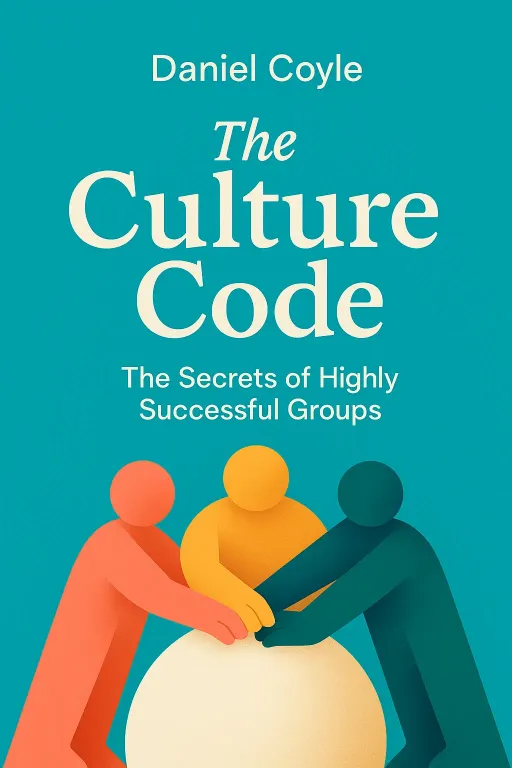
Nova: Oh, Atlas, it might be peak hydration, but I'm talking about the hidden architecture of truly powerful teams. Today, we're diving into this profound concept, drawing heavily from Daniel Coyle's brilliant book,, and complementing it with the strategic insights of Dave Logan's. Coyle, for instance, spent years embedded with elite military units, innovative design firms, and even criminal gangs to uncover the universal patterns of successful group dynamics. It’s not what you think.
Atlas: Okay, so we're peeling back the veneer of corporate 'fun' to get to the real foundational principles. For anyone out there designing systems or trying to understand complex team psychology, this sounds like a masterclass in human engineering.
Nova: Exactly! Because the core of our podcast today is really an exploration of why culture isn't just a 'nice-to-have' but the foundational operating system of any successful group, and how to intentionally design it for profound impact.
Atlas: Today we'll dive deep into this from two crucial perspectives. First, we'll explore the hidden architecture of truly strong cultures, then we'll discuss how to strategically map and evolve your team's collective mindset for unlocking its full potential.
The Hidden Architecture of Strong Culture: Beyond Perks and Ping-Pong
SECTION
Nova: So, let's kick off with this idea that culture isn't about what you – the perks, the shiny offices. It's about what you. Coyle argues that the strongest cultures are built on three foundational pillars: psychological safety, shared vulnerability, and a clear sense of purpose.
Atlas: Psychological safety. That's a term I hear often, but what does it really mean in practice? For someone leading a high-stakes project, where failure can have massive consequences, creating 'safety' might sound counterintuitive or even risky.
Nova: It’s understandable to feel that way. For Coyle, psychological safety isn't about being 'nice' or avoiding tough conversations. It's about creating an environment where people feel safe enough to take risks, ask questions, admit mistakes, and offer ideas without fear of humiliation or punishment. Think about Google's Project Aristotle, which found psychological safety was the number one predictor of team success. They realized that high-performing teams weren't just smart; they were. Members felt comfortable being themselves, even when that meant challenging the status quo.
Atlas: So, it’s not about coddling, it’s about enabling radical candor and innovation by removing the fear of looking foolish. I can see how that would change the dynamic in a brainstorming session or during a post-mortem.
Nova: Absolutely. And closely linked to that is shared vulnerability. This is where leaders, especially, have to go first. Coyle talks about how successful groups foster what he calls 'vulnerability loops.' It’s when one person, often the leader, takes a small risk by admitting a mistake or asking for help, and that act creates a safe space for others to do the same. It's a powerful signal of trust.
Atlas: That sounds rough, but I get it. It’s like a leader saying, "Hey, I messed up on X, can you help me think through Y?" It humanizes them and shows that imperfection is okay, even expected. But how do you prevent that from spiraling into a culture of constant self-doubt or blame?
Nova: That’s where the third pillar comes in: a clear, consistent sense of purpose. When everyone understands they’re doing what they’re doing, and how their individual contribution fits into the bigger picture, it provides a unifying direction. It’s not just about what you do, but as a group, and what impact you’re striving for. This purpose acts as an anchor, ensuring that vulnerability and psychological safety lead to growth and problem-solving, not just commiseration.
Atlas: So, it's a triad: safety to speak up, vulnerability to connect, and purpose to guide it all. That makes perfect sense for anyone trying to design a truly optimized system, because it's addressing the human variables at the core.
Mapping Your Tribe: Strategic Evolution for Unlocking Collective Potential
SECTION
Nova: Precisely. And once you grasp these foundational elements, the natural next question is: how do we actually a better culture? How do we move from understanding these principles to strategically applying them, especially if your current team isn't quite there yet?
Atlas: That’s the million-dollar question for anyone in a leadership role. For our listeners who are managing high-pressure teams, this concept might feel impossible to implement if they're starting from a place of low trust or disengagement.
Nova: That's where Dave Logan's offers a fascinating framework. Logan identifies five distinct stages of tribal culture, and understanding where your team is currently operating is the first step to elevating it.
Atlas: Five stages, huh? Give us the quick tour, Nova. What do they look like?
Nova: At its most basic, Stage 1 is "Life Sucks," characterized by alienation and hostility. Think street gangs or dysfunctional workplaces. Stage 2 is "My Life Sucks," where people are apathetic and disengaged, often victims of circumstances. Stage 3 is "I'm Great," which is common in many competitive corporate environments. Individuals are driven but often at the expense of others. Stage 4 is "We're Great," where teams collaborate effectively and feel a strong sense of pride and unity.
Atlas: I can see how that would be the goal for many organizations. "We're Great" sounds like a high-performing team. But you said there are five stages? What’s beyond "We're Great"?
Nova: Ah, the pinnacle! Stage 5 is "Life Is Great," or "World-Changing." These are tribes driven by a transcendent purpose, focused on making a significant positive impact beyond themselves. They're not just collaborating; they're innovating to solve global problems or create entirely new possibilities. Think of highly successful startups that genuinely change an industry or social movements that reshape society.
Atlas: That’s actually really inspiring. So, understanding these stages allows you to diagnose your current cultural health. But what are the common pitfalls when a strategist tries to 'upgrade' their team's tribal stage? And how can someone with a systems-thinking mindset approach this evolution without it feeling forced or inauthentic?
Nova: That's the art of it. The biggest pitfall is often trying to skip stages or impose a higher stage from the top down. Culture isn't a switch you flip; it's an ecosystem you cultivate. A systems thinker would recognize that you need to identify the leverage points at each stage. For example, to move from "My Life Sucks" to "I'm Great," you need to empower individuals, giving them autonomy and recognition. To go from "I'm Great" to "We're Great," you need to foster cross-functional collaboration and shared goals, emphasizing collective success over individual heroism. It’s about intentional design and consistent reinforcement of core principles, not accidental growth or superficial mandates.
Atlas: So, it's about meeting people where they are, understanding their current worldview, and then strategically introducing elements that naturally nudge them toward the next stage. It’s a very organic, yet deliberate, process.
Nova: Exactly. It's about designing the conditions for culture to evolve, nurturing those psychological safety loops, and clarifying purpose at each step. It’s foundational work that, when done right, unlocks incredible collective potential.
Synthesis & Takeaways
SECTION
Nova: So, whether we're talking about Coyle's invisible architecture of trust and purpose or Logan's strategic map for tribal evolution, the message is clear: a strong culture is not an accidental byproduct of success. It is the result of intentional design and consistent reinforcement of core principles. It's about understanding human dynamics to optimize systems, creating environments where people don't just survive, but thrive and innovate together.
Atlas: That’s a powerful takeaway. It really elevates the conversation around culture from a fluffy HR topic to a core strategic imperative for any leader or architect. It’s not about the perks; it’s about the profound human connections and shared meaning that drive truly great work.
Nova: Absolutely. And for anyone listening who's ready to put this into practice, here's a tiny step you can take today: Observe a recent team interaction. Identify one element of psychological safety or shared purpose that was present, or noticeably absent. Just that observation can be incredibly illuminating.
Atlas: That's a brilliant, actionable starting point. It forces you to look beneath the surface and really see the dynamics at play. What kind of culture are you intentionally or unintentionally building? It’s a question that makes you think.
Nova: Indeed. The true strength of any collective lies in its core.
Atlas: This is Aibrary. Congratulations on your growth!