The Unseen Advantage: How Systems Thinking Elevates Strategy
Golden Hook & Introduction
SECTION
Nova: Atlas, quick game for you. Rapid-fire word association. I'll give you a word, you give me the first thing that pops into your head. Ready?
Atlas: Oh, I like that. Always ready for a mental sprint. Hit me.
Nova: Problem.
Atlas: Oh, immediate answer: "headache." Definitely headache.
Nova: Solution.
Atlas: "Temporary." Unfortunately.
Nova: Challenge.
Atlas: "Opportunity... if I've had enough coffee."
Nova: Strategy.
Atlas: "The art of avoiding future headaches."
Nova: Perfect! Because what if I told you that many of those headaches, those temporary solutions, those missed opportunities, stem from one fundamental flaw in how we even strategy? We're often trying to solve a puzzle by only looking at one piece.
Atlas: Oh, I see. That’s probably why so many of our "solutions" feel like whack-a-mole. You fix one thing, and two more pop up somewhere else.
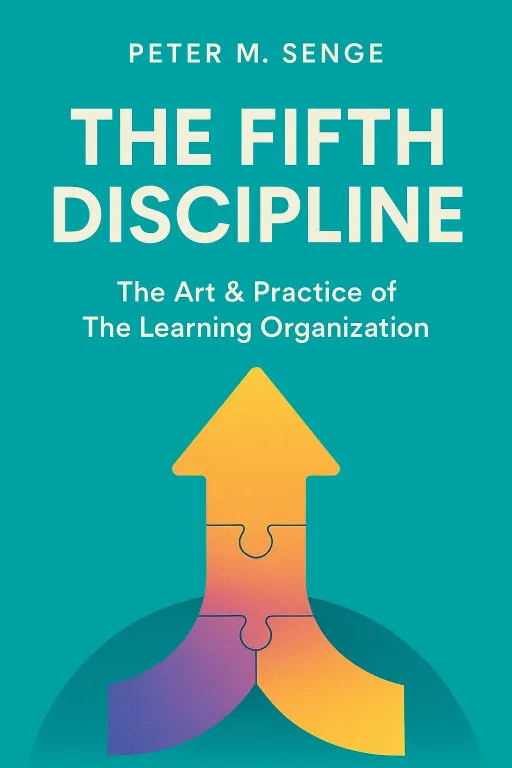
Nova: Exactly! And that’s why today, we're diving into "The Unseen Advantage: How Systems Thinking Elevates Strategy." We're pulling insights from two absolute titans in this field: "Thinking in Systems" by the brilliant Donella H. Meadows, and "The Fifth Discipline" by the visionary Peter Senge. These aren't just books; they're like x-ray glasses for understanding the complex world around us. They offer a unique lens to see the invisible forces shaping our organizations, transforming how we approach challenges by revealing hidden connections and powerful leverage points.
Atlas: That makes me wonder, if it's an "unseen advantage," does that mean we're all missing something obvious that’s right in front of us? I imagine a lot of our listeners, who are trying to optimize outcomes and gain strategic advantage, are thinking, "What exactly we missing?"
Unveiling the Hidden Architecture: The Fundamentals of Systems Thinking
SECTION
Nova: Precisely. We're missing the system. The cold fact is, many complex problems resist simple solutions because we focus on isolated parts, not the whole system. Imagine a highly successful and synchronized symphony orchestra. If a single violinist is off-key, the immediate thought might be, "Fix the violinist!" But what if the sheet music is wrong, or the conductor's tempo is erratic, or the acoustics of the hall are distorting the sound? Focusing only on the violinist, the isolated part, won't solve the systemic issue.
Atlas: So you're saying that if I have a broken part, I shouldn't just fix the part? That sounds a bit out there for someone who's results-driven. My first instinct is always to isolate the problem and tackle it directly.
Nova: It’s a natural instinct, Atlas, and often effective for problems. But Meadows, in "Thinking in Systems," masterfully shows us that complex environments are governed by interconnectedness and feedback loops. Think of a simple thermostat in your house. It detects the temperature, sends a signal to the furnace, which heats the house, which then changes the temperature. This entire cycle is the system. If your house is too cold, you don't just "fix" the furnace in isolation. You understand the entire feedback loop.
Atlas: Okay, that makes sense for a thermostat. But like, in a company, what does that look like when you're just fixing "parts"? For our listeners who are managing high-pressure teams, this concept might feel abstract. Can you give a more complex, relatable example?
Nova: Absolutely. Let's talk about "The Productivity Paradox." Imagine a tech company, let's call it 'InnovateCorp,' that's struggling with declining project delivery times. The leadership, in their quest for optimized outcomes, identifies what they perceive as the "problem part": outdated project management software. So, they invest millions in a cutting-edge new platform, expecting a dramatic boost in efficiency.
Atlas: Sounds like a logical, results-driven move. Upgrade the tools, upgrade the output.
Nova: Right? But here’s the rub. After a year, productivity actually. Morale plummets, and key talent starts leaving. What happened? They focused on the "part" – the software – without understanding the "system." The new software had a steep learning curve, but training was minimal, seen as an "unnecessary cost." The existing team culture valued informal, direct communication, but the new tool forced rigid, bureaucratic reporting. The new metrics it generated were used punitively, not constructively, leading to fear and concealment of issues.
Atlas: Wow, that’s kind of heartbreaking. So, the new software, intended to be the solution, became a catalyst for a deeper systemic problem because it wasn't integrated with the human elements, the culture, the existing workflows. It sounds like they created a negative feedback loop.
Nova: Precisely! The "solution" triggered a cascade of negative interactions within the larger human-technical system. InnovateCorp learned the hard way that a system isn't just a collection of parts; it's how those parts interact. And that's where the hidden leverage points lie. Instead of asking "What's broken?", systems thinkers ask, "How is this system to produce this outcome, and where can we intervene most effectively?"
Atlas: So, understanding the system can actually reduce the mental burden of constant fire-fighting, by helping us identify those leverage points before things go wrong? That’s going to resonate with anyone who struggles with cognitive load management and trying to sustain peak performance.
From Insight to Impact: Leveraging Systems Thinking for Strategic Advantage and Learning Organizations
SECTION
Nova: It absolutely can, Atlas. And that naturally leads us from understanding systems are, to we can actively leverage this knowledge for strategic advantage and build truly resilient, adaptive organizations. This is where Peter Senge's "The Fifth Discipline" becomes incredibly illuminating. Senge introduces the concept of a learning organization, and systems thinking is its cornerstone.
Atlas: Okay, a learning organization sounds great in theory, very aspirational. But for someone who needs to see optimized outcomes and strategic advantage, how does this translate into a concrete competitive edge? What's the 'return on investment' of all this interconnected thinking?
Nova: That's a critical question, and Senge argues it's the ultimate competitive advantage. Think of it this way: a traditional organization might be like a ship that reacts to every wave, constantly bailing water. A learning organization, imbued with systems thinking, is like a ship that understands the ocean currents, the weather patterns, and the very design of its own hull. It doesn't just react; it anticipates, adapts, and even its journey. The return on investment is resilience, innovation, and sustained growth in an increasingly volatile world.
Atlas: That’s a great analogy. So it's about being proactive, not just reactive, in a much deeper sense. But what does that look like in practice? How does mapping out a system actually that strategic advantage?
Nova: Let's consider "The Resilient Supply Chain." During a recent global disruption – let’s say a sudden, unexpected pandemic – many companies found their supply chains collapsing. But one particular manufacturing firm, 'GlobalFlow,' not only survived but thrived. Why? Years earlier, they had embraced systems thinking. They didn't just see their supply chain as a linear path from supplier to factory to customer. They mapped it out as an intricate system: identifying key nodes, potential choke points, alternative routes, interdependencies between different raw materials, and even the human element of their logistics partners.
Atlas: So, they visualized the entire complex web, not just the straight line?
Nova: Exactly. They saw the "unseen advantage." This allowed them to identify vulnerabilities – like over-reliance on a single supplier for a critical component – the crisis hit. They proactively built redundancies, diversified their supplier base across different continents, and even invested in local manufacturing capabilities for certain key items. When the disruption came, while competitors were scrambling, GlobalFlow seamlessly pivoted, activating pre-planned alternative routes and suppliers. Their systems thinking allowed them to adapt swiftly, maintain production, and even gain market share.
Atlas: That's actually really inspiring. So, understanding the entire system, all those interconnected parts and feedback loops, gave them the foresight and agility to not just weather the storm, but to sail through it stronger. It’s not just about solving problems, it's about preventing them and seizing opportunities that others can't even see.
Nova: Precisely. As Nova's Take emphasizes, by seeing the interconnectedness, you gain the power to influence outcomes far beyond individual components. It's moving from a limited, reactive mindset to one that's expansive, proactive, and deeply strategic. It's about seeing the forest, the trees, and the entire ecosystem that sustains them.
Synthesis & Takeaways
SECTION
Nova: So, what we've really explored today is that systems thinking isn't just an academic concept or a buzzword. It's a fundamental shift in perception, a way of seeing the world that reveals powerful levers for profound, lasting change. It moves us from merely treating symptoms to truly understanding and restructuring the underlying causes.
Atlas: That’s a great way to put it. For our listeners who are constantly facing recurring challenges, perhaps feeling like they're hitting the same wall over and over, what's a 'tiny step' they can take to start applying this? Where do they begin to develop this kind of strategic x-ray vision?
Nova: The "Tiny Step" is this: Choose one recurring challenge in your work. It could be anything from project delays to team communication issues or even persistent customer complaints. Then, map out the key components involved and their interactions. Identify the feedback loops – what causes what, and how does the output of one part feed back into another? And most importantly, look for potential leverage points, those small interventions that could create significant, positive shifts in the entire system.
Atlas: And what might they discover about their own assumptions when they do that mapping? I imagine it's not just about the external system, but also about the mental models we bring to it.
Nova: Absolutely. You might uncover that the problem isn't a lack of effort, but a misaligned incentive structure. Or that a communication breakdown isn't about specific individuals, but about a missing feedback channel. It's a journey of refinement, not just revolution. It's about seeing the unseen, and then acting with profound insight.
Atlas: That's such a hopeful way to look at it. From headaches to hidden advantages.
Nova: Indeed. We encourage all our listeners to take that tiny step this week. Share your insights and discoveries with us on social media. We'd love to hear how you're applying systems thinking in your world.
Atlas: It's all about moving from simply reacting to truly understanding and shaping your environment.
Nova: This is Aibrary. Congratulations on your growth!