The Resilient System Trap: Why You Need Adaptive Architecture.
Golden Hook & Introduction
SECTION
Nova: You know, Atlas, we constantly talk about "resilience" in design, in life. We want systems that can bounce back, right? But what if "bouncing back" isn't enough? What if it's actually… a trap?
Atlas: A trap? Whoa, hold on. For architects, for strategists, resilience is the holy grail! We spend our careers trying to build things that withstand the storm, that don't shatter. Are you saying that's… not the goal?
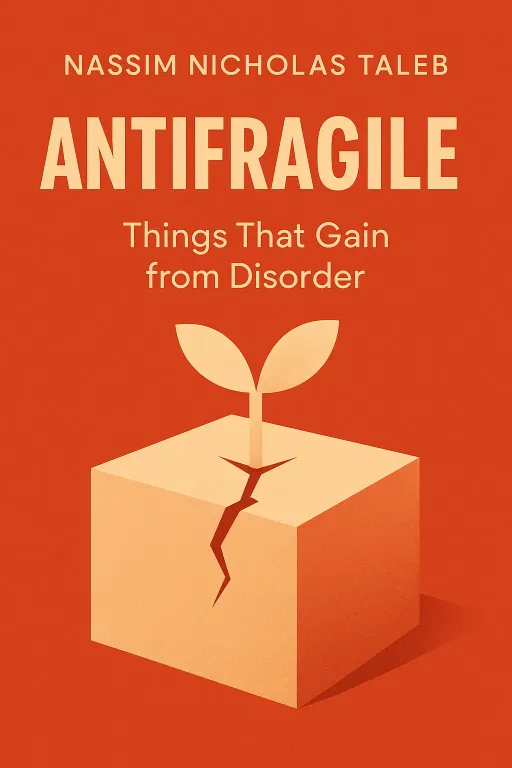
Nova: Exactly! It’s the resilient system trap. We aim for robustness, for systems that can absorb shocks and return to their original state. But what if we could design things that, when faced with disorder, not only survive but actually get stronger? That’s where we step into the world of Nassim Nicholas Taleb's radical concept of 'antifragility,' and the profound insights of Donella H. Meadows on 'leverage points' in complex systems.
Atlas: So, we're talking about systems that don't just endure, but through adversity. I like that. Taleb's work, especially, has really shaken up how people think about risk and uncertainty. His background as an options trader, seeing how markets thrive on volatility, gives him such a unique lens. And Meadows, of course, is foundational for anyone trying to understand complex interconnections.
Nova: Absolutely. Today we're going to dive deep into this. First, we'll explore Taleb's revolutionary concept of antifragility – how systems can benefit from disorder. Then, we'll discuss Meadows' profound insights into leverage points, revealing where to make the most impactful changes to achieve that very antifragility.
Deep Dive into Core Topic 1: Antifragility – Benefiting from Disorder
SECTION
Nova: So, let's start with Taleb's big idea: antifragility. Most things are fragile, meaning they break under stress. Some things are robust or resilient; they resist shocks and stay the same. But antifragile things? They from disorder. Think of it like this: if you break a bone, it often heals stronger than before. That’s a natural antifragile response.
Atlas: That’s a powerful image, the bone healing stronger. But wait, if I’m designing a critical piece of infrastructure, like a bridge or a data center, does that mean I should actively stressors? Because that sounds like a recipe for disaster for anyone who values stability and foresight.
Nova: Not necessarily introducing chaos, but designing it. Taleb argues that we live in a world of extreme, unpredictable events – what he calls 'Black Swans.' Traditional risk management focuses on predicting and preventing, but antifragility is about building systems that unpredictability. Consider the human immune system: it gets stronger by being exposed to pathogens, not by being kept in a sterile bubble. Each challenge it overcomes makes it more robust against future threats.
Atlas: Oh, I see. So it’s not about the shock, it’s about having a system that's inherently structured to learn and improve from the inevitable shocks that come. For someone building a software platform, for example, that might mean incorporating constant, small-scale stress testing, or even designing modules that fail gracefully and then adapt, rather than attempting to build an impenetrable monolith.
Nova: Exactly! Think about a truly innovative restaurant in a fiercely competitive city. Many might aim for a consistent, unchanging menu. But an antifragile restaurant might constantly experiment, introducing new dishes, adapting to ingredient availability, even embracing customer feedback that might seem "disruptive" to a more fragile business. Each small "failure" or unexpected preference gives them data, pushes them to innovate, and ultimately makes their culinary approach more dynamic and appealing than a static competitor. They gain from the inevitable culinary trends and changing tastes.
Atlas: That's a great example. It's like the system isn't just surviving; it's and in real-time. It's not just about having redundant systems, it's about having systems that their performance after a failure or a challenge. So, for an architect, it might mean designing a building with modular components that can be easily upgraded or reconfigured in response to changing environmental demands or user needs, rather than a fixed, rigid structure.
Nova: Precisely. It’s about building in optionality, decentralization, and redundancy, but with a twist: making sure those redundancies are not just backups, but opportunities for learning. When you design for antifragility, you're not just preparing for the unexpected; you're preparing to from it.
Deep Dive into Core Topic 2: Leverage Points in Complex Systems
SECTION
Atlas: That makes me wonder, if we want to get stronger from disorder, where do we even? Because a system can be incredibly complex. For someone trying to design robust systems, it can feel like pushing a boulder uphill. Where do you find the most effective point of intervention?
Nova: That's where Donella H. Meadows' brilliant work on 'leverage points' comes in. She observed that in complex systems, not all points of intervention are equal. Some places, if you push them just a little, will produce a massive, desired change. Other places, you can push with all your might, and nothing happens. It's like the difference between pushing a car by its bumper versus turning the steering wheel.
Atlas: So you're saying there are specific "sweet spots" for change. But how do you these leverage points? It sounds like you need to be a systems wizard, and for someone trying to fortify their creations against the unexpected, what's the tiny step here? What are we looking for?
Nova: Meadows identified twelve leverage points, ranging from the least effective to the most effective. The most profound leverage points often involve shifting the goals of the system itself, or even the mental models that underpin it.
Atlas: Okay, so give me an example that makes this tangible. If I'm a city planner, trying to make public transport more efficient, what's a high-leverage point versus a low one?
Nova: A low-leverage point would be adding more buses or tweaking bus schedules – that's just changing a parameter. A higher leverage point would be rethinking the entire goal of the transport system. Instead of "move as many people as possible from A to B," what if the goal became "maximize citizen well-being and environmental health"? That shift in goal could lead to radically different designs, like prioritizing walking and cycling infrastructure, or integrating public transport with urban green spaces, creating emergent properties of healthier, happier citizens, not just faster commutes.
Atlas: Wow. That's a huge shift. It's not just about optimizing the existing framework; it's about fundamentally questioning the framework itself. It’s about changing the, not just the. That makes me think about how we approach design. We often get caught up in optimizing components, but Meadows tells us to look at the overarching purpose. It connects back to antifragility too, doesn't it? If your system's underlying goal is adaptive learning, it becomes inherently antifragile.
Nova: Exactly! When you understand these leverage points, you can design for emergent properties, making your systems inherently more adaptive and less brittle. It's about finding those critical feedback loops, those places where information flows and decisions are made, and subtly shifting them. It’s about realizing that true resilience, true strength, comes not from rigidity, but from intelligent adaptability.
Synthesis & Takeaways
SECTION
Nova: So, when we combine Taleb's antifragility with Meadows' leverage points, we get a powerful blueprint. It’s not enough to be resilient; we need to be antifragile. And to achieve that, we need to understand where the most impactful changes can be made within a system. It’s about designing with the expectation of stress, not just hoping to avoid it.
Atlas: That’s truly insightful. It’s about moving beyond simply surviving the unexpected, to actually using those shocks as fuel for growth and strengthening. For anyone who designs systems – whether it's software, an organization, or a physical structure – it's a call to look beyond the immediate problem and identify those deep, underlying leverage points. It’s about making your creations not just robust, but inherently more adaptive and less brittle.
Nova: Exactly. It’s a mindset shift that transforms threats into opportunities. So, to our listeners who are architects, strategists, and creators, here’s a tiny step for this week: identify one existing system you manage. How could you introduce a small element of 'antifragility' to it? And where might be a high-leverage point to implement that change?
Atlas: That’s a fantastic challenge. Instead of just patching up issues, look for that one subtle shift that could turn a point of weakness into a source of strength. That's how you really fortify your creations against the unexpected.
Nova: This is Aibrary. Congratulations on your growth!