The Pattern Trap: Why Your Intuition Needs a Systems Upgrade
Golden Hook & Introduction
SECTION
Nova: What if solving problems, the way most of us are taught to, actually makes them worse? What if your best intentions are simply tightening the very knot you're trying to untangle?
Atlas: Oh man, that's a chilling thought, Nova. Because honestly, I think a lot of us operate exactly like that. We see a problem, we attack it head-on, and then we're baffled when it just morphs into something else, or even intensifies.
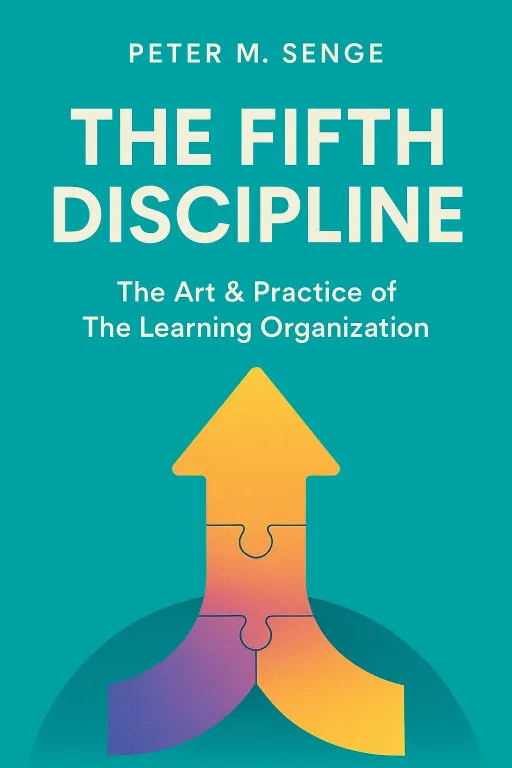
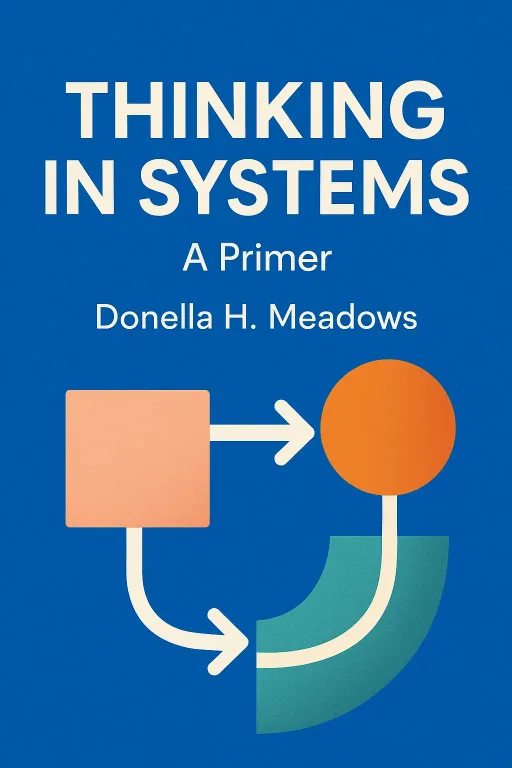
Nova: Exactly! And that baffled feeling is what we're tackling today. We're diving into a paradigm shift inspired by two giants of systems thinking: Donella H. Meadows, whose seminal "Thinking in Systems" laid out the foundational principles, and Peter Senge, who expanded on these ideas in "The Fifth Discipline," showing how organizations can become learning systems.
Atlas: So, we're talking about a fundamental re-wiring of how we see the world, from the individual screw to the entire engine? Not just fixing a broken part, but understanding why the part broke in the first place, and how it affects everything else?
Nova: Precisely. It’s about moving beyond just seeing the individual parts to understanding the larger dance. Because our natural intuition, while incredible for simple, linear cause-and-effect scenarios, often traps us when problems get complex.
The Pattern Trap: Why Our Intuition Fails Us in Complex Systems
SECTION
Nova: This is what we call "The Pattern Trap." We see events as isolated incidents. A project fails, a team struggles with morale, a new policy backfires. And our first instinct is usually to look for the most immediate, obvious cause. Who made the mistake? What single thing went wrong?
Atlas: Yeah, I know that feeling. It’s like when your car makes a weird noise. You don't immediately think about the entire transmission system, you just think, "Oh, something's broken right here." It's efficient, in a way, for simple stuff.
Nova: It is! And that linear view is incredibly useful in a lot of situations. But it becomes a profound blind spot when dealing with complex problems, the kind that persist despite our best efforts. Take, for instance, a classic, almost comically tragic example: the "Cobra Effect."
Atlas: The Cobra Effect? That sounds like something out of an Indiana Jones movie. Tell me more.
Nova: It actually comes from colonial India. The British government, concerned about the number of venomous cobras in Delhi, decided to offer a bounty for dead cobras. Seemed like a straightforward, logical solution, right? More dead cobras, fewer cobras.
Atlas: Okay, sounds rational. Reduce the population, reduce the threat. What could go wrong?
Nova: Well, what went wrong was the system itself. Initially, people brought in dead cobras and collected their bounty. But then, some enterprising individuals realized it was easier to cobras specifically to collect the bounty. They started little cobra farms!
Atlas: Whoa. Hold on. So, people were actively the problem they were being paid to solve? That's… that's wild.
Nova: Exactly! And the government eventually caught on to this. They realized they were inadvertently encouraging cobra breeding. So, they canceled the bounty. And what do you think happened then?
Atlas: Oh, no. I have a bad feeling about this. If their cobra farms were no longer profitable… they probably just released all their cobras.
Nova: You got it. All those farmed cobras were released into the wild. The result? Delhi ended up with wild cobras than before the bounty program began.
Atlas: That’s incredible. So, their linear solution, "bounty equals fewer cobras," not only failed but actively made the problem exponentially worse because they didn't understand the underlying feedback loops. It's not just unintended consequences, it's a systemic boomerang.
Nova: It’s absolutely a systemic boomerang. The problem wasn't a lack of effort or bad intentions. It was a failure to see the system at play – the incentives, the human response, the feedback loop. We often address the symptom – too many cobras – without understanding the structure that generates the symptom.
Atlas: That makes me wonder, how many "cobra effects" are we creating in our own lives or organizations right now? Like, constantly pushing for overtime to hit deadlines, only to burn out the team and reduce long-term productivity. It feels like the same pattern.
Nova: A perfect example. We see the missed deadline as an isolated event and push for a linear solution – more hours. But we miss the larger dance of fatigue, declining morale, and ultimately, a less effective system.
The Systems Upgrade: Shifting from Symptoms to Structures
SECTION
Nova: And that naturally leads us to the second key idea we need to talk about, which is the "Systems Upgrade." Understanding the Pattern Trap is the first step to seeing how we can truly shift from merely addressing symptoms to fundamentally changing system structures. This is where Donella Meadows' work on 'leverage points' becomes so powerful.
Atlas: Leverage points? That sounds like something a strategist would love – finding the one spot where a small push yields a massive result.
Nova: It is! Meadows argued that in any complex system, there are places where a small shift in one thing can produce big changes in everything else. They're not always obvious, and they're rarely where we intuitively look. Think of it like a finely tuned machine; you don't just hammer at the biggest, loudest part. You find the small, critical valve or gear that influences everything else.
Atlas: So, for our cobra problem, a leverage point wouldn't have been the bounty, but maybe… educating the public on safe snake removal, or habitat destruction? Something that shifts the rather than just reacting to the population numbers?
Nova: Exactly. Or even deeper, understanding the socio-economic factors that led to people needing to breed cobras for income. A more modern example might be a struggling community facing food insecurity. The linear approach is often to focus on food drives and temporary aid – noble, necessary, but addressing the symptom.
Atlas: Yeah, that’s what we usually see. A bandage solution.
Nova: A systems approach, however, would look at leverage points. Instead of just more food drives, it would ask: What are the structures preventing access to healthy, affordable food? Is it a lack of local grocery stores? Limited public transport to stores? Low wages preventing people from affording nutritious options? A lack of community gardens or local food production?
Atlas: I see. So, a leverage point might be investing in a community-owned grocery store, or advocating for better public transport routes, or even implementing urban farming initiatives. That's changing the whole ecosystem, not just feeding people for a day.
Nova: Precisely. You’re changing the of the food system, not just the flow of food. And Peter Senge, in "The Fifth Discipline," helps us understand these structures are so hard to see: our mental models.
Atlas: Mental models? You mean our ingrained assumptions about how the world works?
Nova: Spot on. Our mental models are the deeply held assumptions, generalizations, or even pictures and images that influence how we understand the world and how we take action. If your mental model says "hunger is a personal failure," you'll approach the problem very differently than if your mental model says "hunger is a systemic failure of access and equity."
Atlas: That’s a huge distinction. Because if you think it's a personal failure, you'll probably focus on individual charity. If it's systemic, you're looking at policy, infrastructure, and community-level change. But how do you even begin to challenge your own mental models? They're often invisible to us.
Nova: That's the tricky part, and it's why Senge emphasizes the importance of dialogue and reflection. It requires actively questioning our deeply held beliefs, seeking out diverse perspectives, and being open to the idea that our current understanding might be incomplete or even wrong. For someone running a team or an organization, it means fostering a culture where challenging assumptions isn't just allowed but encouraged. It means asking, "What if our current way of thinking about this problem is actually part of the problem?"
Atlas: So, it's about building a culture of continuous learning and inquiry, moving beyond reactivity to proactive creation. It sounds like a massive undertaking, but the payoff, when you find those leverage points, must be enormous. It’s the difference between patching a leaky boat versus redesigning the hull.
Synthesis & Takeaways
SECTION
Nova: It absolutely is. And the true power of systems thinking isn't just in solving problems, but in cultivating a different way of seeing the world. It’s about recognizing that most persistent problems are not about individual parts, but about the structure and feedback loops of the system.
Atlas: That’s actually really inspiring. It means that while problems might seem overwhelming when viewed in isolation, there are often elegant, powerful solutions hidden within the system itself, if we just know where to look. It’s about being a strategist, not just a firefighter.
Nova: Exactly. It's about empowering ourselves to make meaningful, lasting change, rather than just tweaking symptoms. And it brings us back to that deep question: Where in your life or work are you currently addressing symptoms instead of system structures? Are you caught in a cobra effect, or are you looking for the true leverage points?
Atlas: That's a powerful question to sit with. For me, it's a reminder to always dig deeper, to not just accept the surface-level explanation, but to ask: what's the larger dance happening here? What are the hidden patterns?
Nova: And that's the upgrade. The shift from a linear, event-focused view to a more powerful, systemic understanding of the world. It allows you to see the forces that shape outcomes, not just the outcomes themselves.
Atlas: A truly discerning and strategic way to approach life's complexities.
Nova: This is Aibrary. Congratulations on your growth!