The 'How-To' Twist: How to Understand Systems Without Feeling Overwhelmed.
Golden Hook & Introduction
SECTION
Nova: Unraveling the world's hidden connections.
Atlas: Complexity made clear, impact made possible.
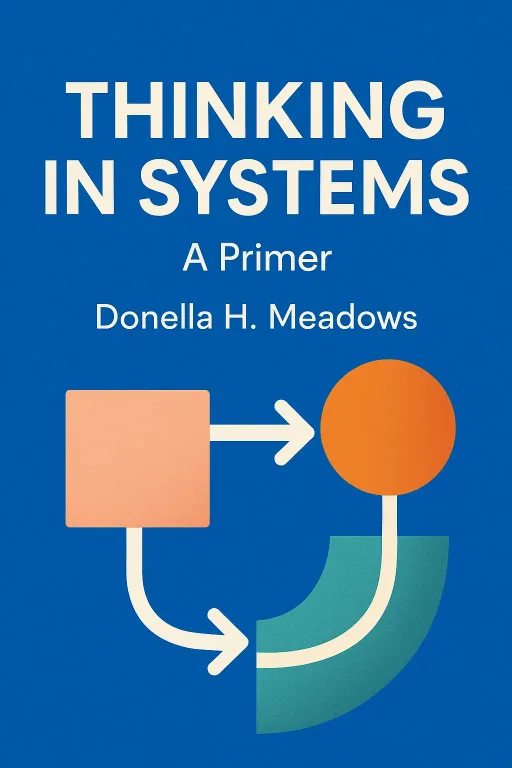
Nova: Exactly! Today we're diving into the brilliant mind of Donella H. Meadows and her seminal work, "Thinking in Systems: A Primer." It’s fascinating because Meadows wasn't just an academic; she was a pioneering environmental scientist. She co-authored "The Limits to Growth" report in the early 70s, which used systems dynamics to model global resource depletion. Imagine being at the forefront of predicting global challenges like that, then dedicating your life to making those complex ideas accessible.
Atlas: Oh, I like that. Going from predicting potential global collapse to then writing a book designed to help everyone understand how the world actually works? That’s quite the journey. It makes me wonder how she distilled something so vast into something we can all grasp.
Nova: It’s truly remarkable. And that's the core of our podcast today: how understanding the invisible threads that connect everything around us can transform how we approach problems, make decisions, and ultimately, create a more profound impact. Today we'll dive deep into this from two perspectives. First, we'll explore the fundamental interconnectedness of systems and how tiny changes can have huge ripple effects. Then, we'll discuss how fostering a collective understanding of these systems can empower us to act adaptively and effectively, whether in our personal lives or within larger organizations.
The Interconnected Web: Understanding System Structures and Feedback Loops
SECTION
Atlas: So, when we talk about "systems thinking," it sounds a bit… academic. Like something for engineers or urban planners. How does that connect to, say, someone trying to improve their team's efficiency, or even just manage their personal finances?
Nova: That’s a great question, because it’s absolutely for everyone. Meadows reveals that our world is a web of interconnected forces. Think of it like this: you have a thermostat in your house, right? That’s a simple system. When the temperature drops, the heater kicks on; when it rises, it turns off. That’s a balancing feedback loop. It maintains stability. We understand that intuitively.
Atlas: Right, it keeps things steady. No big surprises there.
Nova: But then there are reinforcing feedback loops, and these are where things get wild. Meadows shows us that the biggest leverage points for change are often counter-intuitive. They don't lie in fixing individual components, but in understanding these loops and the system's structure.
Atlas: Okay, so give me an example where this "reinforcing loop" goes off the rails. Where does thinking in systems really save us from unintended consequences?
Nova: Let's consider the classic "Tragedy of the Commons." Imagine a beautiful, abundant fishing ground, historically shared by a community. Each fisherman, acting rationally, wants to catch as many fish as possible to provide for their family and maximize their income.
Atlas: Seems sensible. Everyone's just trying to do well.
Nova: Exactly. But here's the reinforcing loop: the more fish one person catches, the less there are for everyone else. This creates an incentive for others to fish even more aggressively, to "get theirs" before the resource is depleted. There's a delayed feedback mechanism here – the ocean seems vast, so the impact of overfishing isn't immediately visible.
Atlas: Oh, I see. So the system encourages each individual to exploit the resource, even though collectively, it leads to disaster. It's like everyone thinks they're just taking a small piece, but all those small pieces add up.
Nova: Precisely. The system's structure, a shared resource with individual incentives, creates a reinforcing loop towards depletion. If you just tell individual fishermen, "Hey, fish less," it often won't work because their immediate feedback loop is individual profit. The leverage point isn't just in individual behavior, but in changing the system itself — perhaps by establishing clear quotas, communal management, or even creating artificial boundaries.
Atlas: That makes sense. So, it's not about blaming the fishermen, it's about recognizing that the system they're operating within is designed to fail. I imagine a lot of our listeners who are trying to solve complex problems in their own organizations might be hitting similar walls, trying to fix "bad actors" when it's really the "bad system."
Nova: Absolutely. Meadows' insight is that true impact comes from understanding these underlying dynamics, not just reacting to symptoms. If you just impose a rule to fish less without understanding the incentives, it might backfire. You have to look at the whole picture.
Learning Organizations: Fostering Collective Insight for Adaptive Action
SECTION
Atlas: That’s a powerful idea. But how do we move from just these complex systems to actually effectively within them? It feels like one thing to map out the "Tragedy of the Commons," and another to actually prevent it when you're in the middle of it.
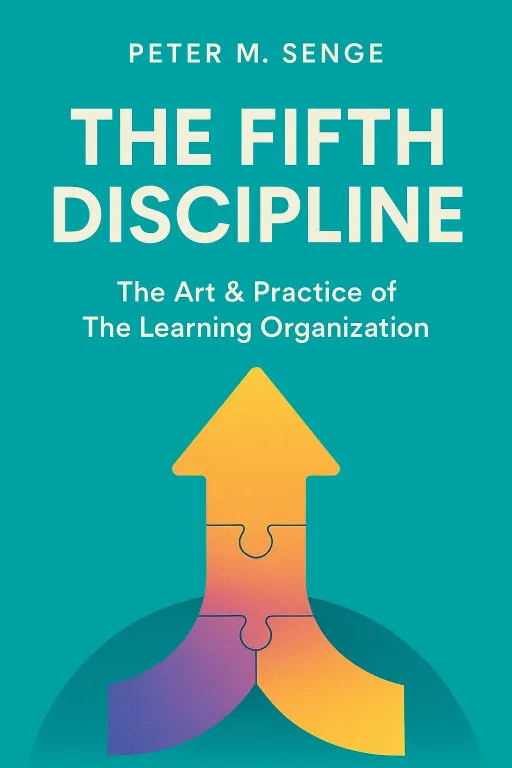
Nova: That's where Peter Senge’s "The Fifth Discipline" beautifully complements Meadows’ work. Senge emphasizes that learning organizations thrive by fostering a shared understanding of how their systems operate. This collective insight allows for adaptive and effective responses to challenges. It’s about creating an environment where everyone involved can see the whole system, not just their little corner of it.
Atlas: Okay, so it’s not enough for one person to be a systems thinker; the whole team, or even the whole company, needs to be on the same page. But that sounds incredibly difficult. How do you get everyone to see the same "system"? Especially when they're all focused on their own departmental goals?
Nova: Let's use an example of a company struggling with supply chain issues. You might have the sales team promising aggressive delivery dates, the production team optimizing for low-cost, long runs, and the logistics team battling constant last-minute changes and rush orders. Each department is doing its "best" within its own silo.
Atlas: Yeah, that’s a classic. Everyone's working hard, but the overall system is inefficient, customer satisfaction is low, and nobody knows why.
Nova: Exactly. In a traditional setup, they might blame each other: "Sales over-promised!" "Production is too slow!" "Logistics can't keep up!" But a learning organization, inspired by Senge, would bring these teams together. They wouldn't just look at individual reports; they would collectively map out the entire supply chain system. They'd identify how sales forecasts impact production schedules, which then impacts warehousing, and ultimately, customer delivery.
Atlas: So, they'd literally draw out the connections, the feedback loops, the delays?
Nova: Yes, precisely! They’d see, for instance, that a short-term sales incentive to hit quarterly targets might be creating a massive inventory surplus that costs the company more in storage and waste down the line. Or that a delay in getting raw materials from one supplier creates a cascade of delays across multiple production lines. By collectively seeing this full picture, they gain a shared mental model.
Atlas: That’s actually really inspiring. So, the "impact maker" in our audience, someone driven to make a difference, shouldn't just try to optimize their own little corner. They need to help everyone around them see the bigger system they're all a part of. But how do you even start that? For someone who's a "seeker" and "synthesizer," how do you introduce this kind of thinking without just sounding like you're adding another layer of complexity?
Nova: It starts small. Senge talks about "personal mastery" – developing your own clarity, vision, and patience. Then, "shared vision" and "team learning" follow. It’s about facilitating conversations, asking probing questions, and sketching out those connections. You don't have to be the CEO to do this. You can start by simply asking, "How does what we do here affect what they do over there?" And then listening to the answers.
Synthesis & Takeaways
SECTION
Atlas: That makes me wonder, given that our world is so interconnected, and problems often feel so overwhelming, how does this systems thinking actually help us feel overwhelmed, rather than more?
Nova: That’s the profound twist. It's not about making things more complex; it’s about understanding the complexity, so you can find the points of greatest leverage. Instead of pushing hard against a brick wall, you find the loose brick that can unravel the whole thing. It shifts you from feeling like a victim of circumstances to an agent of change. You move from reacting to symptoms to truly designing better systems. The goal isn't just to identify problems, but to discover where to intervene most effectively in the flow of things. It’s about shifting from reactive problem-solving to proactive system design, leading to more sustainable and impactful change.
Atlas: So, for our listeners, the "impact makers" and "seekers" who want to connect the dots and make a difference, what's one tiny step they can take this week to start applying this incredibly powerful way of thinking?
Nova: Pick one area you want to influence, something that feels a bit stuck or confusing. Maybe it’s a recurring problem at work, or even a personal habit you want to change. Then, sketch its key components. Who or what are the players? What are the main activities? And crucially, draw the connections between them. Look for those feedback loops. Where does one action feed back into another? Just seeing that map can be incredibly illuminating.
Atlas: I love that. Don't just complain about the traffic; try to map out the system that the traffic.
Nova: Exactly!
Nova: This is Aibrary. Congratulations on your growth!