The 'Hidden Systems' Trap: Why Surface-Level Solutions Miss the Real Problem.
Golden Hook & Introduction
SECTION
Nova: Atlas, quick, rapid-fire question for you. What’s the number one solution to traffic jams?
Atlas: Oh, easy! More lanes, obviously. Just open up another highway, problem solved!
Nova: Right? Except, somehow, every time we add more lanes, the traffic seems to get even worse eventually. What if the very 'fixes' we apply are actually making our problems… immortal?
Atlas: Oh, I like that. Immortal problems. That sounds like my Monday mornings. You fix one thing, two more pop up.
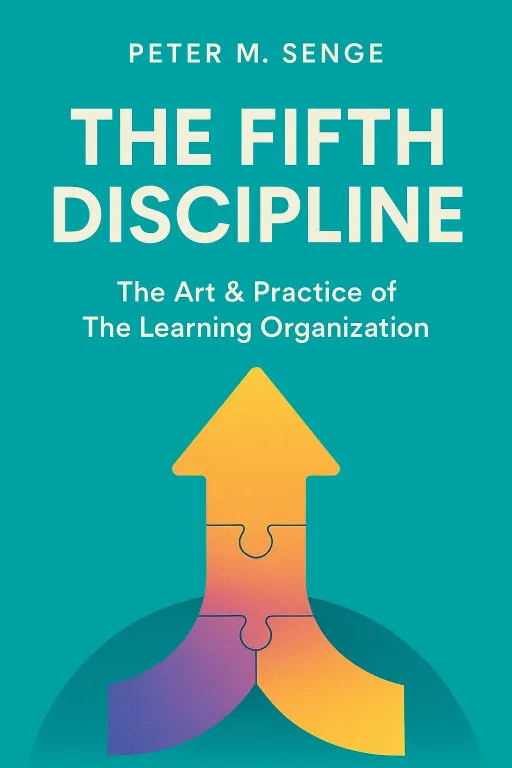
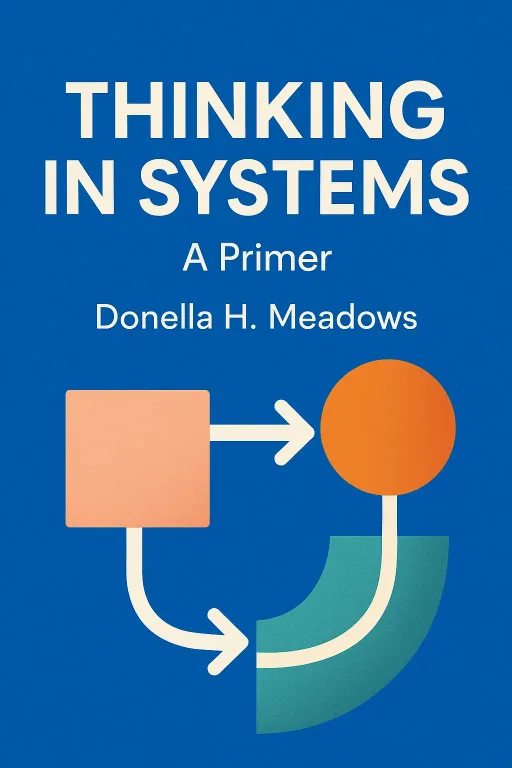
Nova: Exactly! And that's what we're diving into today, the 'hidden systems' trap. We're talking about two groundbreaking books that fundamentally shift how we see the world: "Thinking in Systems" by the brilliant Donella H. Meadows, and "The Fifth Discipline" by Peter Senge.
Atlas: Meadows and Senge. Two heavy hitters. What makes their work so essential for today?
Nova: Well, Donella Meadows was a pioneering environmental scientist, a lead author of the incredibly influential "Limits to Growth" report back in the 70s. She challenged the entire paradigm of endless economic growth, showing how interconnected everything truly is. She brought this ecological understanding to how we think about system. And Senge then took those insights and applied them directly to organizational learning, showing companies how to truly thrive. They're both teaching us to look beyond the obvious.
Atlas: So, it's not just about fixing what's broken, it’s about understanding it keeps breaking in the first place. That sounds like a much bigger game.
The Blind Spot: Symptoms vs. Systems
SECTION
Nova: It’s absolutely a bigger game. And the first big idea these books highlight is our collective blind spot: we are phenomenal at treating symptoms. We see a problem, we rush to fix the most visible, immediate issue.
Atlas: Right, like that leaky boat you mentioned. You grab a bucket, you start bailing.
Nova: Exactly! You're bailing water, you're working hard, you feel productive. But you're exhausted, and the water keeps coming in because you haven't found the hole yet. That's the symptom trap. It’s an endless cycle of fixing without true resolution.
Atlas: But wait, isn’t quick action sometimes necessary? If the boat is sinking, you to bail, right?
Nova: Absolutely! Immediate action is often crucial. The problem arises when we confuse bailing with the leak. Meadows introduced the concept of "feedback loops" to explain this. Often, our quick fixes create what are called 'compensating feedback loops.' You push here, the system pushes back somewhere else.
Atlas: Give me an example. Like, a really vivid one.
Nova: Okay, think about the classic example of pesticide use in agriculture. Farmers see pests, they spray pesticides. Immediate problem solved, right? Crop yield goes up. But then, the pests that survive are the most resilient. They reproduce, and now you have super-pests. So you need stronger pesticides, which then kill off natural predators of the pests, making the problem even worse.
Atlas: Oh, I see. So the 'solution' actually strengthens the problem over time. That’s kind of heartbreaking. It's like my attempts to get more organized. I buy a new planner, I feel great for two days, then I'm back to chaos and now I have stuff to organize.
Nova: Precisely! The planner was a symptom-fix. The underlying system—your habits, your workflow, your mental models about organization—remained unchanged. That's why these problems feel so persistent, so frustrating. We're fighting the system, but we don't even know we're in a fight with a system.
Unveiling the System: Leverage Points and Mental Models
SECTION
Nova: So, if fixing symptoms just creates more symptoms, how do we actually that cycle? How do we find that hole in the boat? This leads us to the second core idea: finding the "leverage points."
Atlas: Leverage points? That sounds like a fancy way of saying 'the important bit.' What exactly do you mean?
Nova: Well, Meadows defined leverage points as places within a system where a small shift in one thing can produce big changes in everything. It’s not about pushing harder, it's about pushing in the place. Imagine a seesaw. You can push with all your might on one end, or you can find the fulcrum and apply minimal effort for maximum effect.
Atlas: So, instead of just bailing water faster, a leverage point would be where we find the actual leak in the boat?
Nova: Exactly! Or even better, asking why the boat is leaking in the first place. For instance, instead of just building more prisons to deal with crime—a symptom fix—a leverage point might be investing in early childhood education or addressing systemic poverty. Those are small shifts with massive, long-term impacts on the entire system.
Atlas: That’s a powerful shift in perspective. And this is where Senge’s "mental models" come in, right? So it’s not just about changing the system, but changing how we about the system?
Nova: Absolutely. Senge argues that our mental models—our deeply ingrained assumptions, beliefs, and even images of how the world works—are often the highest leverage points. They dictate how we design systems, how we react to problems, and even what solutions we consider possible.
Atlas: Can you give an example of how changing a mental model could make such a difference?
Nova: Think about a company that sees its employees purely as "costs to be minimized." Every decision, from salaries to training, will be filtered through that mental model. The system they create will be one of high turnover, low morale, and ultimately, poor performance. But if that company shifts its mental model to view employees as "valuable assets to be developed," suddenly, investing in training, fair wages, and supportive environments becomes logical. The entire system of the company transforms, leading to innovation and loyalty.
Atlas: Wow, that’s huge! So, we're talking about almost a philosophical shift in how we approach everything, from our personal habits to how global problems are tackled. It's not just about what we, but how we.
Nova: Exactly. It’s the ultimate form of leverage. If you can shift the paradigm, the fundamental assumptions from which the system arises, you can create truly transformative, lasting change. It’s about asking: "What are the hidden rules, the unspoken beliefs, that are driving this outcome?" That’s the real deep question.
Synthesis & Takeaways
SECTION
Nova: So, to bring it all back, the core insight from Meadows and Senge is this: problems aren't isolated events. They are symptoms, expressions of underlying system structures and our mental models. We often get trapped in a cycle of fixing the surface, never truly resolving anything.
Atlas: So, the deep question isn't 'what's wrong?' but 'how is this system designed to produce this outcome?' And more importantly, 'what are mental models that are keeping this system in place?'
Nova: Precisely. And the power of systems thinking is that it empowers us. It shows us that we're not just victims of circumstance, but that we can identify those high-leverage points, challenge our own mental models, and make truly lasting change. As Meadows herself said, "The highest leverage often lies in changing paradigms." It’s about shifting our worldview.
Atlas: That’s actually really inspiring. For anyone out there feeling stuck with a problem that just won't go away, whether it's in their personal life, their work, or even something bigger in the world, this offers a whole new way to look at it. It allows you to step back from the frantic bailing and actually look for the leak.
Nova: Absolutely. So, for our listeners today, identify one persistent problem you face. And instead of thinking of the next quick fix, ask yourself: What's the system creating this? What are the interconnected parts? And where might be a leverage point, or a mental model shift, that could truly change everything?
Atlas: That’s a fantastic challenge. We’d love to hear what persistent problems you’re looking at through a systems lens. Share your insights and questions with us on social media!
Nova: This is Aibrary. Congratulations on your growth!