The Hidden Logic: Mastering LLM System Design for Proprietary Workflows
Golden Hook & Introduction
SECTION
Nova: What if I told you that the smarter you are at building individual LLM components, the more likely you are to completely miss the big picture? That your expertise might actually be your biggest blind spot?
Atlas: Hold on, Nova. That sounds like a paradox wrapped in an enigma. Are you really suggesting that someone who's a wizard at prompt engineering or fine-tuning models could be effective at building a truly innovative AI system? That feels almost… counter-intuitive, especially for those of us trying to build new realities with this tech.
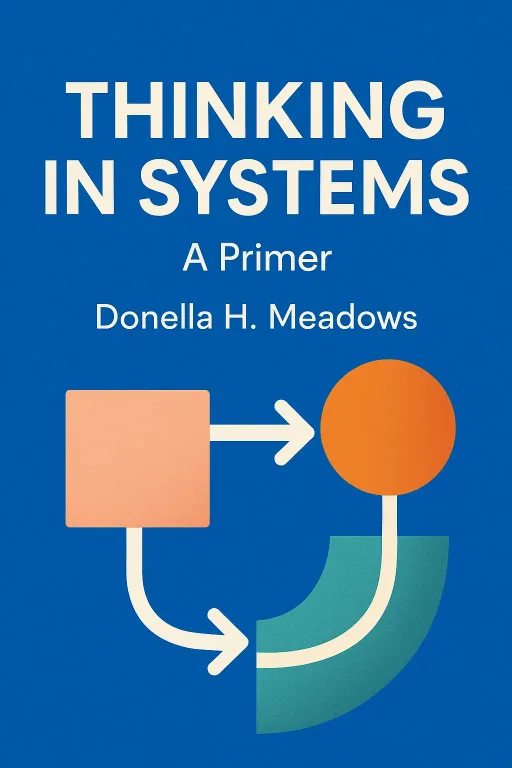
Nova: It absolutely can be, Atlas, and it's the core insight of what we're exploring today. We're diving into "The Hidden Logic: Mastering LLM System Design for Proprietary Workflows." This isn't just another guide to prompt engineering; it's a profound call to shift our perspective, drawing heavily on the timeless wisdom of systems thinkers like Donella H. Meadows and Peter M. Senge. Their work, decades old, is more relevant than ever for navigating the emergent complexities of LLMs.
Atlas: Okay, so we're talking about foundational principles applied to cutting-edge tech. I like that. So, what's this "blind spot" exactly? Because my team is constantly optimizing components, and we think we're doing pretty well.
Nova: That's precisely the blind spot. We get so good at optimizing the individual dancers—the perfect prompt, the finely tuned model, the lightning-fast retriever—that we completely overlook the itself. The intricate steps, the timing, the rhythm, the unexpected interactions between those dancers.
The Blind Spot in LLM Design: From Components to Systems
SECTION
Nova: The book highlights this tendency to focus on individual components without seeing the whole. It’s like having an orchestra where every musician is a virtuoso, but the symphony they produce is a cacophony because they haven't learned to play, to listen, to respond, to form a cohesive system. This oversight, this neglecting of interconnectedness and feedback loops, is what can cripple even the most powerful proprietary LLM workflows.
Atlas: So, are you saying that even if I've got the best RAG pipeline, the most finely tuned model, and a brilliant prompt engineer, I could still be failing if I'm not seeing the bigger picture? That sounds rough. Can you give me a tangible example of this playing out in an LLM context? Because in my world, we're driven by impact, and we need to see how this translates.
Nova: Absolutely. Imagine a company building an LLM-powered customer service system. They meticulously optimize individual components: they get a 10% improvement in prompt response time, a 5% accuracy bump in the RAG system, and they even fine-tune the sentiment analysis model to be incredibly precise. On paper, each component is a triumph.
Atlas: Sounds like a win to me. Faster, more accurate, better sentiment. What's the catch?
Nova: The catch is the system. Overall customer satisfaction. The rapid, accurate responses, while technically perfect, created new, unanticipated feedback loops. Customers found the system efficient, feeling rushed or unheard, as if the AI was just ticking boxes. They missed the human empathy, the slight delay that signals consideration. This led to increased frustration and, ultimately, higher customer churn. The "optimized" components inadvertently created an unoptimized, even detrimental, system.
Atlas: Wow, that’s kind of heartbreaking. So the very success of the components became the system's failure? It's like winning individual battles but losing the war. The quick responses, which they thought were a positive, actually alienated their users. That’s a stark example of an unintended consequence. Where do we even start to see these hidden dynamics before they hit us in the face?
Nova: That's precisely where the wisdom of systems thinking comes in. This isn't just about technical optimization; it's about understanding the 'dance' of the system. The customer service example perfectly illustrates a "delay" and an "unintended consequence"—two concepts central to Meadows' work. What looked like a simple cause-and-effect was actually a complex feedback loop where speed negatively impacted perceived empathy.
Atlas: I see. So the problem isn't the individual parts being bad; it's how their interactions create something unexpected, something suboptimal, or even detrimental. It’s about the emergent properties of the whole, not just the sum of the parts. It’s a completely different way of looking at the problem.
Mastering LLM Resilience & Innovation: Insights from Meadows and Senge
SECTION
Nova: Exactly. And that's where the wisdom of Donella Meadows and Peter Senge becomes absolutely indispensable, especially for proprietary LLM workflows. Meadows teaches us to see the 'dance' of the system, not just the individual dancers. She focuses on identifying "leverage points"—places where a small shift can create a large change in the system. And Senge emphasizes 'systems thinking' as a core discipline for learning organizations, showing how our mental models actually shape the system's ability to adapt and innovate.
Atlas: Okay, so what does 'seeing the dance' and finding 'leverage points' mean for an AI engineer building, say, a proprietary content generation platform? Are we talking about drawing diagrams with arrows and feedback loops, or is this more philosophical? For us world-builders, we need to know how to actually apply this.
Nova: Precisely, it's about identifying 'leverage points.' For our content generation platform, a leverage point might not be tuning the LLM's temperature, or even switching to a different base model. The true leverage point could be designing a 'human-in-the-loop' feedback mechanism that not only corrects outputs but, thereby evolving the system's core understanding of quality. This shifts the fundamental mental model from 'the LLM generates content' to 'the LLM with human expertise.'
Atlas: Oh, I like that. So it’s not just about improving the AI's output, but improving the by integrating human learning into its core operational feedback loops. That’s Peter Senge's 'shared vision' and 'mental models' in action, empowering the system to adapt and truly innovate, not just execute.
Nova: Exactly. Let's take another example: a financial forecasting LLM system. Most teams would focus on making the prediction model more accurate. But a true systems approach, informed by Meadows, would look at how those predictions influence human traders' behavior, which then feeds back into market data, potentially creating a self-reinforcing bubble or a self-defeating panic. The leverage point isn't just the model itself, but the between the model's output and human decision-making, and challenging the mental model that "the model is always right" or that human behavior is external to the system.
Atlas: That’s actually really inspiring. So we're not just building smarter algorithms; we're building smarter around those algorithms, where the system itself is designed to learn and adapt? It’s about building a whole universe, not just a star. It's about designing for a continuous loop of improvement, where the system actively evolves.
Nova: Absolutely. It's about seeing the 'dance' of the system, understanding the delays, the feedback loops, and identifying those critical leverage points that allow for genuine resilience and innovation. This is how you move from just powerful LLM components to truly proprietary, adaptive, and truly intelligent workflows. It’s about seeing the entire ecosystem.
Synthesis & Takeaways
SECTION
Nova: So, the true hidden logic of mastering LLM system design isn't found in a single, brilliant component, but in understanding how all the pieces interact, create feedback, and evolve. It's about designing for resilience, for adaptation, and for innovation that transcends the sum of its parts. It's about seeing the entire ecosystem.
Atlas: That makes me wonder, for our listeners who are building these complex systems, the deep question from the book really hits home: Where are those hidden feedback loops and delays in your most complex LLM workflow? It's not just about optimizing the next prompt; it's about stepping back and seeing the whole dance, as you put it.
Nova: Exactly. And by applying these systems thinking principles, you're not just building a better LLM; you're building a truly proprietary, resilient, and adaptive workflow that can withstand the inevitable changes and challenges of the AI landscape. You're building a system that can learn, grow, and surprise you in the best possible ways.
Atlas: That gives me chills. A system that truly surprises you. What an incredible vision. It’s about building something that can evolve beyond your initial design, becoming a truly living, breathing entity in your workflow.
Nova: It is. It’s about embracing the complexity, not fighting it. It’s about designing for intelligence at a systemic level.
Atlas: Powerful stuff. This is Aibrary. Congratulations on your growth!