The 'First Principles' Trap: Why You Need Systems Thinking for Research.
Golden Hook & Introduction
SECTION
Nova: What if the very thing you've been taught to do in academia – specialize, narrow your focus, break problems down – is actually holding you back from true understanding?
Atlas: Whoa, that's a bold claim, Nova! Most of us are drilled to focus, to become experts in our niche. Are you saying that's a trap, especially for someone trying to make their mark in research?
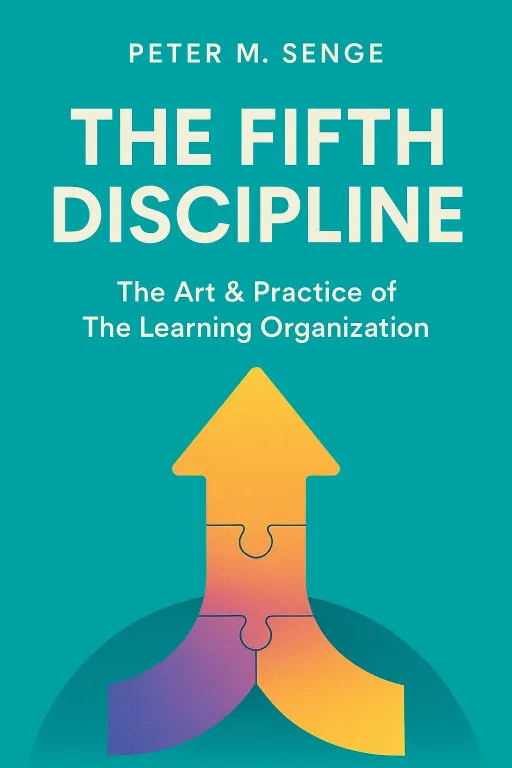
Nova: Absolutely, Atlas. It can be 'The First Principles Trap,' as we're calling it today. We're talking about a fundamental shift in how we approach research, moving beyond isolated analysis. This shift is inspired by two titans of systems thinking: Donella H. Meadows, with her seminal 'Thinking in Systems: A Primer,' and Peter Senge, and his transformative work, 'The Fifth Discipline.'
Atlas: Meadows and Senge. Two names that sound like they hold the keys to unlocking something big. Tell me more about Meadows.
Nova: Donella Meadows was an environmental scientist, a true pioneer. She had this incredible knack for dissecting complex ecological principles and making them universally applicable. She showed us the hidden levers of change, the subtle dynamics that drive everything from climate patterns to economic cycles. Her work fundamentally reframes how we perceive interconnectedness.
Atlas: So she's about seeing the forest, not just the trees. And Senge, from MIT, took those abstract ideas and really brought them into the organizational world, making them actionable, right?
Nova: Exactly. He applies these deep insights to how groups and organizations learn and evolve. So, today we're moving from breaking things down to seeing how they all fit together, and we're going to explore how this changes everything for aspiring academics.
Unveiling Hidden Dynamics: Donella Meadows and the Power of Feedback Loops
SECTION
Atlas: Okay, so you’re suggesting that traditional academic approaches, while valuing precision, might create a blind spot. How does Meadows help us see past that? What's the core idea she brings to the table?
Nova: Her core insight is that complex problems are rarely solved by looking at individual parts in isolation. She introduces us to feedback loops, stocks, and flows. Imagine a simple research project, say, studying student engagement. A traditional approach might look at individual student motivation or teaching methods. But Meadows would ask: what are the feedback loops here?
Atlas: Okay, so, what does that look like in practice? Give me a vivid example.
Nova: Think about a university department trying to improve its research output. They might implement a new policy – say, mandatory weekly research seminars. The immediate, intended effect is increased collaboration and new ideas, which is a positive feedback loop. More seminars, more ideas, more output. Seems straightforward, right?
Atlas: That's the ideal, of course. But I'm guessing there's a 'but.'
Nova: There always is in systems thinking. Because this isn't a linear cause-and-effect. What if those mandatory seminars also create a negative feedback loop? Researchers, already swamped, now have less time for deep, uninterrupted work. The 'stock' of available deep work time decreases. This leads to burnout, lower morale, and eventually, a in the quality of research output, despite the increase in visible activity.
Atlas: Oh, I've seen that play out. So, the intervention meant to boost output actually saps it. That’s counter-intuitive. It sounds like looking at just the number of seminars or initial participation rates would completely miss the point.
Nova: Precisely. That's the blind spot. You’re seeing the initial 'flow' of attendance, but you’re not tracking the 'stock' of researcher energy or the 'negative feedback loop' of time scarcity. Meadows teaches us that these loops – both reinforcing and balancing – create the dynamic behavior of any system. For a researcher, understanding these means you don't just study a phenomenon; you study the that create and maintain it.
Atlas: That’s a powerful shift. It means you're not just reporting on symptoms, but digging into the underlying structure. So when I'm looking at my own research topic, I should be asking: what are the hidden feedback loops? What are the stocks and flows that are driving this?
Nova: Exactly. It's about moving from a snapshot to a movie, from isolated data points to understanding the dance of cause and effect in a continuous cycle. It transforms your approach from an isolated analysis to a holistic understanding, which is crucial for robust research that actually changes things.
Cultivating Collective Intelligence: Peter Senge and the Organizational Learning Ecosystem
SECTION
Atlas: And once you start seeing these loops, the next logical step, and perhaps even more critical for academics, is to understand how these systems operate within groups, within organizations, within the very academic institutions we inhabit.
Nova: That's where Peter Senge comes in with 'The Fifth Discipline.' While Meadows gives us the language to understand systems, Senge applies it to human organizations, showing how collective intelligence emerges from understanding interdependencies. For collaborative research, for navigating the academic ecosystem, his insights are invaluable.
Atlas: So, how does Senge build on Meadows? What does he add for, let's say, a research team trying to land a big grant?
Nova: Senge introduces five disciplines, but let's focus on two key ones for our aspiring academic: 'shared vision' and 'team learning.' Imagine a research group where everyone is brilliant, but they're all pursuing slightly different individual agendas. They might be incredibly productive in isolation. But if they lack a truly shared vision, their collective impact is fragmented.
Atlas: I can picture that. Lots of individual successes, but the overall group might not be moving in a unified, powerful direction. It's like having a symphony orchestra where every musician is a virtuoso, but they're all playing different pieces.
Nova: That’s a perfect analogy! Senge would say they're missing 'team learning.' Team learning isn't just individuals learning in a team; it's about the team as a whole developing the capacity to create the results its members truly desire. It involves open dialogue, deep listening, and suspending assumptions – especially crucial in academia where expertise can sometimes lead to defensiveness.
Atlas: So, it's about getting everyone on the same page, not just intellectually, but in terms of purpose and how they interact. How does that help with something like a collaborative research grant, which often involves many different departments or even institutions?
Nova: When you have a shared vision, the interdependencies become clear. Each person's contribution is seen not as an isolated task, but as a vital part of the larger system working towards a common goal. Senge also emphasizes 'mental models' – the deeply ingrained assumptions that influence how we understand the world and take action. In collaborative research, unspoken or conflicting mental models can derail an entire project.
Atlas: Hmm, I imagine a lot of our listeners can relate to that; trying to collaborate with someone who has a fundamentally different approach, and you just can't seem to bridge the gap. So, Senge gives us tools to uncover and align those hidden assumptions?
Nova: Exactly. He provides frameworks for dialogue and inquiry that help teams surface these mental models, challenge them constructively, and build a more coherent, collective understanding. It's about building a learning organization, an academic ecosystem where insights are shared freely, mistakes are seen as learning opportunities, and the collective intelligence far surpasses that of any individual. It's about creating a system that produces better research outcomes.
Atlas: That sounds incredibly powerful for anyone trying to navigate the complexities of academic life, from managing a lab to leading an interdisciplinary project. It fundamentally shifts how you view your role and your impact within the wider system.
Synthesis & Takeaways
SECTION
Nova: So, whether we're talking about Donella Meadows revealing the hidden dynamics of feedback loops, or Peter Senge showing us how to cultivate collective intelligence within our academic ecosystems, the message is clear.
Atlas: The 'First Principles Trap' isn't about ignoring the details; it's about getting lost in them. It's about missing the bigger picture, the dynamic interconnections that truly drive outcomes.
Nova: Precisely. True understanding, and ultimately more impactful research, comes from seeing how everything connects. It’s moving beyond the narrow path and embracing the holistic view. For aspiring academics, this isn't just a theoretical exercise; it's a practical toolkit for navigating complexity and maximizing impact.
Atlas: So, for our precise learners and purposeful communicators out there, the deep question from the book is this: Consider your current research topic. What are the hidden feedback loops or interconnections you haven't fully explored yet? What parts of the system are you missing?
Nova: It’s a challenge to step back, to widen your lens, and to see the beautiful, intricate dance of the system you’re a part of.
Atlas: It’s about not just being a specialist, but a systems thinker.
Nova: This is Aibrary. Congratulations on your growth!