The 'Chaos' Trap: Why Systems Thinking Unlocks Design Leadership
Golden Hook & Introduction
SECTION
Nova: Atlas, if you had to describe in exactly five words, the feeling of constantly fixing things in your work, only for them to break again, what would they be?
Atlas: Oh, that's easy. Endless, exhausting, frustrating, pointless, loop. Your turn.
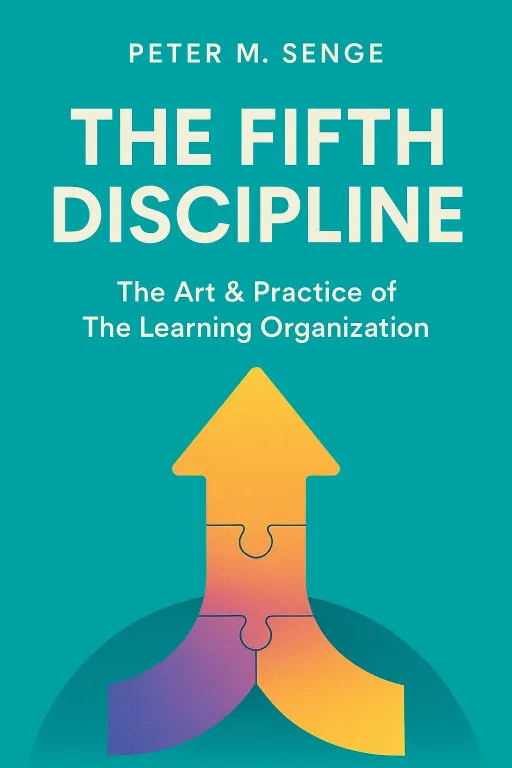
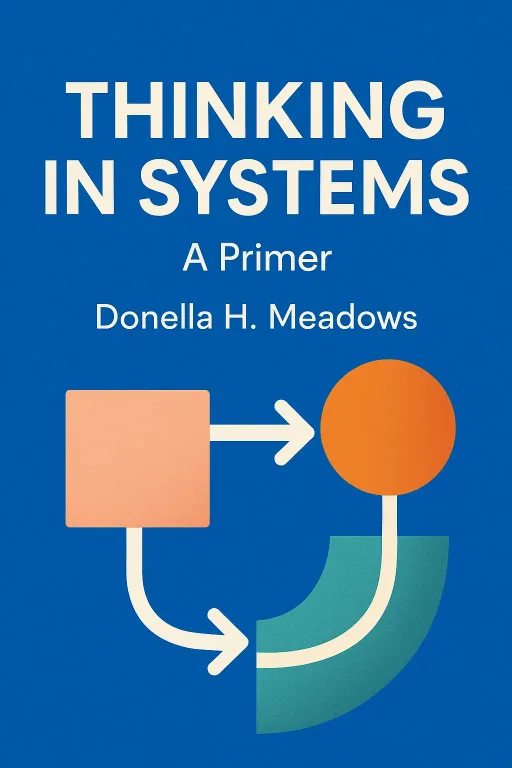
Nova: Mine would be: frustrating, familiar, futile, bewildering, draining. And honestly, that feeling is exactly what Donella H. Meadows tackles in her groundbreaking book, "Thinking in Systems," and what Peter M. Senge builds upon in "The Fifth Discipline." Meadows, an environmental scientist by training, had this incredible ability to translate complex ecological principles into accessible frameworks for understanding system. And Senge, well, he took those ideas and revolutionized how we think about organizational learning.
Atlas: Endless, exhausting, frustrating, pointless, loop. That really hits home for anyone in a leadership role, especially in design. Because you're right, Nova, it often feels like we're caught in this perpetual cycle of whack-a-mole. You fix one bug, another pops up. You optimize one workflow, another bottleneck appears. It's like a design leader's personal 'chaos trap.'
The 'Chaos' Trap: Fixing Symptoms vs. Systems
SECTION
Nova: Exactly! It’s what we call the 'chaos trap' – or more accurately, the 'blind spot.' We get so caught up in the day-to-day, the immediate problem, that we miss the hidden forces, the underlying patterns, shaping our teams and our products.
Atlas: And in the moment, when you're under pressure, with deadlines looming, isn't fixing the symptom the fastest way to just get through the week? To show progress?
Nova: It absolutely feels that way, Atlas. And that's the insidious part of the trap. It gives you the illusion of progress. But what it really does is drain energy, slow growth, and ultimately, prevent true, lasting impact. Imagine you have a leaky faucet. You could spend all day mopping up the puddles, right? That's fixing the symptom. You're busy, you're active, you might even feel productive.
Atlas: But the leak is still there. The pipe is still broken.
Nova: Precisely! And often, those fixes create what systems thinkers call 'compensating feedback.' You fix one problem, and because you haven't addressed the root cause, the system finds another way to manifest that underlying issue. Maybe the water pressure builds up elsewhere, or another pipe bursts.
Atlas: Oh, I've seen that in design. A team might constantly be redesigning a specific UI element because user complaints keep coming in. They're iterating, they're busy, but the complaints don't stop. They're just moving them around.
Nova: Right! Because the real issue wasn't the button's color, but perhaps a fundamental misunderstanding of the user's mental model, or a disconnect between the design and engineering teams' capabilities, or even a business model that creates conflicting incentives. For someone who sees the bigger picture, who's driven to build for lasting impact, that constant symptom-fixing must feel like trying to navigate a ship with a broken compass, completely off course.
Atlas: It's like you're constantly reacting to the waves, instead of understanding the currents. It’s exhausting, and it prevents you from ever truly setting a strategic course.
Systems Thinking as a Design Superpower
SECTION
Nova: And that's where systems thinking steps in as a design superpower. Meadows, in 'Thinking in Systems,' introduces the idea of 'leverage points.' These are spots in a system where a small shift can produce big, lasting changes. It's about identifying those feedback loops that drive behavior, whether it's positive loops that accelerate growth or negative loops that maintain equilibrium – or even stagnation.
Atlas: 'Leverage points' sounds incredibly powerful, but can you give me a design scenario where a small shift had a huge ripple effect? Because often, design leaders are told to make big, sweeping changes.
Nova: Absolutely. Think about a product that's struggling with user engagement. The symptom-fixing approach might be to add more features, or A/B test endless UI variations. A systems thinker, however, might step back and realize the core issue isn't a feature gap, but a misaligned incentive structure for users, or a fundamental flaw in the onboarding process that creates early frustration. The leverage point isn't a UI tweak; it's redesigning the or even the itself. That small conceptual shift can transform the entire user experience and product trajectory.
Atlas: Wow. That's a profound shift. It’s not just about seeing the system, but about influencing it at its most sensitive points. That sounds like what Peter Senge talks about with 'mental models' in 'The Fifth Discipline.' It’s not just about understanding the system, but how teams learn and adapt within it.
Nova: Precisely! Senge argues for the 'learning organization,' where teams don't just react to problems, but actively learn from them, challenging their own 'mental models' – those deeply ingrained assumptions that shape how we understand the world and take action. When a design team can collectively surface and challenge its mental models, it can then build a shared vision, fostering a culture of continuous learning and adaptation.
Atlas: So, for our listeners who are driven by fostering potential – both in themselves and in their teams – this isn't just about better products, it's about cultivating better people, a better design culture, right? It's about building a team that can proactively shape the future, not just react to it.
Nova: Exactly. It moves you from reacting to proactively shaping the future. It allows you to design not just products, but entire product ecosystems, and in doing so, cultivate a team that is resilient, adaptable, and truly innovative. It's about designing for impact that resonates far beyond a single feature release.
Synthesis & Takeaways
SECTION
Nova: So, what we've really been talking about today is the profound power of shifting your perspective. It's moving from the immediate, chaotic fire-fighting to understanding the intricate dance of cause and effect within a system.
Atlas: And honestly, it’s a tough mirror to hold up. But I think the deep question we’re left with is: Where in your own work, right now, are you fixing symptoms instead of the underlying system? Because I bet everyone listening can point to at least one area.
Nova: It’s a question that requires courage and dedicated reflection. Even 15 minutes a week to just step back and ask, 'What are the patterns here? What are the deeper forces at play?' can make all the difference. It's about trusting that inner wisdom, that 'Architect' or 'Navigator' part of you, and giving it the systems lens it needs to truly lead.
Atlas: And when you start doing that, when you move beyond the surface, you begin to see how you can truly build for lasting impact and foster that growth you're driven by. It’s a game-changer.
Nova: Absolutely. This is Aibrary. Congratulations on your growth!