The Blind Spot: Why Understanding Systems Thinking Unlocks Strategic Advantage
Golden Hook & Introduction
SECTION
Nova: Atlas, if I told you that your best problem-solving instincts are actually, in a funny way, a blind spot, what would you say?
Atlas: Oh boy, I’d say, "Great, another thing to fix!" But seriously, if my instincts are the problem, I’m already in trouble. That’s a bit of a curveball.
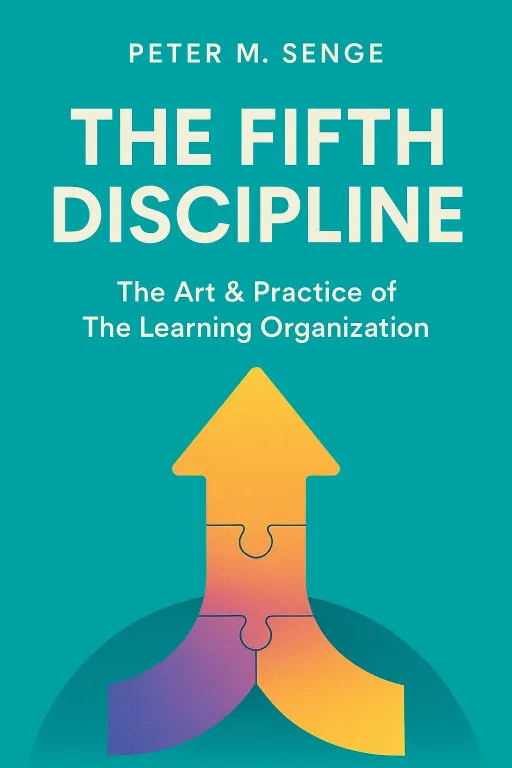
Nova: It absolutely is, and it’s a curveball that’s been subtly sabotaging even the most brilliant builders and strategists for decades. Today, we’re challenging those very instincts by diving into the profound world of systems thinking. We’re going to explore the groundbreaking work of Donella H. Meadows in "Thinking in Systems" and Peter Senge’s seminal "The Fifth Discipline."
Atlas: Meadows, if I remember correctly, was a true pioneer, an environmental scientist from MIT who really put systems on the map.
Nova: Exactly. She laid the foundational concepts for understanding how complex systems behave, and Senge then brilliantly took that baton and applied it to how organizations can truly learn, adapt, and achieve sustainable success. It’s about seeing the invisible forces at play.
The Blind Spot: Why Linear Thinking Fails in Complex Systems
SECTION
Nova: So, let's start with this "blind spot." Our strategic minds, especially those of us driven to build and create, are excellent at breaking down problems. We identify a component, we isolate it, and we fix it. It feels efficient, it feels logical. But in complex systems—whether that’s a market, a product team, or even a community—that linear, reductionist approach often leads to… well, more problems.
Atlas: Hold on, isn’t breaking things down what we’re taught to do? How else do you tackle a massive project or a complex product launch? You can’t just stare at the whole thing; you have to break it into manageable pieces.
Nova: That’s the intuition, and it works wonderfully for complicated problems, like assembling a car. But for problems, like understanding traffic flow or a competitive market, systems are more than the sum of their parts. Meadows really emphasized this. When you only focus on the individual pieces, you miss the feedback loops, the delays, the interdependencies that are actually driving the system's behavior.
Atlas: So, you fix one thing, and something else breaks, or the original problem pops up somewhere else in a different form? That sounds frustratingly familiar to anyone trying to scale a project or a team. Like a game of whack-a-mole with your development pipeline.
Nova: Exactly! Imagine a company trying to cut costs. The linear solution might be, "Let’s reduce our headcount by 10%." On paper, it saves money. But what happens? The remaining staff become overworked, morale plummets, quality control suffers, customer service ratings drop, and ultimately, you lose customers, which costs you more than you saved. That’s a negative feedback loop in action – a seemingly logical action creating a worse outcome because the system wasn't understood.
Atlas: Wow, that’s kind of heartbreaking when you put it like that. It’s so obvious once you point it out, but when you’re in the thick of it, just trying to hit a quarterly target, you just see the "cost problem," not the "employee morale and customer loyalty" system.
Nova: And that’s the blind spot. We tend to focus on symptoms, not the underlying structure that generates those symptoms. It’s like trying to bail water out of a sinking boat without realizing there’s a hole in the hull. You're constantly reacting, never truly solving.
The Shift: Designing for Resilience with Systems Thinking
SECTION
Nova: And that example perfectly illustrates why we need to shift from just fixing symptoms to understanding the entire system. Which brings us to "The Shift" – how we actually move from reactive problem-solving to proactively designing for resilience and long-term impact.
Atlas: Okay, so where’s the good news? How does a "Builder" or "Strategist" leverage this? Give me a story where someone actually systems thinking to create something awesome, not just prevent disaster.
Nova: That’s where Meadows’ concept of "leverage points" becomes critical. These are places in a system where a small shift can lead to big changes. It’s not about pushing harder; it’s about pushing in the right place. And Senge, in "The Fifth Discipline," shows us how to build organizations that can and on these leverage points. He champions the 'learning organization,' where systems thinking is a core discipline.
Atlas: So, it’s not just about fixing; it’s about proactively designing the system to and? Like, building a product that automatically collects and adapts to user feedback, rather than waiting for a yearly review? How does that empower a team to scale and really amplify their impact?
Nova: Precisely. Senge argues that by understanding interdependencies, teams can collectively identify root causes, not just symptoms. Imagine a product development team, instead of just fixing individual bugs as they come in, they map out the entire user journey, the internal communication channels, the feedback loops from customer support, and even the delays in deployment. They find that a small change in how user stories are initially defined, a leverage point, eliminates 80% of their recurring bugs downstream.
Atlas: That makes me wonder about strategic delegation. If the team collectively understands the system, they’re not just executing tasks; they’re acting as intelligent agents within a larger whole. They can identify those leverage points themselves. That’s powerful for someone trying to scale.
Nova: Absolutely. It transforms a team from a collection of individuals into a cohesive, learning entity. They're not just solving problems; they're co-creating sustainable solutions. This allows a 'Builder' to design for resilience, anticipating challenges before they become crises, and a 'Strategist' to sharpen their market vision by truly understanding market dynamics as a complex, evolving system. It’s about moving beyond reactivity to proactivity, and beyond efficiency to effectiveness.
Synthesis & Takeaways
SECTION
Nova: Ultimately, embracing systems thinking helps us move beyond just seeing the current challenge as an isolated event. It allows us to view it as a part of a dynamic, interconnected whole. It’s about designing for long-term impact and achieving a profound strategic advantage.
Atlas: I’m thinking about that deep question from the book content, about a recent challenge in my own team where we kept patching over issues. Viewing it as a system… it changes. It’s not just about fixing bugs; it’s about fixing the ecosystem that the bugs. It’s about building in a way that creates a positive ripple effect.
Nova: Exactly. It empowers you to not just solve problems, but to build better systems that prevent them, fostering resilience and sustainable growth.
Atlas: So, for anyone out there building something, scaling a team, or trying to sharpen their market vision and find their edge, here’s one practical step: grab a whiteboard, pick one persistent problem you’ve been grappling with, and instead of just listing solutions, try mapping out all the interconnected elements. What causes what? What delays things? What are the reinforcing loops? You might just find your true leverage point, that one small shift that changes everything.
Nova: It’s about seeing the dance, not just the dancers, and learning how to influence the rhythm.
Atlas: That’s a fantastic way to put it.
Nova: This is Aibrary. Congratulations on your growth!