The Art of Asking: Why Better Questions Lead to Better Solutions
Golden Hook & Introduction
SECTION
Nova: Atlas, five words. What's the secret to unlocking breakthrough solutions?
Atlas: Oh, I like this game. My five words: Stop talking, start truly asking.
Nova: Ooh, I love that. That's sharp. Mine would be: Questions reveal, answers often hide.
Atlas: That's a great way to put it, Nova. Because honestly, my default setting, and I imagine a lot of our listeners', is to just jump straight to the solution, right? The problem is there, let's fix it!
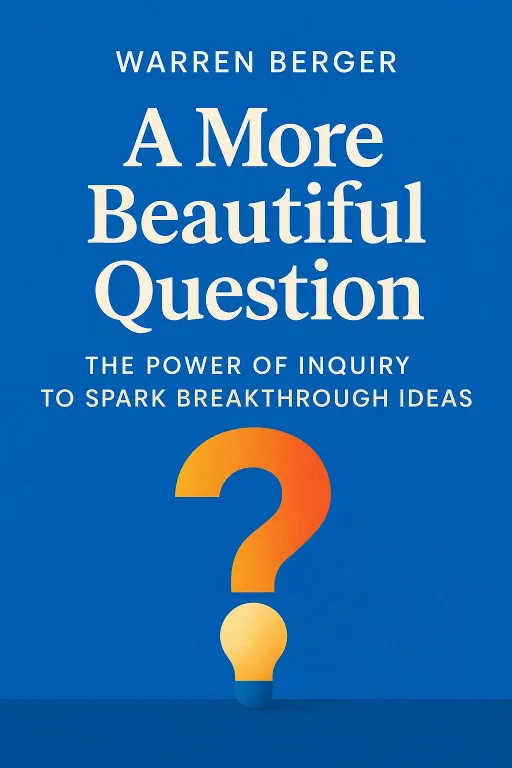
Nova: Exactly! And that's precisely what we're dissecting today: the profound, often overlooked, power of asking. We're drawing insights from two seminal works that, when combined, offer an incredible toolkit for anyone looking to build something lasting. First, Warren Berger's, widely acclaimed for bringing inquiry-driven innovation into the mainstream. Berger really solidified the 'why' behind good questions. And then, Donella H. Meadows', published posthumously, which became a foundational text for understanding complex systems, influencing generations of thinkers and problem-solvers.
Atlas: So you're saying it's not just about asking question, but asking questions. That makes me wonder, how does simply changing the question lead to fundamentally different outcomes, especially when you're trying to build robust systems or cultivate something new?
Nova: That's the perfect question to kick us off, Atlas, because it challenges that ingrained human impulse to jump to quick answers. We've all been there, right? Faced with a challenge, our brains immediately start scrambling for solutions. But what if that initial rush to an answer is actually blinding us to the problem, or even more importantly, to the truly innovative solution lurking beneath the surface?
The Foundational Power of Questioning: Beyond Answers to Innovation
SECTION
Nova: Berger argues that the quality of our solutions is directly tied to the quality of our questions. He champions three types of 'beautiful questions': 'Why,' 'What If,' and 'How.' Let me illustrate with a story that really hammers this home. Think about a company, let's call them 'Connect Solutions,' back in the early 2000s. They were a leading manufacturer of landline telephones. Their problem, as they saw it, was declining sales. Their initial 'answers' were typical: "We need better marketing!" or "Let's innovate with new colors and features!"
Atlas: Yeah, I can see that. That's the classic reaction. You just double down on what you're already doing.
Nova: Precisely. But a new, more insightful leader came in and instead asked a simple 'Why?' question: "Why do people use our phones?" The obvious answer was to talk to other people. But digging deeper, they asked, "Why are people increasingly to use landlines?" And the answers started to shift. It wasn't just about communication, it was about,, and.
Atlas: Ah, I see where this is going. So the problem wasn't their product, but the underlying that was evolving.
Nova: Exactly! That 'Why' question exposed a hidden assumption: that fixed-location communication was always going to be king. It opened the door to the 'What If' questions: "What if communication wasn't tied to a wall?" "What if our devices could be portable, personal, and always connected?" This led them down a path entirely different from just redesigning landlines. It nudged them towards mobile technology, even though it wasn't their core business at the time.
Atlas: So, for our listeners who are trying to build a really resilient team or cultivate a vibrant community, how do these 'beautiful questions' actually help clarify the foundational assumptions they're making? Because it feels like in a fast-paced environment, pausing to ask 'why' can feel like it's slowing you down.
Nova: It's a fantastic point, Atlas, and it speaks to the resilience aspect of our listeners. It feels counter-intuitive, but that pause to ask 'why' is an investment, not a delay. Imagine a team struggling with low morale. The easy answer might be "let's have a pizza party!" But a 'Why' question might be: "Why are people feeling disengaged?" Which could reveal issues with workload, lack of recognition, or unclear purpose. Then the 'What If': "What if we empowered team members to own projects from start to finish?" And finally, the 'How': "How do we structure our teams to provide that autonomy and clear purpose?" That process leads to a far more sustainable and impactful solution than just pizza. It builds the foundation for a truly robust system.
Atlas: That's actually really inspiring. It means the initial discomfort of slowing down to question can save you from building on shaky ground. It's about building lasting value, not just quick fixes.
Systemic Inquiry: Unearthing Root Causes for Sustainable Impact
SECTION
Nova: Absolutely. And that naturally leads us to the second key idea we need to talk about, which often acts as a counterpoint to what we just discussed: understanding the interconnectedness of things. Once we know to ask profound questions, we need to know to direct them – into the very fabric of the systems we operate within. This is where Donella Meadows' becomes indispensable. Meadows teaches us to see beyond superficial symptoms to the underlying structures and feedback loops.
Atlas: That sounds intellectually appealing, but when you're cultivating a community or trying to scale a robust system, how do you even begin to map those interconnected parts? It feels overwhelming. Like, where do you even start with something so complex?
Nova: That's a completely valid feeling, Atlas. Meadows helps us by emphasizing that systems aren't just collections of parts; they're collections of parts, organized in ways that achieve something. She introduces concepts like 'stocks', 'flows', and 'feedback loops'. Let's take a common organizational problem: employee burnout.
Atlas: Oh, I know that feeling. The immediate answer is usually "more vacation time" or "wellness programs."
Nova: Right. Those are symptom-level solutions. A systemic inquiry, using Meadows' principles, would go deeper. You'd ask: "What are the contributing to burnout?" Maybe it's an ever-increasing workload exceeding the capacity. Then you look for. Is the company culture one where overwork is implicitly rewarded? Is there a feedback loop where managers, seeing others work late, feel they must also demand more?
Atlas: Okay, so that’s a bit like looking at a leaky faucet and realizing the real problem isn't just the drip, but the pressure valve that's set too high, or the corroded pipes upstream. So how does this prevent 'solution-jumping' when you're trying to build something foundational?
Nova: Exactly! It prevents that by guiding you to 'leverage points' – places in the system where a small shift can lead to significant, lasting change. For the burnout example, the leverage point might not be more vacation, but changing the incentive structure to reward efficient work rather than sheer hours, or redesigning communication channels to reduce information overload. Meadows shows us that often, the most obvious solutions are the least effective because they address symptoms, not the systemic cause. By asking questions that trace those connections, you can build truly sustainable growth. You’re not just patching a leak; you're redesigning the plumbing for long-term health.
Atlas: That's such a hopeful way to look at it. It means if you're an architect building complex systems, or a cultivator nurturing a community, you have the power to make changes that genuinely last, not just temporary fixes. It's about designing for resilience from the ground up.
Synthesis & Takeaways
SECTION
Nova: It truly is. What we've explored today is that the act of asking, both the 'beautiful questions' that redefine problems and the 'systemic questions' that uncover root causes, is the ultimate tool for achieving truly innovative and sustainable solutions. It's about moving from a reactive answer-first mindset to a proactive, inquiry-driven approach that builds lasting value.
Atlas: So for our listeners, the architects, cultivators, and resilient leaders out there who are ready to build with more intention, what's one tiny step they can take this week to start integrating this powerful idea into their work, their projects, their lives?
Nova: That's the perfect way to bring it home, Atlas. And the tiny step is deceptively simple, yet profoundly effective: Before your next problem-solving session – whether it's a big team meeting or even just a personal challenge you're wrestling with – spend just five minutes generating at least three 'why,' 'what if,' or 'how' questions about the core issue. Don't worry about answers yet, just the questions.
Atlas: I love that. It’s not about finding the answer immediately, it’s about finding the question first. That's actually really empowering, and it aligns perfectly with trusting your intuition as much as your data. Taking that reflective moment to ask better questions can truly guide your vision.
Nova: Precisely. It’s how you cut through complexity and reveal the true nature of any challenge. It paves the way for elegant, robust solutions.
Atlas: What a powerful shift in perspective. Thank you for this, Nova.
Nova: My pleasure, Atlas. This is Aibrary. Congratulations on your growth!