Stop Reactive Security, Start Proactive Resilience: The Guide to Unbreakable Systems.
Golden Hook & Introduction
SECTION
Nova: Atlas, if I say "reactive security," what's the first thing that pops into your mind?
Atlas: Oh man, "reactive security." That's easy. It's like playing whack-a-mole with a blindfold on, in a house that's already on fire, using a spoon. You're just constantly hitting things, hoping something works, but the flames keep spreading. It's exhausting.
Nova: Exactly! It's that never-ending patch-and-react cycle, isn't it? And it's a cycle so many IT professionals, so many "Guardians" of digital systems, find themselves trapped in. Today, we're going to talk about breaking that cycle. We're talking about stopping reactive security and instead, building truly proactive resilience.
Atlas: That sounds like a dream. But how? How do you even begin to untangle that mess?
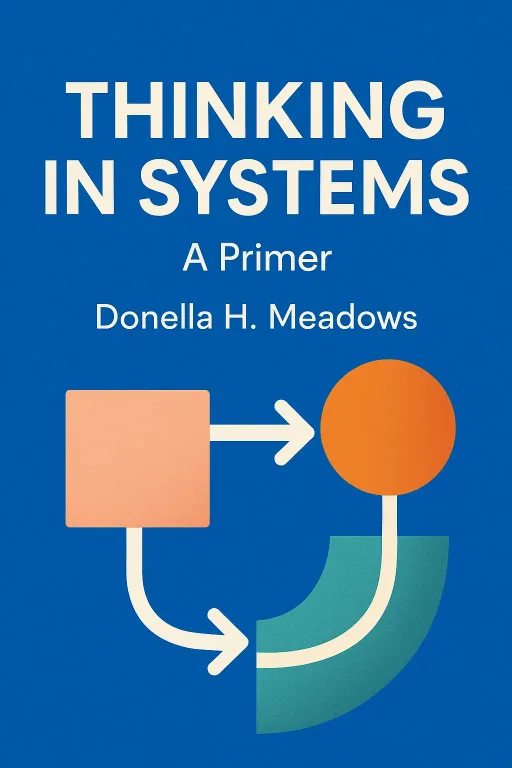
Nova: Well, we're diving deep into two powerful texts that, when combined, offer a complete playbook. First, we're going to explore "Thinking in Systems" by the brilliant Donella H. Meadows. Meadows was a pioneering environmental scientist and systems dynamicist, and her work bridges the gap between hard science and philosophical understanding of how the world truly works. She taught us to see the invisible forces at play.
Atlas: Huh. An environmental scientist teaching us about cybersecurity? I'm already intrigued. I imagine a lot of our listeners, the architects and strategists out there, are feeling that constant pressure of fixing symptoms, not causes.
Nova: Precisely. And then, to bring that theory into stark, practical reality, we'll look at "The Phoenix Project" by Gene Kim, Kevin Behr, and George Spafford. This book is remarkable because it's a novel, a story, yet it brilliantly illustrates how applying systems thinking through DevOps principles can transform utterly chaotic IT operations into something highly reliable and, crucially, secure. It's a groundbreaking way to demystify complex tech concepts.
Atlas: That makes sense. It's one thing to understand the theory of how a complex engine works, and another to actually get your hands dirty and build one that runs perfectly. So, we're talking about the 'why' and the 'how' for unbreakable systems today?
Nova: Absolutely. The core of our podcast today is really an exploration of how we can stop merely reacting to security threats and instead proactively build systems so fundamentally resilient they become unbreakable, by deeply understanding their underlying structures.
The Invisible Architecture: How Systems Thinking Builds Unbreakable Security
SECTION
Nova: So, let's start with Donella Meadows. Her central idea is "systems thinking." It's not about looking at individual components in isolation, but understanding the interconnectedness, the feedback loops, and the leverage points within a whole system. For security, this means looking beyond the individual vulnerability to the systemic health of your entire digital environment.
Atlas: So you're saying if a hacker gets in through a specific server, it's not just about patching that server, it's about understanding that server was vulnerable in the first place, and how that vulnerability is connected to other parts of the system?
Nova: Exactly. Think of it like this: imagine a company, let's call it "DataSafe Inc." They're constantly battling security incidents. Phishing attacks lead to compromised accounts, which then lead to lateral movement within their network because of flat network architecture. Then, a misconfigured cloud bucket exposes customer data.
Atlas: Oh, I know that feeling. Every Tuesday is "patch Tuesday," but it feels more like "panic Tuesday" for the security team.
Nova: Right. The DataSafe security team is heroic. They're patching, they're running scans, they're updating firewalls, they're chasing alerts around the clock. They fix the phishing problem with better training, they segment the network, they secure the cloud bucket. But then, a few months later, a new, unforeseen vulnerability crops up in their CI/CD pipeline, allowing a different kind of breach.
Atlas: That's the whack-a-mole problem you mentioned. It sounds incredibly disheartening. For our listeners who are managing high-pressure teams, this constant firefighting must be soul-crushing.
Nova: It is. And Meadows would say that DataSafe is stuck in a reactive feedback loop. The problem isn't the individual breaches; it's the underlying system that those breaches. Maybe it's a culture of rapid deployment without integrated security checks, or a lack of communication between development and operations, or even incentives that prioritize features over security. The fixes they apply are symptoms-level interventions.
Atlas: So, it's like trying to fix a leaky faucet by constantly bailing out the overflowing sink, instead of turning off the main water valve?
Nova: That's a perfect analogy! Meadows teaches us to look for the "leverage points." These are the few places in a complex system where a small shift can produce big changes throughout. For DataSafe, a leverage point might not be patching the individual server, but re-designing their software development lifecycle to embed security from the very first line of code. Or it could be changing the incentive structure for engineers to reward secure design, not just speed.
Atlas: That's a great way to put it. So, it's about finding the "master switch" instead of just changing lightbulbs? It's shifting focus from individual threats to the systemic health of the entire digital environment. That enables proactive defense.
From Chaos to Control: DevOps as Applied Systems Thinking for Security
SECTION
Nova: And if Meadows gives us the lens through which to understand these complex systems, then "The Phoenix Project" gives us the blueprint for what that looks like in action. It's essentially a masterclass in applying systems thinking to IT operations, transforming chaos into control.
Atlas: I've heard of "The Phoenix Project" – it's practically a cult classic in the IT world. But how does a novel about a fictional company called Parts Unlimited help us build unbreakable security?
Nova: Well, Parts Unlimited was a disaster. Their IT department was a black hole of project delays, finger-pointing, and critical changes that constantly broke systems. They had a single, indispensable genius named Brent who was the bottleneck for everything. Sound familiar to anyone?
Atlas: Oh, I've seen that movie. Brent is usually the only one who knows how the legacy system works, or the one person who can debug that ancient script. And if Brent goes on vacation, the whole house of cards collapses.
Nova: Precisely. Their security posture was, predictably, atrocious. Not because they lacked smart people, but because their was broken. "The Phoenix Project" shows how they adopted DevOps principles – which are fundamentally about systems thinking – to transform their operations. They focused on three key areas: Flow, Feedback, and Continuous Learning.
Atlas: Flow, Feedback, Continuous Learning. Walk me through that in a security context.
Nova: For "Flow," they visualized all work, from development to operations, including security tasks. They eliminated Brent as the bottleneck by distributing knowledge and automating processes. This meant security checks became integrated into the continuous delivery pipeline, rather than being a last-minute gate.
Atlas: So, security isn't a separate team's problem anymore, it's baked into the entire value stream. That's huge. That's going to resonate with anyone struggling with "Shadow IT" or constant audit failures.
Nova: Exactly. Then "Feedback" came in. Instead of waiting for a quarterly audit to find vulnerabilities, they built in fast, continuous feedback loops. Automated security testing, real-time monitoring, and rapid communication channels meant that security issues were identified and fixed in minutes or hours, not weeks or months. It’s about building quality and security, not bolting it.
Atlas: I see. So, you're not just reacting a breach, you're getting immediate alerts on potential weaknesses they're being introduced. That's a game-changer.
Nova: And finally, "Continuous Learning." They created a culture of experimentation and improvement. Every incident, every deployment, every security test became an opportunity to learn and refine their processes. They stopped blaming individuals and started analyzing the system to prevent recurrence. This meant their systems didn't just become more efficient; they became inherently more resilient and secure. They were building systems that could self-heal or fail gracefully.
Atlas: So, the book essentially argues that secure systems are a natural byproduct of healthy, efficient systems, not a separate project? That's powerful. It's about leveraging feedback loops to learn faster than threats evolve, transforming from chaotic to highly reliable and secure.
Synthesis & Takeaways
SECTION
Nova: So, what we're really talking about today is a fundamental shift in mindset. It's moving away from seeing security as a series of isolated problems to solve, and embracing resilience as a core design principle for everything we build. Donella Meadows gives us the intellectual framework, and "The Phoenix Project" shows us how to actually do it in the trenches.
Atlas: That's actually really inspiring. For our listeners who are "Architects" and "Strategists" looking to scale their expertise in cloud architecture or cybersecurity, this isn't just theory. This is the bedrock for building truly robust solutions. But for someone who wants to stop the endless patching and start building unbreakable systems, where do they even begin?
Nova: The tiny step we recommend is incredibly practical, and it comes directly from this systems thinking approach. Map out just critical network security process within your organization. Identify its key feedback loops – where information flows, where decisions are made, where actions are taken. And then, crucially, identify its potential points of failure.
Atlas: And the goal isn't just to find the weak spots, but to understand the that allows those weak spots to exist or persist. It's about finding those leverage points.
Nova: Exactly. It's about asking: where can a small, targeted intervention create a disproportionately positive impact on the overall security posture? That's how you move from firefighting to architecting unbreakable systems. It's about designing for resilience from the ground up, making security an inherent quality, not an afterthought.
Atlas: That gives me chills. Thinking in systems, applying DevOps principles – it's not just about technology, it's about culture, process, and truly understanding the complex dance of digital environments. It’s about being a guardian by building systems that are fundamentally sound.
Nova: Absolutely. It transforms an endless battle into a continuous journey of improvement and proactive design.
Atlas: Thank you, Nova, for illuminating that journey for us. This is Aibrary. Congratulations on your growth!