Stop Reacting, Start Anticipating: The Guide to Proactive Problem-Solving.
Golden Hook & Introduction
SECTION
Nova: What if I told you that being at fixing things on the fly is actually holding you back from true mastery?
Atlas: Oh, I like that. That's going to resonate with anyone who's ever felt like they're constantly putting out fires instead of preventing them.
Nova: It’s a powerful question, isn’t it? Because often, our immediate response to a problem, while necessary in the moment, can prevent us from seeing the bigger picture, from truly anticipating.
Atlas: That makes me wonder, what's the alternative? How do you move beyond just being a quick fixer?
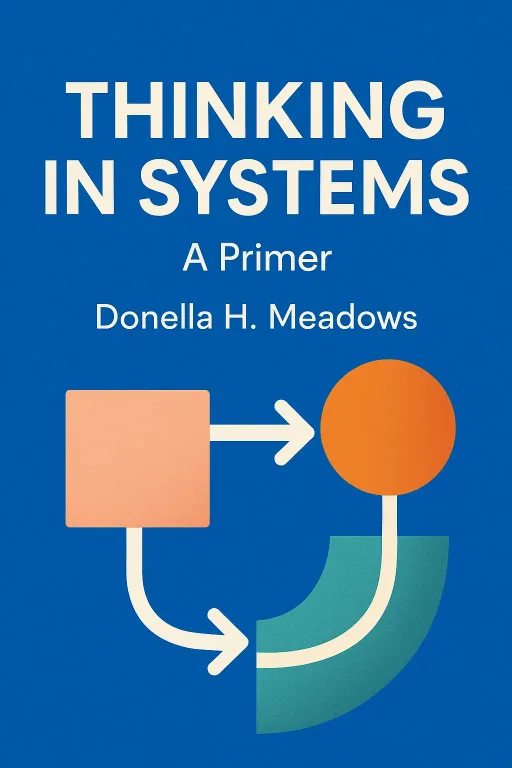
Nova: Today, we're sparking some serious thought with insights from Donella H. Meadows' "Thinking in Systems" and Rolf Dobelli's "The Art of Thinking Clearly." These aren't just academic texts; they're blueprints for anyone who wants to build more than just circuits – they want to build robust, reliable futures.
Atlas: Okay, so basically, you're saying these books help us stop reacting and start anticipating, right? That sounds crucial for anyone in a demanding field like electrical work. It’s about building a strong foundation, not just for the work, but for your career.
The Power of Systems Thinking: Seeing Beyond the Spark
SECTION
Nova: Exactly. Let's start with Meadows. She highlights how we often fix symptoms without understanding the whole system. Think about it: electrical work demands quick fixes. But real efficiency, real expertise, comes from understanding the system. You need to predict problems before they happen to truly excel and reduce stress.
Atlas: Wait, so beyond just replacing a faulty component, what's a 'systems' approach here? Most people, especially when they're starting out, would just swap it out and move on.
Nova: Well, replacing a faulty component is a quick fix. And sometimes that’s all you have time for. But a systems thinker asks, "What this component to fail in the first place?" Let’s say a circuit breaker keeps tripping. The immediate fix is to reset it, or even replace it if it’s truly faulty. But a systems perspective digs deeper.
Atlas: What kind of deeper? Like, checking the load?
Nova: Precisely. Maybe it's an overloaded circuit due to too many appliances on one line – the breaker is just doing its job, protecting the system. Or perhaps there's an intermittent short somewhere upstream that's hard to find without looking at the larger context, the flow, the connections. The system isn't just the breaker; it's the load, the wiring, the power source, and how they all interact in a dynamic way.
Atlas: That makes sense. It's not just about the part, it's about the puzzle. So, what exactly do you mean by 'leverage points' in this scenario? Is it just finding the root cause?
Nova: It’s more than just the root cause. A leverage point, as Meadows describes it, is a place in the system where a small shift can lead to big, lasting changes. For our tripping circuit, replacing the breaker isn't a leverage point if the overload continues. That's just treating a symptom.
Atlas: So, what would be a leverage point then?
Nova: Rewiring to balance the load across different circuits, or installing a dedicated circuit for high-draw appliances – a leverage point. You're changing the fundamental structure, the underlying patterns of the system, not just patching the symptom. You're anticipating the problem, not just reacting to its manifestation.
Atlas: I can see how that would be a game-changer for anyone building or maintaining complex electrical setups. It feels like moving from being a mechanic to an architect. You're not just fixing; you're optimizing.
Nova: You're absolutely right. It elevates your craft. It's about seeing beyond the immediate spark to the entire current, the entire flow, and understanding how to influence it for stability and efficiency.
Dodging Mental Traps: The Art of Clear Decision-Making
SECTION
Nova: That's a perfect segue because even with perfect systems knowledge, our own minds can trip us up. This brings us to Rolf Dobelli and "The Art of Thinking Clearly."
Atlas: Okay, so we've got the system down, but now we're talking about our own brains messing things up? How does that even work in a practical field like electrical engineering or an apprenticeship?
Nova: It’s surprisingly common. Take "confirmation bias," for instance. An electrician might be convinced a certain type of wiring, say, older aluminum wiring, is always the problem because they’ve seen it fail before. So, when troubleshooting a new issue, they look for evidence that confirms their existing belief, ignoring other possibilities.
Atlas: So, they might spend hours on the wiring, convinced it’s the culprit, when the actual fault is a loose connection somewhere else entirely?
Nova: Exactly! They might spend hours tracing wires, only to find the problem was a simple, loose connection in a junction box that they overlooked because their brain was already locked onto the "aluminum wiring" theory.
Atlas: Oh, I’ve been there! It’s like when you're convinced your car's making again, and you ignore all the other sounds it could be making.
Nova: A perfect analogy. Dobelli helps us recognize these cognitive shortcuts, these mental traps. Another one is "availability bias" – we overestimate the likelihood of events that are easily recalled or recently experienced. If you just dealt with a major power surge that fried several components, you might over-prepare for surges, spending excessive time and resources on surge protection, while under-preparing for more common, but less dramatic, issues like gradual wear and tear.
Atlas: But wait, isn't experience supposed to make us at problem-solving? Are you saying our brains can actually make us worse? That sounds a bit out there.
Nova: Experience is absolutely vital, but unchecked, it can feed these biases. Dobelli isn't saying experience is bad; he's saying be aware of how your brain processes that experience. By recognizing these biases, like confirmation bias or availability bias, you can actively look for disconfirming evidence or seek out alternative explanations. It's about thinking your thinking, adding a layer of critical self-awareness to your technical expertise.
Atlas: That’s a powerful insight. It’s not just about what you know, but how you think about what you know.
Synthesis & Takeaways
SECTION
Nova: So, when you combine Meadows' systems thinking with Dobelli's clear thinking, you get a powerful synergy. You're not just seeing the whole electrical grid and its complex interdependencies; you're seeing how your own mind might be distorting your view of it, leading you down the wrong path.
Atlas: In other words, it’s about understanding the machine you’re working on, and understanding the machine the work – your brain. For aspiring technicians, that sounds like the ultimate competitive edge. It's about being effective, not just busy.
Nova: Absolutely. The cold fact is, electrical work demands quick fixes, but true efficiency, true mastery, comes from predicting problems before they happen. It’s about reducing stress, building robust systems, and becoming indispensable. The smallest shift in perspective, like asking 'what in the system caused this, and how can I prevent it from happening again?', can prevent catastrophic failures, save immense time and money, and truly elevate your craft.
Atlas: That gives me chills. Thinking through problems like that, with both a systemic view and an awareness of your own cognitive biases, sounds like the path to becoming a true leader in the field. So, next time you're faced with a problem, whether it's a flickering light or a complex circuit issue, ask yourself: 'Am I just patching a symptom, or am I truly understanding the system and my own thinking?'
Nova: A profound question for profound growth.
Atlas: Indeed.
Nova: This is Aibrary. Congratulations on your growth!