Stop Managing Complexity, Start Designing Simplicity: The Guide to Effortless Impact.
Golden Hook & Introduction
SECTION
Nova: What if I told you that the secret to truly mastering complex projects isn't about managing more details, but about managing almost none at all?
Atlas: Wait, managing at all? Honestly, that sounds like a dream for anyone drowning in project spreadsheets. How does that even work when every detail feels absolutely mission-critical?
Nova: Exactly! That's the core, almost counter-intuitive idea behind today's deep dive into "Stop Managing Complexity, Start Designing Simplicity: The Guide to Effortless Impact." It’s not some magic trick or a productivity hack that will vanish next week. It's a profound shift in perspective that has been gaining serious traction among forward-thinking leaders and innovators.
Atlas: So it’s less about a new methodology to add to our already overflowing toolkit, and more about a new way of seeing the world of work, then? A new lens?
Nova: Precisely. This book really challenges the conventional wisdom that more control, more oversight, and more micromanagement automatically lead to better outcomes. In fact, it argues the opposite.
The Cold Fact - Understanding Underlying Structure
SECTION
Nova: The cold, hard fact, as the book puts it, is that complex projects often get bogged down not because we miss a specific detail, but because of unforeseen interactions. You simply cannot manage every single variable in a truly complex system. It’s an impossible task.
Atlas: Oh, I know that feeling all too well. It’s like playing whack-a-mole with problems, isn't it? You fix one thing, and two more pop up somewhere else you didn't even expect, often completely unrelated to the first. It’s exhausting.
Nova: Exactly! The book argues that instead of constantly reacting to these symptoms, we need to shift our focus. We need to really understand the underlying of the system itself. Imagine an iceberg: we're constantly trying to chip away at the visible tip, the immediate problems, but the real power, the real influence, is in the massive, invisible structure beneath the surface.
Atlas: So, it's about seeing the whole picture, the interconnectedness, not just the visible parts. But how do you even begin to map that out? For someone leading a large, multi-faceted initiative, "understanding the underlying structure" sounds like a philosophy degree, not a practical project plan.
Nova: It’s far more practical than it sounds. Think about it like a complex machine. You don't manage every single cog and spring individually; you understand how the major components interact to produce the overall function. This allows you to influence the entire system, rather than just reacting to its outputs or constant breakdowns.
Atlas: That's a powerful reframing. It sounds like it could really streamline operations if you know where to push. But what does "influence the system" actually look like in practice? Is it about changing rules, or people, or something else entirely?
Nova: It’s about identifying what are called "leverage points"—those specific places in a complex system where a small, well-placed shift or intervention can lead to significant, widespread, and often surprising changes. It's the difference between constantly patching individual leaks and fixing the faulty plumbing that causes them all in the first place.
Atlas: So, instead of being overwhelmed by the sheer volume of tasks or problems, you're looking for the fulcrum that can move the whole thing with minimal effort. That’s definitely something a strategic leader, who’s always looking for efficiency and impact, would be looking for. It’s about working smarter, not just harder.
Tactical Insights - Meadows & Senge
SECTION
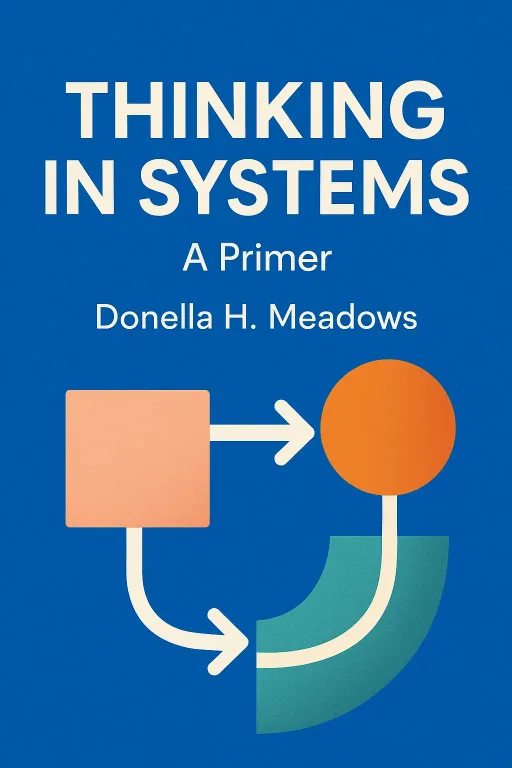
Nova: Absolutely. And this isn't just a modern concept that popped up yesterday. Pioneering thinkers like Donella H. Meadows, with her seminal work "Thinking in Systems," really laid the groundwork for this understanding. Meadows shows us how to identify feedback loops – those circular processes where a system's output feeds back into its input – and those crucial leverage points we just mentioned. She was a brilliant scientist and environmental analyst, but her insights are universally applicable.
Atlas: Donella Meadows. I've heard her name mentioned quite a bit in sustainable development and environmental circles. Her work is often cited for its holistic view of complex ecosystems. How does that translate directly to, say, a business project or an organizational challenge?
Nova: Beautifully. A feedback loop in a business context could be something like customer satisfaction leading to repeat purchases, which then drives more marketing investment, creating even more satisfaction. Or, negatively, a customer complaint leading to poor online reviews, fewer sales, and then a cascade of more complaints. Meadows helps you see these patterns, understand their dynamics, and crucially, understand where to intervene for the biggest effect. Her insights allow us to design for sustainability, not just in an environmental sense, but in an operational one too.
Atlas: So, small, targeted changes can create massive, lasting impact within a system. That’s truly the dream for anyone trying to build a better future with limited resources, whether it’s a product, a process, or an entire organization. But what about the human element in all of this? Systems are run by people, after all, and people are inherently complex.
Nova: That's a critical point, and it’s where Peter Senge's "The Fifth Discipline" comes in. Senge emphasizes that true learning organizations are built not just on individual brilliance, but on a of these systemic structures. It's not enough for one person, the lone genius, to see the whole picture; the entire team, the entire organization, needs to develop this collective intelligence.
Atlas: Ah, "The Fifth Discipline"—a classic in organizational learning. So, it’s about making everyone a systems thinker? That sounds like a huge cultural shift for many organizations, especially those that traditionally focus on individual performance metrics and siloed departments.
Nova: It absolutely is. But Senge argued that this shared understanding fosters collective intelligence, allowing teams to tackle complex challenges more effectively and collaboratively. It’s about moving beyond individual silos and seeing how everyone’s actions, however small, contribute to the larger system. It really resonates with the idea of a collaborative leader seeking to unite their team around a common, deeper understanding of their collective purpose and impact. It transforms 'us versus them' into 'how do we all contribute to this one system?'
Atlas: So, in essence, Meadows gives us the tools to analyze and understand the system, and Senge shows us how to get everyone on board with that analysis, building a collective mind. It's a powerful one-two punch for anyone focused on sustainable innovation and integrated project delivery. It’s about leading with purpose, bringing people along on that journey.
Tiny Step & Practical Application
SECTION
Nova: Exactly. By seeing the whole picture, by understanding these dynamics, you can stop chasing problems and truly start designing for sustainable outcomes. And the beauty of this approach is that the book offers a tiny, actionable step to begin this journey today.
Atlas: Okay, I'm ready for the "tiny step." Because all this systems thinking can feel a bit abstract without a clear starting point. For someone who leads with purpose and wants immediate, tangible impact, what's the very first concrete thing we can do?
Nova: Here it is: Identify one recurring project issue. Just one. Don't try to solve everything at once. Then, map its inputs, its outputs, and any feedback loops you can observe. And here's the crucial part: look for a single point where a small change, a seemingly minor tweak, could ripple through the entire system and create a significant positive effect.
Atlas: So, pick a pain point, trace its connections, and then find that one little lever, that one high-impact intervention. Not a massive, overwhelming overhaul, but a targeted, precise action. That’s actually incredibly empowering. It takes the overwhelming feeling of complexity and breaks it down into an executable, manageable action.
Nova: Right? It’s about building better futures, one strategically placed lever at a time. It encourages us to trust our vision, to see challenges as opportunities to refine our strategy, just as our listeners strive to do in their daily work. It allows for effortless impact by design.
Synthesis & Takeaways
SECTION
Nova: What we've really discovered today is that true organizational mastery, and indeed personal effectiveness, isn't about brute-force management of every single detail. It’s about a more elegant, more impactful approach: designing for simplicity. It's about understanding the invisible threads that connect everything, the hidden structures that drive outcomes.
Atlas: It’s profound, really. It shifts us from feeling like we're constantly putting out fires and reacting to crises, to actually engineering a system where fires are less likely to start, and if they do, they're contained much faster. It's about proactive design over reactive management, which is a key for any strategic architect.
Nova: Precisely. It’s about finding those leverage points, those moments where a small, thoughtful intervention can create a cascade of positive change throughout an entire system. It’s the difference between struggling against the current and learning how to navigate its flow, using its own power to propel you forward. For anyone looking to streamline complex operations or deepen their sustainable impact, this mindset is absolutely invaluable.
Atlas: And the idea that this isn't just for academics or theorists, but for anyone willing to step back and look at the bigger picture—that’s truly powerful. It’s about leading with purpose, bringing people along, seeing challenges as opportunities to refine strategy, and ultimately, building better, more sustainable futures.
Nova: Absolutely. It encourages us to dedicate time each week to explore these new approaches, to always be learning and adapting, to be the sustainable innovators and collaborative leaders we aspire to be. This is Aibrary. Congratulations on your growth!