Beyond the Obvious: Unlocking Hidden Patterns in Complexity
Golden Hook & Introduction
SECTION
Nova: Remember that scene in the Matrix where Neo finally sees the code behind reality? What if I told you there's a way to see the 'code' behind your everyday problems, not just the fleeting images?
Atlas: Oh, I love that! Like suddenly everything clicks into place and you’re not just reacting to what’s in front of you, but understanding the deeper mechanics. I think a lot of our listeners, especially those who love to connect disparate ideas, are probably leaning in right now.
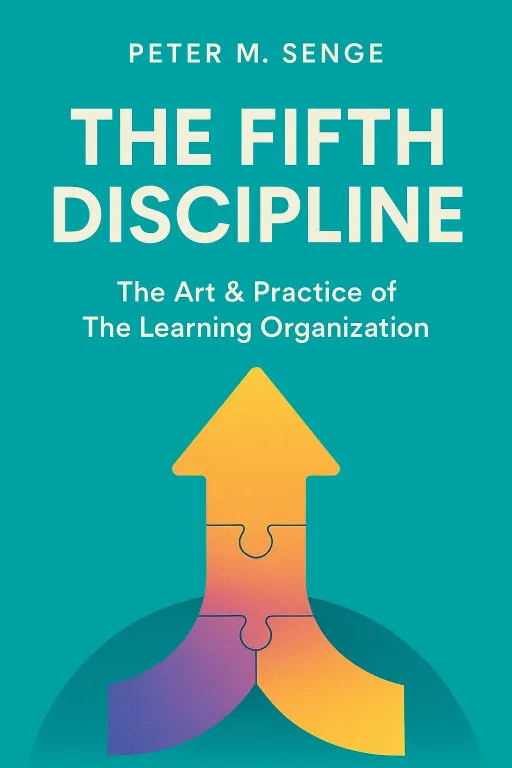
Nova: Absolutely. And that's exactly what we're diving into today. We're exploring the profound wisdom of systems thinking, drawing primarily from two foundational texts: Donella H. Meadows' seminal "Thinking in Systems" and Peter M. Senge's transformative "The Fifth Discipline." What's so fascinating about Meadows is that she wasn't just a brilliant environmental scientist and pioneering systems theorist; she was a fierce advocate for sustainability who applied these complex ideas to real-world global challenges, making her work incredibly potent and practical.
Atlas: That's a great distinction. It’s not just abstract theory, but something that actually has teeth in the real world. So, if we’re talking about seeing the 'code,' where do we usually go wrong? What's the biggest blind spot we tend to have?
The Blind Spot – Missing Connections and Superficial Solutions
SECTION
Nova: The biggest blind spot, Atlas, is our inherent tendency to see isolated events. We look at a problem, identify the most obvious symptom, and then try to fix. It feels logical, right? But it’s like constantly patching a leaky roof without ever looking at the structural damage underneath.
Atlas: Okay, but isn't it logical to fix the obvious problem first? If the sink is overflowing, you grab a bucket, right? You don't immediately call a plumber to rebuild the entire plumbing system.
Nova: You grab a bucket, yes. But if that sink keeps overflowing every week, and each time you grab a bigger bucket, eventually you realize the bucket isn't the solution. The classic example is traffic. Cities often see congestion, and their immediate, seemingly logical response is to add more lanes to the highway. More road, more cars, problem solved!
Atlas: Right, that’s just common sense. More capacity means less jam.
Nova: Exactly. But what often happens? For a short period, traffic might ease. Then, within a few years, it's just as bad, or even worse. This is known as "induced demand." By making driving easier, you encourage more people to drive, or live further away, or take trips they wouldn't have before. The system adjusts, and the original problem resurfaces because the underlying dynamics—urban planning, public transport availability, even societal norms around commuting—were never addressed.
Atlas: Whoa. So you're saying that by trying to fix the symptom, you can actually make the problem worse in the long run, or at least perpetuate it? That's going to resonate with anyone who’s ever felt like they’re constantly fighting the same battle over and over again.
Nova: Precisely. It’s what systems thinkers call the "Whack-a-Mole" phenomenon. You whack down one problem, and another pops up somewhere else, or the same one just re-emerges. Think about an organization constantly battling employee burnout. The HR department might introduce gym memberships, mindfulness apps, or "pizza Fridays." These are all attempts to alleviate the of burnout.
Atlas: And those are good things, right? Who doesn't love pizza?
Nova: They can be good, yes, but they don't address the underlying system. If the true cause of burnout is chronic understaffing, unrealistic deadlines, a culture of overwork, or poor leadership, then pizza Fridays are just a temporary distraction. The system will continue to generate burnout because the structural issues—the actual 'code'—haven't changed.
Atlas: Honestly, that sounds like my Monday mornings. I imagine a lot of our listeners who are trying to connect disparate ideas or design better solutions in their own lives often hit this wall. How do you even begin to identify these hidden connections when everything feels chaotic, especially when you're driven to comprehend how things work and build something new?
The Shift – Embracing Systems Thinking for Deeper Understanding
SECTION
Nova: That’s the critical question, and it’s where "the shift" to systems thinking truly empowers us. It’s not about embracing complexity for complexity’s sake. It’s about understanding that every system, whether it’s a traffic network, an organization, or even your own mental habits, operates with certain underlying structures. And within these structures are what Donella Meadows called "leverage points."
Atlas: Leverage points? That makes me wonder, what exactly does that mean?
Nova: A leverage point is a place in a system where a small shift can lead to massive changes in the entire system. It’s like the rudder on a ship. A tiny movement of the rudder can change the direction of an enormous vessel. Meadows argued that most people focus on the least effective leverage points – things like trying to change parameters, like the number of lanes on a highway.
Atlas: Okay, a thermostat makes sense as a simple feedback loop. But how does that translate to, say, climate change or a complex business problem? Where are the 'leverage points' in something that massive?
Nova: That's where Senge’s work in "The Fifth Discipline" becomes incredibly valuable, especially his insights on "mental models." These are the deeply ingrained assumptions, generalizations, or even pictures and images that influence how we understand the world and how we take action. They’re often unconscious, but they can be massive leverage points.
Atlas: So basically you’re saying that our internal beliefs or the unspoken rules within an organization can be the 'rudder' for the entire ship?
Nova: Precisely. Imagine a company that operates under the mental model that "customers only care about price." Every decision, from product development to marketing, will be filtered through that lens. They'll cut costs, lower quality, and focus solely on aggressive pricing. But what if that mental model is wrong? What if their customers actually value quality, reliability, and excellent service above all else?
Atlas: Then they’re completely missing the boat. They’re optimizing for the wrong thing entirely.
Nova: Exactly. The leverage point isn't to cut prices even further. It's to challenge and shift that mental model. When the leadership team truly understands that customers prioritize value, not just cost, it can transform the entire organization. They might invest in better materials, enhance customer support, and focus their marketing on their superior quality. That small shift in perspective—the mental model—produces huge changes across the whole system.
Atlas: That's actually really inspiring. It feels like it gives you agency, even in complex situations. What about a personal, everyday example of a mental model that, once shifted, could have a profound impact? How can an 'insight seeker' or 'aspiring designer' apply this in their own life to truly 'build their own worlds' of understanding?
Nova: Think about procrastination. A common mental model is "I'm lazy." This leads to self-criticism, which creates stress, which makes you likely to start the task, reinforcing the "I'm lazy" belief. It's a classic negative feedback loop. The leverage point isn't to just "try harder"—that's like adding more lanes to the highway.
Atlas: Right, that never works for long.
Nova: The leverage point is to shift that mental model. Instead of "I'm lazy," perhaps the mental model is "I'm afraid of failure," or "This task is overwhelming." Once you identify underlying belief, you can start to address it. Maybe the small change is breaking the task into tiny, non-threatening steps, or acknowledging the fear and starting anyway, rather than fighting the perceived laziness. That’s how you design better systems for yourself.
Synthesis & Takeaways
SECTION
Nova: So, we've journeyed from recognizing our "blind spot" in seeing isolated events to understanding "the shift" that systems thinking offers. It’s about moving beyond superficial fixes to identifying those powerful leverage points, whether they're in a global system or within your own mind. Meadows' work, which has been widely acclaimed for its clarity and practical insights, has influenced generations of thinkers in sustainability and organizational development precisely because it moves us past the obvious.
Atlas: That makes me wonder, what seemingly isolated problem in life might actually be a symptom of a larger, unseen system? That was the deep question posed in the book content, and it feels incredibly relevant now. It's not just about fixing things, it’s about genuinely understanding them.
Nova: Exactly. By seeing the system, by recognizing those feedback loops and mental models, we gain true agency. We move from being reactive problem-solvers to proactive system designers. We can make truly impactful changes, not just manage symptoms. It's about seeing the code, not just the fleeting images on the screen.
Atlas: And for our listeners who love to build and design, this gives them a whole new toolkit. I challenge everyone to pick one recurring problem in their life this week, and instead of just trying to fix the symptom, try to map out the system behind it. What are the inputs, the outputs, the feedback loops? What mental models are at play?
Nova: And then, identify one small leverage point. One tiny shift that could create a ripple effect. It's a powerful way to unlock those hidden patterns.
Atlas: Definitely.
Nova: This is Aibrary. Congratulations on your growth!