

The Network Effect of Trust: How to Build Unshakeable Influence in Cybersecurity.
Golden Hook & Introduction
SECTION
Nova: In the world of ones and zeros, where logic reigns supreme, what if I told you the single most powerful algorithm for influence isn't technical at all? It's something far more human, far more elusive, and yet, entirely learnable.
Atlas: Huh. That’s a bold claim, Nova. Especially in cybersecurity, where we're constantly sifting through data, building robust defenses, and designing enduring solutions. My first instinct is to look for the empirical evidence, the hard data.
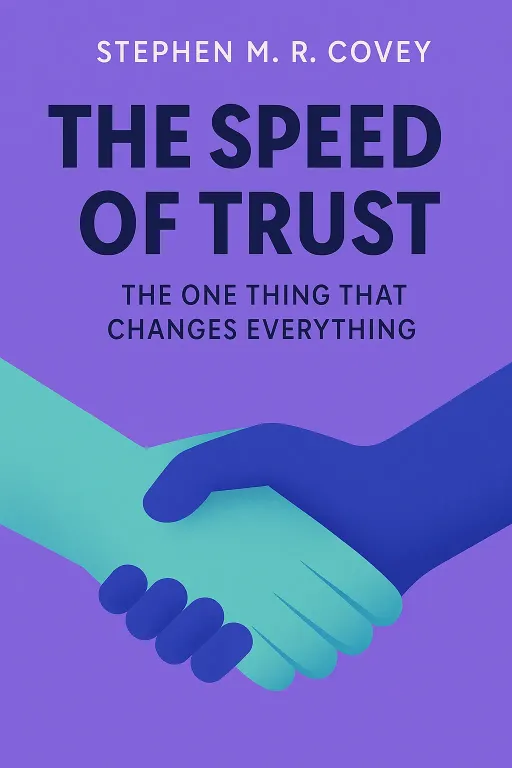
Nova: And you’re right to, Atlas. Because that’s exactly what our discussion today is all about: the undeniable, measurable power of trust. We’re diving into a concept we call 'The Network Effect of Trust,' drawing heavily from the insights of Dr. Anya Sharma's work, which brilliantly synthesizes foundational ideas from Stephen M. R. Covey’s 'The Speed of Trust' and Simon Sinek’s 'Start with Why.'
Atlas: Okay, so we're talking about trust, but in a way that’s… quantifiable? That’s going to resonate with anyone who’s trying to get buy-in for a new security protocol or lead a complex project. How can something as inherently human as trust be measured, especially when you’re building high-stakes defenses?
Nova: It's a fantastic question, and it’s where Covey really changed the game. Before him, trust was often seen as a soft skill, a nice-to-have, maybe even a bit fluffy. But Covey, through his extensive research, argued that trust is a measurable, learnable skill that dramatically increases speed and decreases cost in any relationship or organization. He essentially said, 'Trust isn't just a moral virtue; it's an economic driver.'
The Measurable Science of Trust: Speed, Cost, and the 13 Behaviors
SECTION
Atlas: That’s a powerful reframing. So, for our listeners who are building critical systems and protecting digital assets, what does that actually look like in practice? How do you see this 'trust as an economic driver' play out in a cybersecurity context? Can you give an example of a "trust tax"?
Nova: Absolutely. Imagine a scenario: a new CISO, let's call her Sarah, arrives at a large organization. She’s technically brilliant, has a fantastic vision for overhauling their legacy security infrastructure, but she hasn't taken the time to build rapport or understand the existing team dynamics. She immediately rolls out a new, mandatory, complex security policy.
Atlas: Oh boy, I’ve seen this movie before.
Nova: Exactly! The team, feeling unheard and distrustful of her motives—maybe they suspect she's just trying to make a name for herself—starts dragging their feet. They find every loophole, every reason to delay implementation. They don't actively sabotage, but they don't actively either. The project, which should have taken six months, stretches to a year, costing the company double in resources, missed deadlines, and increased vulnerability. That, Atlas, is a classic 'trust tax.'
Atlas: Wow, that’s heartbreakingly familiar. It’s like a hidden line of code that controls system performance, but it’s entirely human. It’s not about the technical solution; it’s about the reception of that solution. I imagine a lot of our listeners struggle with gaining cross-functional buy-in for robust defenses. So, how do Covey's '13 Behaviors' offer a practical roadmap out of that quagmire?
Nova: That's where the actionable insights come in. Covey outlines behaviors like 'Talk Straight,' which means being transparent and honest, even when it's uncomfortable. Or 'Demonstrate Respect,' by listening genuinely and valuing others' input. In Sarah's case, if she had practiced 'Talk Straight' by explaining the behind the new policy—the genuine risks it was mitigating, the long-term benefits for the team—and 'Demonstrated Respect' by involving key team members in the policy's refinement, that 'trust tax' could have been avoided.
Atlas: That makes me wonder, isn't it hard to 'talk straight' when you have sensitive security information you can't always disclose? There's a fine line between transparency and revealing vulnerabilities.
Nova: That’s a critical nuance, and you’ve hit on a common challenge. 'Talking straight' doesn't mean revealing every detail. It means communicating with integrity and clarity, setting appropriate boundaries, and explaining certain information must remain confidential. It's about being reliably honest within those parameters, not just spewing data. It’s about building a reputation for integrity, so even when you can't share everything, people trust your judgment and your intentions. Another key behavior is 'Keep Commitments.' If Sarah had committed to regular check-ins and then consistently followed through, that alone would build immense trust.
Beyond the 'What': The Magnetic Power of 'Why' in Cybersecurity Leadership
SECTION
Nova: And that naturally leads us from the 'how' of building trust through specific behaviors to the even more profound 'why' behind true influence, thanks to Simon Sinek's transformative work. He argues that people don't just buy you do; they buy you do it.
Atlas: Okay, so, 'starting with why.' What does that really mean for someone designing enduring security solutions? Aren't the 'what' and 'how'—the technical solutions, the specific protocols—actually the most important things in cybersecurity?
Nova: It feels counterintuitive, doesn't it? But Sinek's 'Golden Circle'—Why, How, What—shows us that the most influential leaders and organizations communicate from the inside out. They start with their core purpose, their belief, their 'why,' before moving to 'how' they do it, and 'what' they do. Imagine two cybersecurity leaders. Both propose an identical, state-of-the-art encryption solution.
Atlas: Right. Both brilliant, technically sound.
Nova: Exactly. Leader A focuses on the 'what': "This solution uses AES-256 encryption, offers multi-factor authentication, and integrates seamlessly with our existing APIs." Leader B, however, starts with the 'why': "We believe every user deserves uncompromising privacy and the absolute assurance that their digital lives are safe. This solution is how we uphold that promise, safeguarding not just data, but the very trust our users place in us."
Atlas: Oh, I see. Leader B isn't just selling a product; they’re selling a vision, a purpose. The technical specs are still important, but they become the of the 'why,' not the primary pitch. That’s a magnetic field of trust that draws others to their vision. It connects directly to ethical leadership and shaping the cybersecurity landscape responsibly.
Nova: Precisely. Leader B immediately taps into a deeper, more resonant connection. People aren't just impressed by the tech; they're by the purpose. This fosters alignment, not just compliance. It's crucial for our listeners who are building robust defenses and shaping the future of security, because it empowers them to lead beyond the technical.
Atlas: That makes me wonder, how does articulating 'why' empower the next generation of security professionals? When we talk about mentorship frameworks, it's easy to just teach them 'what' to do—the latest threat vectors, the coding languages. But how does the 'why' fit in?
Nova: It transforms mentorship from mere instruction to true inspiration. If you're mentoring someone, and you can articulate you dedicate your life to cybersecurity—because you believe in protecting fundamental freedoms, or safeguarding innovation, or ensuring a trusted digital future—you're not just teaching them how to configure a firewall. You're instilling a sense of purpose. You're creating a shared mission that transcends the day-to-day tasks. That kind of ethical, purpose-driven leadership creates a network effect of trust that ripples through an entire organization, and indeed, through the next generation of guardians.
Synthesis & Takeaways
SECTION
Nova: So, when we bring Covey and Sinek together, the message becomes incredibly powerful: trust isn't just about behaving correctly; it's about you're behaving that way. It's the network effect of alignment and ethical intent, where your purpose and your actions forge an unshakeable bond.
Atlas: That’s actually really inspiring. So, influence isn't just about being technically brilliant or even consistently trustworthy in actions; it's about weaving that trust into the very fabric of your purpose. It's about being the architect of trust, not just the architect of systems.
Nova: Exactly. And the data backs it up. Research consistently shows that organizations with high trust levels consistently outperform competitors by nearly three times in areas like innovation and employee retention. It's not just a nice idea; it's a strategic imperative.
Atlas: For our listeners who are architects and guardians of digital space, what's one tiny step they can take this week to start building this 'network effect' of trust?
Nova: A great place to start is with Covey’s 13 behaviors. Pick just one—maybe 'Talk Straight' in your next team meeting by clearly stating your intentions and assumptions, or 'Keep Commitments' by following through on a small promise you made. Intentionally practice it, and then observe its impact on trust. You might be surprised at the ripple effect.
Atlas: That's a practical, actionable step. It brings the abstract idea of trust right down to a daily interaction.
Nova: This is Aibrary. Congratulations on your growth!









