Cultivating High-Performance: Culture and Capabilities
Golden Hook & Introduction
SECTION
Nova: Ever walk into a team meeting and just the energy? Not the agenda, not the action items, but the unspoken currents, the invisible ties that bind... or break a group apart? What if I told you those subtle vibes are actually a powerful, predictable language that can make or break your team's ultimate success?
Atlas: Oh man, I know that feeling. It's like walking into a room and instantly sensing if it's a "we're all in this together" vibe, or more of a "every person for themselves" kind of energy. But predictable? That sounds a bit out there.
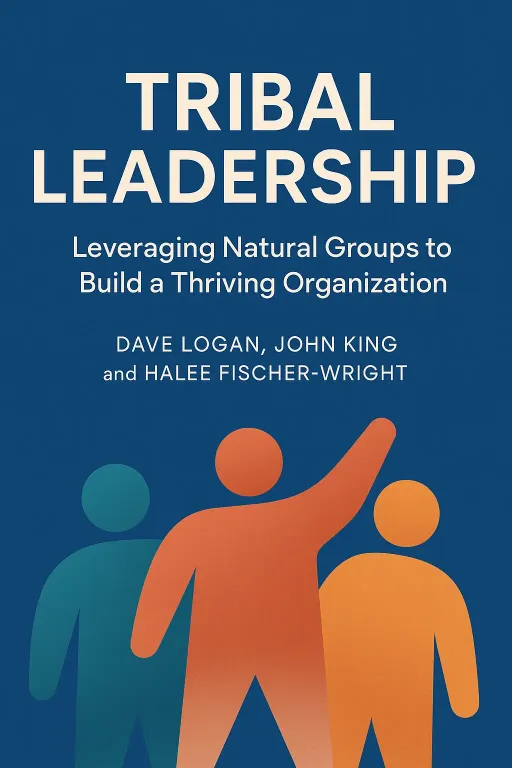
Nova: It might sound that way, Atlas, but it's grounded in extensive research. Today, we're diving into two brilliant works that decode these exact dynamics and then show us how to sculpt them for peak performance. First up, "Tribal Leadership" by Dave Logan, John King, and Halee Fischer-Wright. Logan, a USC professor and seasoned consultant, along with his co-authors, spent years observing over 24,000 people in organizations to map out the distinct stages of team culture. This acclaimed work is celebrated for making complex sociological concepts accessible and actionable.
Atlas: Twenty-four thousand people! That's not just a hunch, that's data. So, they basically cracked the code on team vibes?
Nova: Precisely. And then, we'll connect that cultural blueprint to "The Skills-Powered Organization" by Ravin Jesuthasan and Tanuj Kapilashrami. These authors are global leaders in talent and HR strategy, so they're looking at the future of work with incredible foresight. Their book is a contemporary guide for business leaders recognized for addressing modern challenges like AI and automation.
Atlas: That makes me wonder, for anyone trying to develop their team and strategically plan for what's next, how do these ideas actually offer concrete pathways? Because 'vibes' and 'skills' sound like two very different things on the surface.
Nova: They are, but they're intrinsically linked. You can't truly optimize your team's capabilities without first fostering the right cultural soil. And that brings us right into the heart of "Tribal Leadership."
The Power of Tribal Culture and Language
SECTION
Nova: Logan and his co-authors identify five distinct stages of tribal culture, each defined by the dominant language and relationships within the group. Imagine a spectrum, from disengaged apathy to collective genius.
Atlas: Okay, so what does that spectrum look like? Give us the highlights.
Nova: At the lowest end, Stage 1, the language is "Life Sucks." Think of a truly dysfunctional, isolated corporate department where hostility is the norm. It's raw, every person for themselves.
Atlas: That sounds like a tough place to be. I imagine a lot of our listeners have probably witnessed elements of that, even if not at the extreme.
Nova: Exactly. Moving up, Stage 2 is "My Life Sucks." This is where individuals feel alienated, disengaged, and resentful. They're doing the work, but they're clocking in, clocking out, and their primary complaint is about their own situation. "It's not fair," or "I can't believe I have to do this."
Atlas: Right, like that person who always blames the system, but never takes ownership. So far, not exactly "collective genius."
Nova: Not at all. Then we hit Stage 3, and this is where many organizations get stuck. The language here is "I'm Great." Individuals are high-performing, confident, often competitive, and focused on personal achievements. They might be brilliant, but they often struggle to collaborate effectively. "Look at what did," or "My numbers are better than yours."
Atlas: Oh, I've been there. You see these rockstar individual contributors, but when it comes to a team project, it's like herding cats. Everyone's vying for credit.
Nova: That's the essence of Stage 3. Now, the magic happens when leaders learn to elevate their team's language and relationships to Stage 4: "We're Great." Here, the focus shifts from individual glory to collective success. The language becomes "We achieved this," "Our team is amazing," "Let's help each other." People are proud of their team's accomplishments, and collaboration becomes natural.
Atlas: So basically, moving from "I" to "we" is the critical jump. But how do you actually that? What are the practical signs a leader should look for, or even more importantly,?
Nova: That's the million-dollar question, and it aligns perfectly with that "tiny step" you might take. For a day, just observe. Is the dominant language "I need to hit my quota," or "How can collectively smash our team goal?" Are conversations about individual tasks, or about the? A leader needs to be almost a linguistic detective, Atlas. For example, imagine a struggling sales team. In Stage 3, the talk might be, "I closed 50 deals this month, what did you do?" But a leader, by intentionally shifting language and fostering shared goals, can transform it. They might start celebrating team-wide successes, encouraging peer coaching, and reframing individual targets as contributions to a collective victory. The language subtly shifts to, "We collectively exceeded our quarterly target by 10% because we supported each other with lead sharing and closing strategies."
Atlas: That's a perfect example. You can almost hear the shift in tone and intent. It's more than just cheerleading, it's about fundamentally altering the relational fabric.
Nova: Absolutely. It's about designing an environment where "we" is the natural pronoun. And the pinnacle? Stage 5: "Life is Great." This is rare, but it's where a team operates with collective genius, not just for their own success, but to make a profound impact on the world. Think of highly innovative R&D teams, or a humanitarian organization driven by a deep sense of purpose. They're not just "we're great," they're "we're great, and we're changing the game for everyone."
Atlas: Wow. That's actually really inspiring. To go from "my life sucks" to "life is great" as a collective. It sounds like it requires a leader to be not just a manager, but a true empathetic catalyst, someone who understands the deeper motivations and connections within their team.
Nova: It does. It’s about recognizing that culture isn't just a fluffy HR concept; it's the operating system of your team. And once you have that collective genius mindset, Atlas, the next question becomes: how do you ensure they have the and for the future?
The Skills-Powered Future: Adapting Capabilities for Tomorrow
SECTION
Nova: This is where "The Skills-Powered Organization" by Jesuthasan and Kapilashrami comes in. They argue for a radical shift from job-centric to skills-centric work models. Think about it: the traditional approach is to define a job, then find a person to fit that job.
Atlas: And that feels so rigid, doesn't it? Especially now, with technology evolving so fast, a job description written last year might already be outdated.
Nova: Exactly! The authors, drawing on their deep expertise in global talent management, highlight that clinging to static job descriptions is a recipe for obsolescence. The skills-powered model is about identifying the critical skills an organization needs, then looking at its existing workforce and seeing who has those skills, or who those skills.
Atlas: But wait, looking at this from a strategic planning perspective, isn't that risky? How do you actually "future-proof" a leadership pipeline with just 'skills' instead of clearly defined roles and career paths? It sounds almost chaotic.
Nova: It’s not chaotic; it’s fluid and adaptive, which is what the future demands. Imagine a traditional manufacturing company that, a decade ago, hired for "Assembly Line Supervisor" roles, requiring experience with specific machinery and production quotas. Now, with automation and smart factories, those roles are demanding new skills like robotics oversight, data interpretation from IoT sensors, and change management.
Atlas: I can see how that would be a challenge. Those traditional roles might not even exist in the same way.
Nova: Precisely. A skills-powered organization wouldn't just say, "we need to hire new robotics engineers." Instead, they'd identify the needed: systems thinking, predictive maintenance analysis, cross-functional collaboration with software teams, and the ability to train others on new tech. They might discover that some of their existing "Assembly Line Supervisors" possess strong problem-solving skills, a knack for process improvement, and excellent communication – skills that can be and for the new, more technologically advanced supervisory roles. This approach moves beyond simply filling a seat to cultivating dynamic potential.
Atlas: That makes me wonder, it sounds like it requires a completely different way of thinking about talent beyond just filling a seat. It's about empowering people to evolve within the organization, which ties back to that "developing future leaders" goal.
Nova: That’s a great way to put it. This approach unlocks talent that might be hidden within the organization. It fosters continuous learning because employees are constantly developing new skills to meet evolving needs, rather than just waiting for the next promotion within a rigid hierarchy. It also future-proofs the leadership pipeline because you're cultivating leaders based on their adaptable skill sets – their ability to learn, to lead through change, to innovate – rather than just their experience in a single, potentially outdated role.
Atlas: So it's like a corporate DNA redesign, where adaptability is the new superpower. It means looking at your people not as fixed job titles, but as a dynamic reservoir of potential capabilities.
Nova: Exactly. It's about recognizing that human potential isn't static. It's about continuous growth, both for the individual and the organization. It moves beyond simply "training" to genuine "talent cultivation" that impacts the bottom line and long-term resilience.
Synthesis & Takeaways
SECTION
Nova: So, what we've really explored today is that you can't have a truly skills-powered organization without first fostering a collective genius culture. And a truly genius culture needs relevant, evolving skills to make that impact on the world. They feed each other.
Atlas: That makes sense. You can have all the skills in the world, but if your team's internal language is "my life sucks," those skills are going nowhere. And a "we're great" culture can only sustain itself if that "we" is actually equipped for what's coming next.
Nova: It's a powerful synergy. And for our listeners, especially those visionary leaders driven by developing others, it comes down to two key actions.
Atlas: So you’re saying, it starts with that "tiny step" from the books, right? Observe your team's communication patterns for a day. Is the tribal language focused on "we" and "our shared vision," or "I" and "my tasks"?
Nova: Precisely. Be that linguistic detective. And then, once you have that insight, relentlessly ask that "deep question": How can I strategically identify and cultivate the critical skills within my team to not only meet current objectives but also future-proof our leadership pipeline? It's about understanding the subtle power of words and the profound impact of evolving capabilities.
Atlas: That’s actually really inspiring. It’s not a destination, but a continuous cultivation. It's about empowering your team to speak a language of shared success while constantly upgrading their collective superpower toolkit. It's about creating an environment where growth is not just encouraged, but engineered for lasting impact.
Nova: Exactly. It's about leading with both heart and strategic foresight, creating a culture where everyone feels they belong to something bigger, and are equipped to face whatever the future throws at them. It's how you truly cultivate high-performance.
Atlas: Powerful stuff, Nova. Really makes you think about the subtle levers of leadership.
Nova: Indeed.
Nova: This is Aibrary. Congratulations on your growth!