Stop Guessing, Start Leading: The Guide to Empowered Team Scaling.
Golden Hook & Introduction
SECTION
Nova: What if the very act of growing your team, which feels like progress, is actually setting you up for chaos? Most leaders think adding more people solves problems. But often, it just creates more.
Atlas: Oh, I know that feeling. It’s like you’re trying to expand, but instead of gaining momentum, you just hit more resistance. You’ve got a great product, a great vision, but the team growth feels… sticky.
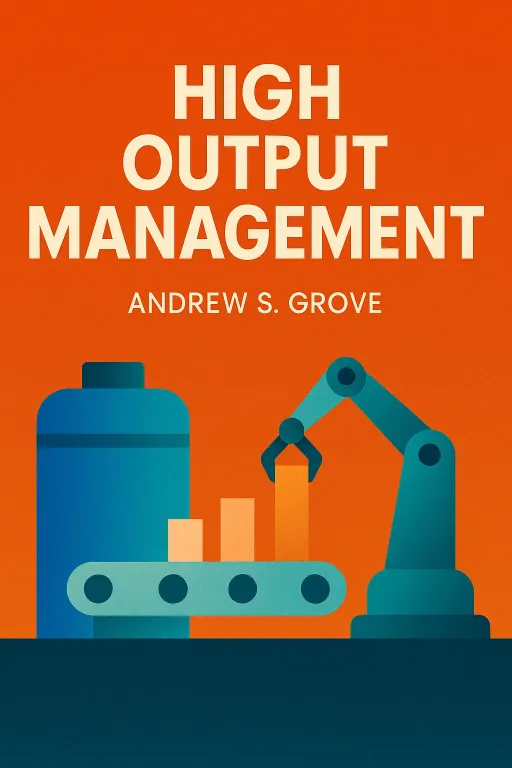
Nova: Exactly. It’s a common trap for innovators, that feeling of being stuck even with a fantastic offering. Today, we’re diving into two foundational texts that fundamentally shift how we think about team scaling: Andrew S. Grove’s “High Output Management” and Bill Walsh’s “The Score Takes Care of Itself.”
Atlas: Those are some heavy hitters. Grove from the tech world, Walsh from sports. What makes these two so essential for scaling teams?
Nova: Well, Andrew S. Grove, a Hungarian immigrant and Holocaust survivor, wasn't just the CEO of Intel; he's often called the father of Silicon Valley's management style. His influence shaped generations of tech leaders. And Bill Walsh, the legendary NFL coach, didn't just win Super Bowls; he transformed the San Francisco 49ers from a struggling team into a dynasty, not by focusing on wins, but by meticulously defining standards of performance for every single action. These aren’t just business books; they are blueprints from two of the most impactful leaders of the last century who understood that leadership isn't about individual heroics, but intelligent system design.
Atlas: That's a powerful connection. So, how do their insights, from such different worlds, come together to help leaders multiply impact without multiplying chaos?
Nova: That's the magic. They both offer a fundamental shift in leadership perspective, moving us from merely adding bodies to strategically designing systems. Let’s start with Grove, and his almost counter-intuitive idea about a manager’s true output.
Deep Dive into Core Topic 1: The Multiplier Effect (Grove's High Output Management)
SECTION
Nova: Grove’s core principle is this: a manager’s output is the sum of their own output the output of those under their influence. Think of it like a lever. Your personal output is important, but your real power, your real multiplier effect, comes from how effectively you enable others.
Atlas: So it's not just about what do, but what I enable to do? That makes sense, but it’s a big shift from the idea of the ‘hero leader’ who tries to do everything themselves, right?
Nova: Absolutely. The hero leader eventually hits a ceiling. Grove shows us that effective leadership isn't about being the busiest person in the room, but about being the most effective architect of productivity for everyone else. His emphasis is squarely on training and motivation as the two paramount managerial activities.
Atlas: Training and motivation. Okay, those sound fundamental. But how do you apply them effectively when every team member is different? I mean, you can’t manage a seasoned veteran the same way you manage a new hire, can you?
Nova: You absolutely cannot, and Grove would agree. This is where his concept of "task-relevant maturity" comes in. It’s a brilliant idea. It suggests that the best management style depends on the individual's maturity level in relation to a specific task.
Atlas: Wait, so you’re saying I need to assess my team’s readiness for a task before I decide how to manage it? That's a huge shift from a one-size-fits-all approach. Can you give an example of how this plays out in a real-world scenario? Like, what's the difference between managing a new hire versus a veteran team member using this model?
Nova: Of course. Imagine you have a new marketing associate. Their task-relevant maturity for, say, launching a new social media campaign, is low. Here, Grove would recommend a highly structured, hands-on approach: detailed instructions, frequent check-ins, a lot of teaching. You're almost co-piloting with them. The cause-and-effect is clear: close supervision builds their skills and confidence.
Atlas: Right, you're not just throwing them in the deep end.
Nova: Exactly. Now, picture a seasoned team lead who has successfully launched dozens of campaigns. Their task-relevant maturity for the same social media campaign is high. For them, your role shifts dramatically. You delegate, you set the objective, you offer resources, and you step back. Your check-ins are less frequent, more about progress and strategic alignment than step-by-step guidance. The outcome is not just the campaign getting done, but the team lead feeling empowered, growing, and ultimately, you leveraging their expertise.
Atlas: That’s actually really inspiring. For our listeners who see themselves as nurturing guides, this approach resonates. It's about fostering potential and enabling growth, not just getting tasks done. It's about building futures, not just products, if you will.
Deep Dive into Core Topic 2: The Blueprint for Excellence (Walsh's Standard of Performance)
SECTION
Nova: And speaking of empowering autonomy and building systems, that perfectly leads us to Bill Walsh, who took this idea of multiplying impact to an almost obsessive level, not just on a football field, but in the very fabric of his team. He called it the "Standard of Performance."
Atlas: “The Score Takes Care of Itself” — that title implies something profound. What exactly is a ‘Standard of Performance’ for Walsh, and is it just micromanagement by another name? Because that’s a fear a lot of leaders have when they hear ‘detailed standards.’
Nova: That’s a great question, and it’s a crucial distinction. Walsh’s standard wasn’t about – it wasn't just "win the game." It was about the. It was about defining the minute details of excellence for every single action, from how you tie your shoes, to how you answer the phone, to how you run a play on the field. He believed that if every single person, in every single role, performed each action to a meticulous, predefined standard, then the score, the win, would naturally follow.
Atlas: Wow, that's incredibly detailed. So, it's about making the ‘how’ so clear that the ‘what’ just naturally happens? I mean, I’ve heard stories about Walsh scripting the first 15 plays of every game, regardless of the opponent. That’s a level of precision that feels almost… superhuman.
Nova: It is. He understood that chaos creeps in when the 'how' is ambiguous. He created a culture where consistent high performance was the default because everyone knew what excellence looked like in their specific task. But to your point, how does that apply to, say, a creative team where things are less predictable than football?
Atlas: Yeah, like how do you apply a "standard of performance" to brainstorming a new product feature, or designing a user interface? It can’t be as rigid as a football play.
Nova: It’s not about stifling creativity, but about defining the of creative output. For a creative team, it could mean defining how feedback is given—is it constructive, specific, timely? How ideas are brainstormed—is there psychological safety, are all voices heard? What’s the quality of presentation expected for a pitch? What’s the rhythm of collaboration? It shifts the focus from individual creative genius to a collective, repeatable process of excellence that creativity to flourish.
Atlas: So it's about designing the playing field, not just picking the players. That's a crucial distinction for someone trying to scale without losing quality, or worse, losing their team’s innovative edge. It’s about creating a framework for excellence, not a straitjacket.
Synthesis & Takeaways
SECTION
Nova: Precisely. When you bring Grove and Walsh together, you see a powerful synergy. Grove focuses on through appropriate, maturity-based management. Walsh focuses on through meticulously defined standards. Together, they create a comprehensive blueprint for autonomous, high-impact teams. It's about designing systems that allow your team to thrive, rather than constantly intervening yourself.
Atlas: That's a profound insight. So, if I'm a leader trying to stop guessing and start leading, what's a small, 'tiny step' I can take right now to apply these big ideas? Because sometimes, the biggest ideas feel the most daunting to implement.
Nova: That's a great question, and it’s actually a key recommendation from the material. Identify one recurring task in your team. Just one. Then, using Grove’s task-relevant maturity model, delegate it effectively.
Atlas: Okay, so if it's a task for someone new or less experienced, I'd give more detailed instructions, maybe even a checklist, like Walsh’s precise plays. And for someone highly experienced, it's more about defining the desired outcome and trusting their process.
Nova: Exactly. You’re being intentional with you lead, not just you do. It’s that dance between professional ambition and personal presence that our listeners often seek to balance. You’re fostering potential.
Atlas: And I imagine dedicating specific, uninterrupted time to active listening, as those growth recommendations suggest, would be critical to understanding that task-relevant maturity for each team member.
Nova: Absolutely. It’s the foundation for making those informed decisions. It’s how you build true autonomy and multiply impact without multiplying chaos. It’s how you build futures, not just products.
Atlas: It really shifts the perspective from being a hero to being an architect. It’s empowering for leaders and their teams. So, what recurring task will you choose to delegate with intention this week?
Nova: This is Aibrary. Congratulations on your growth!