Stop Reacting, Start Orchestrating: The Guide to Proactive Project Flow.
Golden Hook & Introduction
SECTION
Nova: Atlas, my friend, we’re delving into the fascinating world of project mastery today. Tell me, what's the first thing that comes to mind when I say "optimizing your workflow"? Give me your most cynical, yet brilliant, take.
Atlas: Oh man, optimizing workflow. Honestly, it's usually some well-meaning but ultimately doomed whiteboard session where everyone agrees to 'communicate better' and then goes back to doing exactly what they were doing before, just with more guilt.
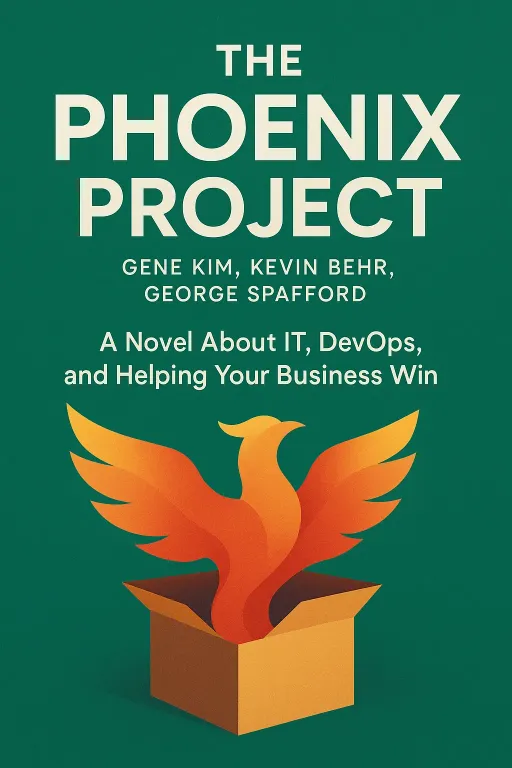
Nova: That's a brutal, yet incredibly accurate, roast of many an organizational initiative! But what if I told you there are minds out there who’ve actually cracked the code, transforming that chaotic whiteboard into a symphony of productivity? Today, we're pulling back the curtain on "Stop Reacting, Start Orchestrating: The Guide to Proactive Project Flow," a title that perfectly encapsulates the wisdom from two foundational texts. We're talking about "The Phoenix Project" by Gene Kim, Kevin Behr, and George Spafford, a book that brilliantly uses a novel format to illustrate complex IT operations, and the timeless classic, "High Output Management" by the legendary former Intel CEO, Andrew S. Grove. Grove’s insights are still shaping how high-performing teams operate decades later.
Atlas: I’m curious, what does a novel have to teach me about project management? And Grove, I know his name is practically synonymous with Silicon Valley leadership, but for someone trying to build and innovate, how do these old-school ideas translate to today's lightning-fast, complex environments? I'm looking for the real levers here, not just abstract theory.
Nova: Exactly the right questions, Atlas, because these books fundamentally shift your view from individual tasks to understanding the itself. And that's where we start.
The Invisible Bottleneck: Seeing Your Project as a System
SECTION
Nova: So, let's dive into "The Phoenix Project." This book is a narrative, a story about a fictional company’s IT department on the brink of disaster. What it reveals, through its characters' struggles, is that many projects get bogged down not by a lack of effort, but by invisible bottlenecks and misaligned priorities—systemic issues. It introduced this revolutionary idea of "The Three Ways": Flow, Feedback, and Continual Learning.
Atlas: Okay, but how do these "Three Ways" really manifest in a chaotic real-world scenario? For our listeners who are managing high-pressure teams, or even just their own complex projects, "flow" can feel like a mythical creature. What does it actually look like when it’s missing, and how do these principles fix it?
Nova: That's a perfect challenge. Imagine a critical project—let's call it Project Unicorn—where the marketing team needs input from engineering, who needs data from operations, who in turn relies on an external vendor. The marketing team submits their request, which sits in engineering's queue for weeks. Engineering finally starts, but they hit a snag because operations hasn't provided the right data. Operations points fingers at the external vendor, who’s notoriously slow. Meanwhile, marketing is fuming, deadlines are blowing up, and everyone is working overtime, but nothing is actually moving forward. The "flow" is completely broken.
Atlas: Oh, I've been there. That’s not just a project, that’s a war zone. Everyone's busy, everyone's stressed, but the progress bar is stuck at 20%. It feels like individual failures, but you’re saying it's deeper than that.
Nova: Precisely. "The Phoenix Project" highlights that these aren't necessarily individual failures of competence. It’s a systemic problem. The bottleneck—the point where work piles up—is often invisible because everyone is just focused on their own piece. The "Flow" principle says you must make work visible and ensure it moves smoothly from left to right, minimizing handoffs and queues. "Feedback" means those downstream problems quickly circle back upstream, so engineering knows if operations can't deliver, preventing wasted effort. And "Continual Learning" is about constantly improving the process based on those feedback loops.
Atlas: That’s going to resonate with anyone who struggles with feeling like they’re constantly pushing a boulder uphill. So it’s not about working harder, but smarter, by seeing the whole machine? How do you even begin to spot these invisible blockages when you're caught in the middle of that chaos?
Nova: That’s where the "Tiny Step" comes in, and it's deceptively simple. You literally map out your current project's workflow visually. Draw it out. Where does information physically go? Where do tasks consistently get stuck? What are the handoffs? You'll often find that the bottleneck isn't a person, but a process step, a waiting state, or a dependency that no one had fully accounted for. It's about turning the invisible visible.
Orchestrating Output: Amplifying Impact Through Proactive Leadership
SECTION
Nova: Once you start seeing the system, the natural next step is learning how to truly it, which brings us to Andrew Grove’s "High Output Management." Grove, a legendary figure at Intel, wasn't just about managing tasks; he was about amplifying impact. He famously stated that a manager's output is the sum of their team's output their influence on others.
Atlas: What does "influence on others" really mean for someone trying to lead a high-performing team? Is it just charisma, or is there a tangible, strategic element to it? For an innovator, that influence is key to bringing new ideas to life.
Nova: It’s absolutely strategic, Atlas. Grove was incredibly tactical. He saw meetings, for example, not as a necessary evil, but as a primary medium for managerial work, a crucial way to disseminate information and make decisions. He wasn't talking about endless, pointless meetings. He was talking about highly structured, purpose-driven sessions designed to amplify the team's output. His influence came from setting clear objectives, ensuring timely decision-making, and fostering a culture where information flowed efficiently, preventing those very bottlenecks we just discussed.
Atlas: That makes sense. It’s about building frameworks, not just barking orders. So, give me a real-world example of how this kind of proactive orchestration, using meetings and decision-making, actually prevented the kind of project disaster we talked about earlier. How does this connect to identifying constraints they become bottlenecks?
Nova: Let’s revisit Project Unicorn, but this time, with a Grove-inspired manager at the helm. Instead of waiting for marketing to submit a request and hoping for the best, the manager institutes a weekly "flow review" meeting. In this meeting, representatives from marketing, engineering, and operations are present. They don't just report status; they actively look ahead. "Marketing, what are your needs for the next two weeks? Engineering, what resources will that require? Operations, do we foresee any data or vendor dependencies?"
Atlas: So, instead of reacting to a problem once it's exploded, they're proactively identifying potential blockages and making decisions the work even hits the bottleneck. That's a huge difference.
Nova: Exactly. Grove emphasizes that a manager’s output is multiplied by their ability to anticipate and remove obstacles for their team. By using structured meetings for information exchange and proactive decision-making, the manager isn't just supervising; they're orchestrating. They're ensuring the "flow" is maintained, providing "feedback" before problems escalate, and fostering "continual learning" by analyzing where future bottlenecks might appear. It's about building a system that runs smoothly, almost elegantly, rather than constantly bailing out a sinking ship. This proactive approach allows teams to move faster, innovate more, and ultimately, achieve a much higher output with less friction.
Synthesis & Takeaways
SECTION
Nova: So, when you put "The Phoenix Project" and "High Output Management" together, you get this incredibly powerful synergy. It’s not just about identifying the problems in your system, but also about actively designing and leading that system to make it efficient, resilient, and ultimately, high-performing. It’s a fundamental shift from reactive firefighting to proactive flow design. This isn't just about getting more done, is it?
Atlas: This isn't just about getting more done. It’s about creating a sustainable, almost elegant way of working that truly impacts the future. For an innovator, for an architect, for a strategist, it's about building something that not only works but thrives, allowing us to focus on the big picture, on true impact, rather than constantly being bogged down by operational drama. It's about achieving mastery, not just productivity.
Nova: Absolutely. It’s about understanding that true productivity isn't just about individual effort, but about the health of the entire system you're operating within. When you master that, you don't just avoid burnout; you unlock a whole new level of creative and strategic capacity.
Atlas: So, for everyone listening, what invisible bottlenecks are lurking in your current projects? What’s one tiny step you can take this week to map that out and start orchestrating, rather than just reacting?
Nova: That's a powerful question to end on. Start small, map your workflow, and see where the friction truly lies. You might be surprised by what you uncover.
Atlas: And that, listeners, is the first step towards not just better projects, but a better way of working.
Nova: This is Aibrary. Congratulations on your growth!