The Leader's Paradox: Why Vulnerability Fuels Impact
Golden Hook & Introduction
SECTION
Nova: Forget everything you thought you knew about strong leadership. What if the very quality we often hide – our vulnerability – is actually the most potent superpower a leader can wield?
Atlas: Whoa, superpower? That feels incredibly counterintuitive for leadership, especially when the stakes are high. I mean, in fields like mental healthcare, you're expected to be the rock, the unshakeable expert.
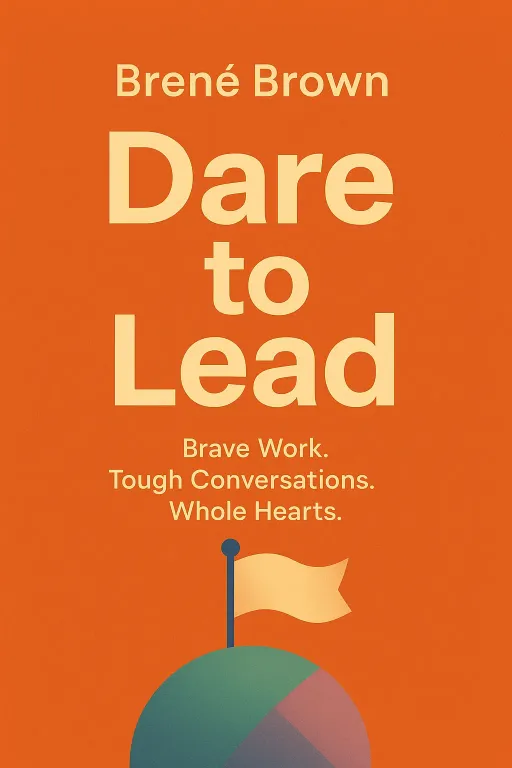
Nova: Exactly, Atlas! And that's precisely why we're diving deep into "Dare to Lead" by the incredible Brené Brown today. Brown, a research professor who has spent decades studying courage, vulnerability, shame, and empathy, brings an unparalleled scientific rigor to concepts often dismissed as 'soft skills.' Her work truly revolutionized our understanding of what it means to lead effectively.
Atlas: I know Brown's work has had a massive impact. It’s interesting how her research, which started with something as personal as shame, ended up transforming how we think about corporate leadership. That's quite a journey for a book.
Nova: It really is. And it speaks volumes about the universal truth she uncovered.
Vulnerability as the True Measure of Courage in Leadership
SECTION
Nova: So, let's start with her core argument: vulnerability is not a weakness. It's not oversharing or emotional incontinence. Instead, Brown defines vulnerability as emotional exposure, risk, and uncertainty. And what is courage, if not leaning into those exact things?
Atlas: Okay, but for many, the idea of a leader showing "emotional exposure" or admitting "uncertainty" in front of their team just screams weakness. Imagine a clinician admitting they're unsure about a diagnosis to a patient or their family. The immediate thought is usually, "I need to project confidence."
Nova: I completely get that gut reaction, Atlas. It's ingrained in our leadership narratives. But Brown argues that the very act of leaning into that discomfort – admitting you don't have all the answers, or that a strategy might fail – that's where true courage lies. It's about showing up fully, even when you can't control the outcome. Think about James Kouzes and Barry Posner in "The Leadership Challenge." They talk about leaders needing to "Model the Way." Part of that modeling, a crucial part, is showing up authentically, owning mistakes, and learning from them. That requires immense vulnerability.
Atlas: So, it's about showing the struggle, not just the polished success? Like a mental health leader admitting a new program isn't getting the traction they hoped for, but then inviting the team to collaboratively troubleshoot?
Nova: Precisely! It's not about being a mess; it's about being honest about the messiness of the human experience. When a leader says, "Look, this didn't go as planned, and I'm really struggling with how to move forward, but I believe in this team to figure it out together," that doesn't erode trust. It builds it. It signals, "I'm human, just like you, and we're in this together."
Atlas: That's actually really powerful. I can see how that kind of authenticity would resonate, especially with teams navigating complex, emotionally charged work. It asks for a different kind of strength than just being stoic.
Nova: It absolutely does. It asks for the strength to be seen, to connect, and to lead from a place of genuine humanity. And that, in turn, unlocks something even more profound within a team.
The Impact of Vulnerable Leadership: Psychological Safety and Innovation
SECTION
Nova: And that commitment to showing up authentically, Atlas, actually leads us directly to the profound impact of vulnerable leadership: the creation of psychological safety. This isn't just a buzzword; it's the bedrock of high-performing teams, especially in innovative fields.
Atlas: For someone innovating in mental healthcare, psychological safety is paramount. You need teams to feel safe enough to propose radical new treatments, challenge existing protocols, or even admit when they're personally struggling with burnout, without fear of judgment or reprisal. How does a leader's vulnerability directly foster that?
Nova: It's quite simple, yet incredibly impactful. When a leader demonstrates vulnerability – when they admit a mistake, ask for help, or share a genuine struggle – they inadvertently give permission for their team members to do the same. They model the behavior. If the boss can say, "I messed up," or "I don't know the answer," then team members feel safer to ask questions, admit their own errors, and bring their full, imperfect selves to work.
Atlas: So, a leader's willingness to be vulnerable essentially lowers the perceived risk for everyone else. It creates an environment where people aren't constantly guarding themselves, which frees up cognitive and emotional energy for actual innovation and problem-solving.
Nova: Exactly! Imagine a team trying to develop a novel therapeutic approach. If the leader has cultivated an environment where failure is seen as a learning opportunity, and honest feedback is encouraged, that team is far more likely to experiment boldly, iterate quickly, and ultimately, innovate. If the leader projects an unshakeable image, the team might play it safe, stick to what's known, and miss out on breakthrough ideas.
Atlas: That makes perfect sense. So, for our listeners who are innovative leaders in mental health, always pushing for better patient outcomes, what's a concrete, tiny step they can take to start cultivating this vulnerable leadership, especially if they've always been taught to project unwavering strength? Is it just admitting 'I don't know'?
Nova: Nova’s Take suggests precisely that kind of actionable step. It's about identifying one situation this week where you can share a genuine struggle or ask for help. It doesn't have to be a grand, dramatic confession. It could be as simple as saying, "I'm feeling overwhelmed by this deadline, does anyone have a strategy for prioritizing that I haven't considered?" Or, "I'm having a tough time making sense of this complex data set, can someone with a fresh pair of eyes take a look with me?"
Atlas: That's a powerful shift. It sounds like it's not just about making people feel good, but actively enabling higher performance and better outcomes, which is critical for advancing mental healthcare ethically and effectively. It creates a space for true collaboration.
Synthesis & Takeaways
SECTION
Nova: What we're really talking about here, Atlas, is moving beyond a performance mindset, where leadership is about appearing perfect, to one of genuine human connection. And that, ironically, makes us better performers, more impactful leaders, and fosters more resilient teams.
Atlas: So, for our listeners who are pushing boundaries in mental healthcare, who are constantly healing and innovating, this isn't just a touchy-feely concept. It's a foundational skill for building resilient teams and driving ethical, impactful change. It’s about leading with your whole self, not just your polished facade.
Nova: Absolutely. And remember, growth is a journey, not a destination. Embracing this paradox – that vulnerability fuels impact – is an ongoing practice. It’s a muscle you build.
Atlas: So, this week, take that tiny step. Find one moment to be truly vulnerable, to ask for help, or share a struggle. See what connections you forge, what doors you open. We’d love to hear about it.
Nova: This is Aibrary. Congratulations on your growth!