

Mastering the Art of Leadership: A Dual Perspective
Golden Hook & Introduction
SECTION
Nova: Hey Atlas, quick game. Rapid-fire word association. I say a word, you give me the first thing that comes to mind. Ready?
Atlas: Oh, I like that. Always ready for a curveball. Hit me.
Nova: Leadership.
Atlas: Oh, man. Pressure. Vision. Sometimes, a lot of very strong opinions. And, if I'm honest, sometimes a bit of a mystery how some people just....
Nova: That’s a fantastic, and very honest, snapshot! Because that "mystery" you mentioned, that feeling of 'do they just have it?', is exactly what we're dissecting today. We’re pulling back the curtain on what makes truly exceptional leaders, drawing from two powerhouse books.
Atlas: Okay, I’m intrigued. What are we looking at?
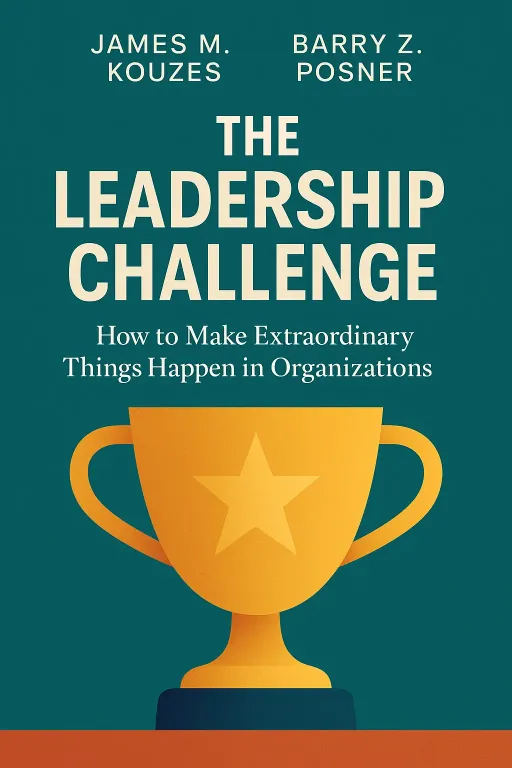
Nova: First up, the absolute classic, a foundational text in the field: "The Leadership Challenge" by James M. Kouzes and Barry Z. Posner. This book isn't just theory; it's built on decades of rigorous research, interviews with thousands of leaders, and has consistently been a cornerstone for leadership development programs globally. It basically mapped out the observable behaviors that make leaders effective.
Atlas: Right, the "how-to" guide, almost?
Nova: Exactly. But then, we're taking that incredible foundation and adding a crucial, modern layer with "Mastering Leadership" by Robert J. Anderson and William A. Adams. They introduce what they call the 'Universal Model of Leadership,' which argues that profound leadership growth isn't just about external actions; it's about integrating your inner development with that outer effectiveness.
Atlas: So, it's not just about you do, but you are when you do it?
Nova: Precisely. The core of our podcast today is really an exploration of how true, impactful leadership emerges when we consciously fuse our deepest personal values and inner development with proven, observable leadership practices. Today we'll dive deep into this from three perspectives. First, we'll explore the 'outer game' of leadership – the observable practices that make leaders effective. Then, we'll journey into the 'inner game' – the mindset and character that form a leader's core. And finally, we'll discover how integrating these two dimensions can fundamentally transform your approach to team leadership and inspire unparalleled commitment.
The Observable Leader: Mastering the Five Practices
SECTION
Nova: So, let's kick off with the "outer game" – the visible, actionable side of leadership that Kouzes and Posner illuminate so brilliantly. They distilled their extensive research into five practices of exemplary leadership: Model the Way, Inspire a Shared Vision, Challenge the Process, Enable Others to Act, and Encourage the Heart.
Atlas: Those sound like great bullet points for a management seminar, but how do they actually play out in the real world? For our listeners who are leading teams, maybe in high-pressure tech environments, what does "Model the Way" even look like beyond just showing up on time?
Nova: That’s a great question, because it’s far more than punctuality. "Model the Way" is about clarifying your values and then aligning your actions with those values. It’s about setting the example, not just talking about it. Think of a leader who, facing a tight deadline, doesn't just delegate the hardest parts. Instead, they roll up their sleeves and work alongside their team, maybe even taking on a less glamorous but critical task themselves.
Atlas: I can definitely see that. It builds instant credibility. It’s like a coach who demands peak physical performance but also leads by example in their own training.
Nova: Exactly! It’s about earning the right to lead through personal example. And then there's "Inspire a Shared Vision." This isn't just about having a goal; it's about painting a vivid picture of the future that excites and motivates everyone. Imagine a startup founder who doesn't just present quarterly revenue targets, but articulates a future where their product fundamentally changes how people connect, how they work, or how they live.
Atlas: So, it’s not just "we need to hit X numbers," it’s "we are building the future of X." That resonates so much more deeply. I’ve been in situations where the vision felt like a corporate slogan rather than something truly inspiring.
Nova: And that’s the difference. An exemplary leader doesn't just articulate the vision; they it, and they communicate it in a way that ignites that same passion in others. It's about tapping into people's aspirations, helping them see how their individual contributions fit into a larger, more meaningful purpose. This isn't charisma for charisma's sake; it's about connecting the dots between daily tasks and a truly worthwhile future.
Atlas: That makes me wonder, though, for leaders who might not naturally be the most outwardly expressive or visionary, can these practices be learned? Or do you really need that innate spark?
Nova: Absolutely they can be learned, Atlas. That's the beauty of Kouzes and Posner's work. They argue these are practices, not personality traits. Even "Inspire a Shared Vision" can be cultivated by learning to listen more deeply to what truly matters to your team, by understanding the impact of your work, and by practicing how you articulate that impact with genuine enthusiasm. It’s a skill, like any other, that improves with deliberate practice and feedback.
The Inner Core: Leading from Within
SECTION
Nova: Now, while those five practices provide an incredible roadmap for to do, Anderson and Adams in "Mastering Leadership" push us to ask we are while we're doing it. They introduce the 'Universal Model of Leadership,' which really emphasizes the inner game. They suggest that profound leadership growth comes from mastering both the subjective – our mindset, our character, our values – and the objective – our behaviors and skills.
Atlas: But wait, isn't "inner work" a bit... fluffy for a pragmatic leader who's trying to hit deadlines and manage a budget? For someone focused on results and efficiency, how do they justify spending time on something as intangible as "mindset" or "character growth"?
Nova: That's a common and understandable skepticism, but it's crucial. Anderson and Adams argue that your inner state, your level of consciousness and personal development, directly determines your outer effectiveness. Think of it like an iceberg. The five practices are the visible tip – what everyone sees. But the vast majority of the iceberg, its stability and its true power, is hidden beneath the surface: your beliefs, your motivations, your fears, your values.
Atlas: So, if your inner game is weak, even if you try to "Model the Way" externally, it might feel inauthentic or eventually crumble under pressure?
Nova: Exactly. Imagine a leader who, on the surface, encourages their team to "Challenge the Process" – another one of Kouzes and Posner’s practices. But internally, this leader is deeply insecure and threatened by dissent. What happens when someone actually challenge the process? Their inner insecurity might lead them to subtly shut down the idea, or even punish the challenger, undermining the very practice they claim to uphold.
Atlas: That makes so much sense. I’ve seen that play out. It creates a disconnect, where the words don't match the actions, and that erodes trust faster than anything.
Nova: It's why Anderson and Adams stress that truly mastering leadership isn't just about adding more skills to your toolkit; it's about transforming. It’s about developing a higher level of awareness, emotional intelligence, and integrity. They talk about different stages of leadership development, moving from a reactive, self-protective mode to a more creative, purposeful, and integrated approach.
Atlas: Okay, so it’s not fluffy; it’s foundational. But how do you even character growth? How do you know you're making progress on this inner journey?
Nova: It's not about a quantifiable metric like sales figures, but about qualitative shifts. It’s reflected in how you respond to stress, how you handle conflict, your capacity for empathy, your ability to truly listen, and your consistency between what you say and what you do. Are you less reactive? More resilient? Do you inspire deeper trust and psychological safety in your team? Those are the measures. It's a continuous journey of self-reflection and conscious development, which, for a growth seeker, is a compelling challenge.
The Integrated Leader: Beyond Skills, Towards Transformation
SECTION
Nova: So, if Kouzes and Posner give us the powerful map of what exemplary leaders, Anderson and Adams provide the crucial compass, showing us we need to to navigate that map authentically. The real magic happens when you integrate these two.
Atlas: So, it's not just you do, but you do it, and that "why" comes from your inner core?
Nova: Precisely! Let's revisit "Model the Way." When a leader truly understands their deepest personal values – maybe it's integrity, innovation, or service – and then consciously aligns their actions with those values, they're not just performing a leadership practice; they're embodying their authentic self. That's when "Modeling the Way" moves from a management technique to a profound act of leadership that inspires genuine trust and respect.
Atlas: That’s actually really inspiring. It means you’re not just going through the motions; you're leading from a place of deep conviction. And that, I imagine, is contagious.
Nova: It absolutely is. When a leader's external practices are rooted in their authentic internal values, it creates a powerful resonance. Think about "Inspire a Shared Vision." If that vision is genuinely born from the leader's core beliefs and purpose, it becomes more than just a strategic objective. It becomes a moral imperative, a meaningful cause that people want to rally behind.
Atlas: So, the commitment it inspires isn't just about hitting targets, it’s about being part of something bigger, something that aligns with their values too.
Nova: Exactly. It fosters a much deeper, more sustainable form of commitment. When leaders operate from this integrated place, they build cultures of psychological safety, where people feel genuinely valued, heard, and empowered. They "Enable Others to Act" not just as a task, but because they genuinely believe in the potential of their team members. They "Encourage the Heart" with genuine appreciation, born from a place of empathy and gratitude.
Atlas: What’s the transformation a leader can expect from this integration? Beyond just better performance metrics?
Nova: The biggest transformation is moving from being a transactional leader, focused on exchanges and tasks, to a truly transformational leader, someone who elevates their team, inspires them to achieve more than they thought possible, and helps them grow as individuals. This integrated approach creates a virtuous cycle: your inner growth fuels your outer effectiveness, which in turn reinforces your sense of purpose and impact, leading to even deeper growth. It’s about building a legacy, not just a career.
Synthesis & Takeaways
SECTION
Nova: So, what we're really seeing today is that leadership isn't a dichotomy between inner and outer. It's a powerful synergy. The five practices give us the tools and the framework, but the Universal Model of Leadership reminds us that the most potent tool is our developed self.
Atlas: That’s a powerful way to put it. It sounds like for anyone looking to refine their team management skills and inspire deeper commitment, the first step isn't just to more, but to themselves better.
Nova: Absolutely. It encourages you to ask: What are my non-negotiable values? How do they show up in my "Model the Way"? How do they inform the "Shared Vision" I'm inspiring? It's about bringing your whole self, your authentic self, to your leadership. And when you do that, you don't just lead a team; you genuinely inspire them.
Atlas: That shift from just managing to truly inspiring, that’s where the magic happens. For our listeners who are growth seekers, I’d encourage them to take a few moments this week to identify one core value they hold dear and think about how they can more intentionally "Model the Way" based on that value. It's a powerful reflection.
Nova: A fantastic call to action, Atlas. Because every step forward, no matter how small, is progress on this journey of mastery.
Atlas: This is Aibrary. Congratulations on your growth!









