Leading with Exemplary Impact
Golden Hook & Introduction
SECTION
Nova: Think about the most impactful leaders you’ve ever encountered. Were they the ones with the biggest titles, or the ones who always seemed to know exactly what they stood for, and lived it, every single day? I’m willing to bet it was the latter.
Atlas: Oh man, I love that. Because for so long, leadership felt like this elusive, almost mystical quality, reserved for a select few. Like you either had "it" or you didn't, right? And if you're a curious learner like many of our listeners, you're constantly seeking to understand to develop "it."
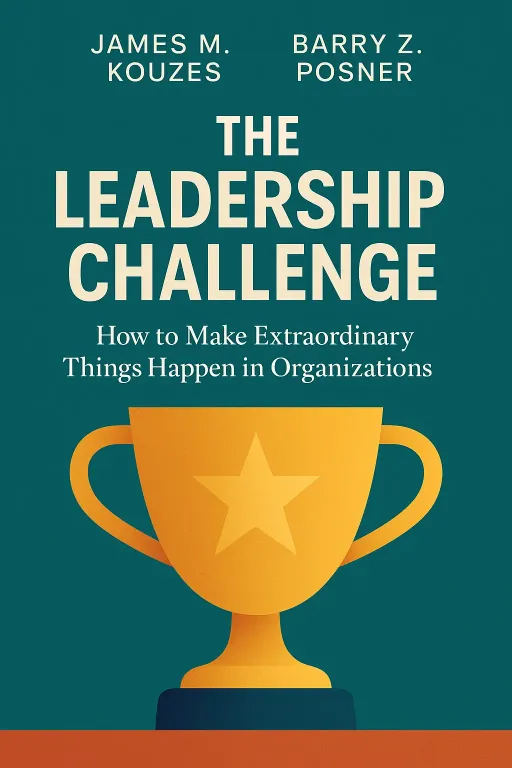
Nova: Exactly! And that’s a myth that James M. Kouzes and Barry Z. Posner systematically dismantle in their seminal work, "The Leadership Challenge." This isn't some self-help guru's quick tips; it's a guide that has been continuously updated for decades, built on over forty years of rigorous research into what they call 'personal best' leadership experiences.
Atlas: Forty years of research? Wow. That's not just a book, that's practically a leadership institution. So, what makes this book so enduringly relevant? Is it just a rehash of common sense, or is there a deeper science to it?
Nova: It’s absolutely the latter, Atlas. What makes it so powerful is that it's evidence-based, focusing on practices that anyone, at any level, can learn and apply. They distilled all that research into what they call the 'Five Practices of Exemplary Leadership.' Today, we’re going to dive deep into two of the most foundational: 'Model the Way' and 'Inspire a Shared Vision.' We’ll explore how these practices aren't just theoretical ideals, but actionable blueprints for mobilizing others and achieving extraordinary results.
Deep Dive into Core Topic 1: Model the Way
SECTION
Atlas: Okay, so 'Model the Way.' That sounds straightforward enough, but I imagine there's more to it than just "be a good example." What exactly do Kouzes and Posner mean by that?
Nova: It’s so much more than just being a good example. 'Model the Way' is fundamentally about authenticity and values. It starts with clarifying your own values – truly understanding what you believe in, what drives you, what lines you won't cross. And then, crucially, it's about aligning your actions with those stated beliefs. It’s about walking the talk, especially when the talk gets tough.
Atlas: But how do you really that? I mean, it’s easy for anyone to they have values, right? We all want to believe we're ethical and consistent. What distinguishes someone who from someone who just about it? Can you give an example?
Nova: That’s a brilliant question, because it gets to the heart of credibility. Credibility isn’t granted by title; it’s earned through consistent, value-driven behavior. Think about a leader faced with a difficult decision – perhaps a budget cut that impacts people, or a strategic pivot that goes against popular opinion.
Nova: There’s a powerful story that illustrates this. It’s about a CEO named Alan, who ran a manufacturing company. The company was facing a severe downturn, and there was immense pressure to cut costs, including laying off a significant portion of the workforce. The board was pushing for immediate, deep cuts to appease shareholders. Alan, however, had always championed a core value of "people first" – investing in his employees, fostering a family-like culture.
Atlas: Oh, I know that feeling. It’s easy to talk about "people first" when things are good, but when the bottom line is screaming, those values often get quietly shelved. I imagine a lot of our listeners who are managing high-pressure teams feel that tension between ideals and harsh reality.
Nova: Exactly. But Alan didn't just talk. He gathered his leadership team and reiterated their shared value: "We will do everything in our power to avoid layoffs." He then by taking a drastic personal pay cut, followed by all senior executives. They implemented a temporary four-day work week for everyone, including themselves, to spread the pain rather than concentrate it. They were transparent with the entire company about the financial situation and their chosen path.
Atlas: Whoa. That’s a real-world example of putting your money where your mouth is. Or, in this case, putting your salary where your values are. That’s going to resonate with anyone who struggles with making tough calls that impact people.
Nova: Absolutely. The result? While the company still faced challenges, employee morale remained surprisingly high. They weathered the storm, and when the economy recovered, they had a fiercely loyal, intact workforce ready to hit the ground running. Alan’s actions, directly aligning with his stated values during a crisis, built immense trust and credibility. It wasn't just a grand gesture; it was a series of consistent, value-driven decisions that permeated the entire organization.
Atlas: So it's less about a single, heroic act, and more about that everyday, almost boring, consistency, especially when it costs you something. That makes me wonder, for our listeners who are trying to lead a small team or even just influence their peers, how does someone in a rapidly changing environment maintain that consistency when the ground is always shifting?
Nova: That’s a crucial point. It’s about having a clear internal compass. When the external environment is chaotic, your values become your anchor. It means taking the time, even when things are hectic, to pause and ask: "Does this decision align with what I truly believe?" It’s a continuous process of self-reflection and integrity. And that, in turn, makes you predictable and trustworthy to those you lead, which is invaluable in uncertain times.
Deep Dive into Core Topic 2: Inspire a Shared Vision
SECTION
Nova: And that naturally leads us to the second key practice, which often acts as a powerful complement to modeling the way: 'Inspire a Shared Vision.' Once you’ve established credibility by living your values, you then have the platform to paint a compelling picture of the future.
Atlas: 'Inspire a Shared Vision.' Okay, so isn't a "vision" just a fancy mission statement or some corporate jargon that gets plastered on a wall and then ignored? How do you make it and, not just a buzzword? I mean, how do you get people to genuinely buy into a future they can't yet see?
Nova: That’s the magic, Atlas! It’s about more than just a statement. It’s about igniting a passion for a future possibility, making it personal, and fostering collective commitment. Exemplary leaders don't just people the vision; they them. They communicate with such passion and conviction that others catch fire.
Nova: Think about Elon Musk and SpaceX. When he started, the idea of a private company making reusable rockets to colonize Mars sounded like science fiction. It wasn't just a business plan; it was a grand, almost audacious vision for humanity's future. He painted a picture of a multi-planetary species, of pushing the boundaries of what's possible.
Atlas: Oh, I see. So it's not just "we're going to build rockets." It's "we're going to save humanity by making us multi-planetary." That's a huge difference in scale and emotional appeal. But how does he actually get people to sign up for something that sounds so... out there?
Nova: He does it by appealing to fundamental human aspirations – the desire to explore, to contribute to something bigger than oneself, to make a lasting impact. He uses vivid language, compelling narratives, and relentless optimism to make that future feel tangible and exciting. He doesn't just present data; he tells a story of possibility.
Nova: Consider another example, from a very different field: Malala Yousafzai. Her vision wasn't about rockets or profit; it was about every child's right to education. She didn't have corporate power or a vast organization when she started. She had a deeply personal experience and a clear, morally resonant vision. She articulated a future where girls could learn freely, and she spoke about it with such unwavering conviction that it inspired millions globally to join her cause.
Atlas: That’s actually really inspiring. So it’s about tapping into something deeper than just a job description. It's about purpose. But what if your team is cynical, or just focused on the day-to-day grind? How do you break through that and get them to that vision?
Nova: That's where 'Model the Way' comes back into play, actually. If you've been consistent and authentic, people are more likely to trust your vision. Then, to get buy-in, you have to involve them. It’s not just vision; it needs to become vision. This often means listening to their aspirations, finding common ground, and showing them how their work contributes directly to that bigger picture. It's also about celebrating small wins along the way, showing progress, and acknowledging their efforts – which touches upon 'Encourage the Heart,' another of the Five Practices.
Nova: When you truly inspire a shared vision, you're not just giving people tasks; you're giving them a purpose. You're empowering them to act, another of the practices. They see how their individual contributions fit into a grander narrative, and that fuels their motivation and creativity. It’s about moving from "I have to do this" to "I to be part of this."
Synthesis & Takeaways
SECTION
Atlas: This is fascinating. So, 'Model the Way' is about building credibility and trust through your actions, and 'Inspire a Shared Vision' is about giving people a compelling reason to follow you and contribute. They really do feed into each other, don't they? You can't inspire a vision if people don't trust you, and modeling the way can feel directionless without a vision.
Nova: Exactly! They’re two sides of the same coin, foundational to exemplary leadership. Kouzes and Posner’s research unequivocally shows that these aren't innate qualities. They are learnable, actionable behaviors. It’s less about being born a leader, and more about choosing to practice leadership, consistently and authentically.
Atlas: That's such a hopeful message for anyone, especially curious learners who are passionate about growth. It means that leadership isn't just for the C-suite; it's something we can all cultivate in our daily lives, whether we're leading a team, a project, or even just our own personal development.
Nova: Absolutely. The enduring power of "The Leadership Challenge" is its message that leadership is an observable, teachable set of practices. It’s about taking personal responsibility, articulating a future worth striving for, and then empowering others to make that future a reality.
Atlas: So, for our listeners today, what's one small way you can start modeling your values or articulate a compelling vision, even just to yourself or a small group, this week? The impact might be far greater than you imagine.
Nova: Think about it. And thank you for joining us on this exploration of exemplary leadership.
Atlas: This is Aibrary. Congratulations on your growth!