Beyond Command: The Power of Followership
Golden Hook & Introduction
SECTION
Nova: Atlas, quick challenge for you. If you had to describe what makes a truly great leader in just five words, what would they be? No overthinking!
Atlas: Oh, easy. Visionary, decisive, inspiring, resilient... and, uh, profoundly curious. That’s six. Wait. Let me restart. Visionary, decisive, inspiring, resilient, empathetic. How’s that?
Nova: Empathetic! I love it. Those are all fantastic, classic leadership traits. But what if I told you we're still missing half the story? The half that makes those five incredible words even for a leader to embody consistently?
Atlas: Missing half the story? That's a bold claim, Nova. I mean, we're constantly bombarded with books and seminars about what need to do. What could possibly be the other half? The secret ingredient we're all overlooking?
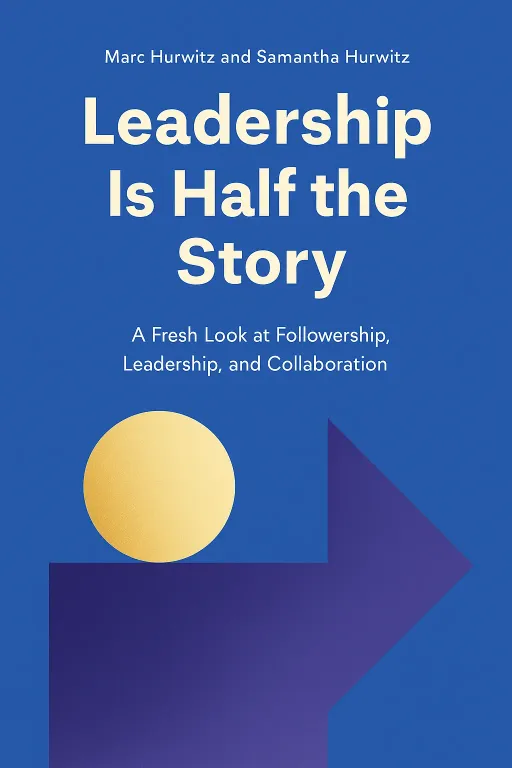
Nova: Exactly! And that's precisely what Marc and Samantha Hurwitz provocatively argue in their book, "Leadership Is Half the Story." They flip the script entirely. And then, building on that foundation, Jeffrey W. Hayzlett, in "THE HERO FACTOR," provides a powerful framework for what leaders can actually to unlock that missing half.
Atlas: So, we're talking about a paradigm shift here. It's not just about the person at the top, but something deeper, something about the dynamic below or around them? As a strategic navigator, I'm always looking for levers to pull that aren't immediately obvious, especially when it comes to team performance. This sounds like it could be one of them.
Nova: It absolutely is. Today, we're diving deep into this often-ignored side of the leadership coin: the power of followership and how truly great leaders don't just command, they cultivate 'heroes' within their ranks. It's about empowering every role to drive ownership and purpose.
Redefining Leadership Through Followership
SECTION
Nova: So, let's start with the Hurwitz's central thesis: "Leadership Is Half the Story." For generations, our entire narrative around success, innovation, and change has been leader-centric. We lionize the CEO, the founder, the general. We dissect their strategies, their charisma, their decision-making.
Atlas: Right, it's always "the great man" or "the great woman" theory of history. The singular genius who charts the course.
Nova: Precisely. But the Hurwitz duo argues this focus is fundamentally incomplete. They say that great leaders don't exist in a vacuum. They are, in fact, products of great. And by "followership," they don't mean passive obedience. This isn't about sheep blindly following a shepherd.
Atlas: Wait, "followership" that isn't passive? That challenges the conventional wisdom right there. For a lot of leaders, especially those trying to maintain control in complex environments, the idea of "challenging" followers might sound like insubordination or even a threat to their authority. How does that actually work without devolving into chaos?
Nova: That's the brilliance of their argument, Atlas. They define effective followers as engaged, proactive, and. Think of it like this: imagine a high-stakes surgical team. The lead surgeon is undeniably the leader, making critical decisions. But what if the anesthesiologist notices a subtle change in the patient's vitals that the surgeon missed? Or the scrub nurse spots a critical instrument out of place?
Atlas: They to speak up. Their role isn't just to assist; it's to actively contribute their expertise and, if necessary, correct the course. Their challenge isn't defiance; it's a vital safeguard.
Nova: Exactly! That proactive engagement, that willingness to offer a different perspective or flag a potential issue, that's effective followership. The Hurwitz's point out that a leader who cultivates this kind of team isn't just getting compliance; they're getting collective intelligence, diverse perspectives, and early warning systems.
Atlas: So it's not about the leader having all the answers, but about creating an environment where the best answers can emerge from anywhere? That directly speaks to the visionary leader's desire for impact and growth. You're not just executing your vision; you're it with the best minds around you.
Nova: Absolutely. They illustrate this with examples of military units where junior officers are empowered to question orders if circumstances on the ground change dramatically, leading to more adaptive and successful missions. Or highly innovative tech teams where the most junior engineer feels safe enough to point out a flaw in the senior architect's design.
Atlas: That makes me wonder, how does a leader transition from expecting obedience to fostering this kind of proactive challenge? Because that requires a significant shift in mindset, not just for the team, but for the leader themselves. It’s about psychological safety, I imagine.
Nova: It's entirely about psychological safety and trust. A leader has to model vulnerability, actively solicit dissenting opinions, and genuinely listen without defensiveness. They have to understand that a challenge isn't a personal attack, but an offering meant to improve the collective outcome. It makes the organization more dynamic, more resilient. It’s a shared burden, leading to shared successes.
Atlas: I can see how that would build a more robust organization. The leader isn't the sole point of failure or the sole source of brilliance. They're orchestrating a symphony of talent. That's a powerful reframing of leadership for anyone driven by developing others.
Cultivating 'Heroes' & Empowering Ownership
SECTION
Nova: And this idea of active, engaged followership naturally leads us to the. How does a leader actually that environment? That's where Jeffrey W. Hayzlett's "THE HERO FACTOR" comes in. He offers a framework for leaders to cultivate an environment where employees feel empowered to be 'heroes.'
Atlas: 'Heroes' – I like that framing. It sounds a lot more active and purpose-driven than just "employees." What does he mean by a 'hero' in this context?
Nova: For Hayzlett, a 'hero' is someone who takes initiative, solves problems, and contributes meaningfully, often going beyond their job description. These are the people who don't wait for permission to fix something that's broken or to innovate a new process. They act with ownership.
Atlas: So, if the Hurwitz's gave us the of followership, Hayzlett gives us the to nurture it. But how do you prevent that from turning into everyone just doing their own thing? As a strategic navigator, my concern would be maintaining alignment with the broader organizational goals. You need a coherent strategy, not just a bunch of individual heroes running off in different directions.
Nova: That's a critical point, Atlas, and Hayzlett addresses it. It's not about anarchy; it's about. Leaders create the 'playing field' and define the 'game,' but then they trust their 'heroes' to find the best way to score. This involves clear communication of vision and values, providing necessary resources, and then stepping back to allow for autonomy.
Atlas: So, it's like setting the destination but letting the crew figure out the best route, and even discover new, more efficient routes along the way, rather than micromanaging every single oar stroke?
Nova: Exactly! Consider the story of a major tech company that was struggling with a complex customer service issue. Instead of the leadership team trying to solve it from the top down, they empowered a cross-functional team of mid-level employees—the 'heroes' on the front lines—to fully own the problem. They gave them a budget, access to data, and the authority to implement solutions.
Atlas: And I imagine the results were far better than a top-down mandate. Because those people on the ground understand the nuances and pain points in a way that leadership often can't.
Nova: Precisely. This team, feeling trusted and empowered, not only solved the immediate problem but also redesigned several internal processes, leading to a significant increase in customer satisfaction and a reduction in operational costs. They became 'heroes' because the leadership created the conditions for them to do so. This approach fosters intrinsic motivation. People aren't just working for a paycheck; they're working because they feel a sense of ownership and purpose.
Atlas: That speaks volumes to developing future leaders. If you want people to step up, you have to give them opportunities to do so, even if it means letting go of some control. It’s about building a culture where everyone feels they lead, even from their current role.
Nova: It’s a profound shift. It moves from a model where leaders the organization forward, to one where they the collective energy and talent of everyone to it forward. This creates a culture of ownership that extends far beyond the C-suite.
Synthesis & Takeaways
SECTION
Nova: So, bringing these two powerful ideas together, we see that effective followership and cultivating heroes are two sides of the same transformational coin. You can't have one without the other.
Atlas: Right. The proactive, engaged, and challenging follower described by Hurwitz and Hurwitz the 'hero' Hayzlett wants to cultivate. And a leader who empowers their team to be 'heroes' will naturally develop effective followers. It's a beautiful synergy.
Nova: It truly is. It redefines leadership not as a solitary burden of having all the answers, but as the wisdom to nurture the collective genius and courage within your entire team. It's about sharing the load, sharing the innovation, and ultimately, sharing the successes.
Atlas: Which, honestly, sounds a lot less lonely at the top. For visionary leaders and strategic navigators, this isn't just a feel-good concept; it's a strategic imperative. It's how you build resilient, innovative, and deeply engaged organizations that can adapt to anything.
Nova: It also directly addresses that deep desire for self-growth and developing others. By focusing on followership and heroism, leaders grow their own capacity by empowering others to grow theirs. It's a multiplier effect.
Atlas: So, for our listeners, the actionable takeaway here is to identify one area this week where you can intentionally shift your focus. Instead of dictating the 'how,' empower a team member to take initiative, solve a problem, and truly own the outcome. Give them the space to be a hero.
Nova: Absolutely. Start small, build trust, and watch the collective genius within your team begin to shine. You'll not only lighten your own burden but also amplify your impact exponentially.
Atlas: That’s actually really inspiring. It’s about unlocking potential that’s already there, just waiting for the right environment.
Nova: It absolutely is. True leadership isn't about being the biggest hero; it's about creating an environment where everyone can be one.
Atlas: This is Aibrary. Congratulations on your growth!