Stop Reacting, Start Anticipating: The Guide to Supply Chain Resilience.
Golden Hook & Introduction
SECTION
Nova: Atlas, what if I told you that trying harder, or even fixing, is often the absolute worst way to solve your biggest problems?
Atlas: Oh man, that sounds like my Monday mornings! I feel like I'm constantly trying harder, patching things up, and then finding myself right back where I started. What do you mean, "worst way"?
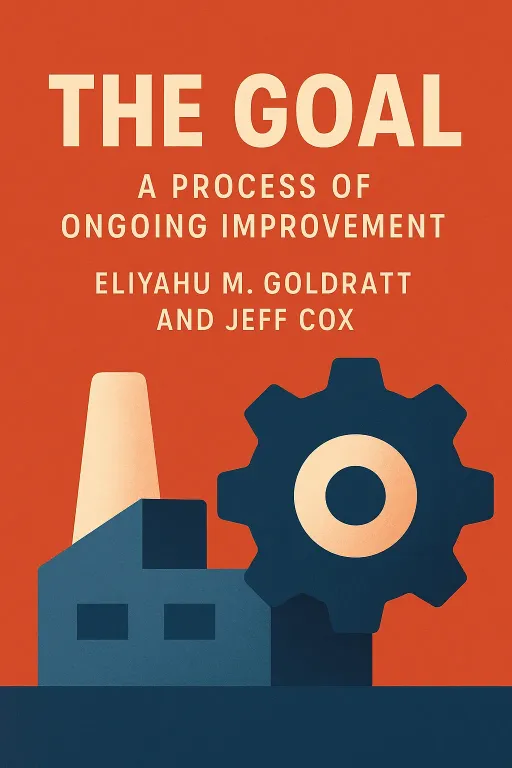
Nova: Exactly! That constant firefighting, that feeling of being perpetually behind, it's a symptom of something deeper. And that's the counter-intuitive wisdom we're pulling from two titans of operational thought today. We're diving into Eliyahu Goldratt's seminal work, "The Goal," which really revolutionized manufacturing and production by bringing a physicist's rigorous approach to business challenges. And we’re pairing that with Andrew Grove's "High Output Management," a foundational text from the former Intel CEO that’s shaped how Silicon Valley thinks about efficiency and leverage.
Atlas: Ah, so not just theory, but battle-tested wisdom from the trenches. That makes me wonder, for our listeners who are managing high-pressure situations, or just trying to navigate a complex life, how do these ideas help them break that cycle of constant reaction? How do we stop the firefighting?
Nova: That's the core of it, Atlas. It's about shifting from reacting to problems to anticipating them. It’s about understanding that your operational systems, whether it's a factory floor or your personal workflow, are often held back by hidden bottlenecks. And ignoring these constraints means you’re constantly reacting to symptoms, not solving the root cause.
Atlas: Okay, so the "cold fact" is that we're reacting because we're missing something crucial about our systems. That really resonates with the idea of wanting lasting security and not just quick fixes. So, how do we even to see these hidden bottlenecks?
Unmasking the Hidden Bottleneck: The Theory of Constraints
SECTION
Nova: That’s where Goldratt’s Theory of Constraints comes in, and it's brilliantly simple. Imagine a chain. How strong is that chain? It's only as strong as its weakest link, right? Or, think of a highway during rush hour. You can add more lanes the bottleneck, or faster cars, but if there's still a single choke point, like a narrow bridge or a toll plaza, the entire flow of traffic is dictated by that one spot.
Atlas: Yeah, I see that. So, you're saying that in any process, there's usually specific thing that's slowing everything down, and that one thing dictates the entire system's output? But wait, I mean, don't we need to optimize? Isn't that the whole point of efficiency?
Nova: That's the common misconception, and it's a powerful one. Goldratt actually showed that trying to optimize everything simultaneously is often counterproductive. It's like trying to make every single scout in a troop hike at the same speed. Some are naturally faster, some are slower. If you make the fastest ones wait for the slowest, and then push the slowest ones harder, you create frustration and chaos. He illustrated this beautifully in "The Goal" with a character named Alex Rogo, a plant manager facing closure.
Atlas: Oh, I love a good story. How did Rogo figure this out?
Nova: Rogo was trying to make every machine in his plant run at 100% efficiency, which sounds logical, right? But the plant was still losing money. His mentor, a physics professor named Jonah, challenged him. Jonah pointed out that machines working at full capacity the bottleneck were just building up mountains of inventory that couldn't be processed. It was a massive waste of resources. The real problem wasn't underperforming machines; it was the of their capacities.
Atlas: So basically, one machine was the "narrow bridge," and everything upstream was just piling up cars that couldn't cross.
Nova: Exactly! Rogo eventually identified his bottleneck machine, a heat treatment furnace. It was the slowest link, and it determined the plant's entire output. By focusing all his improvement efforts on that furnace – scheduling work differently for it, making sure it never ran out of materials, even moving quality control it – he dramatically increased the plant's overall throughput and saved the company.
Atlas: That's incredible. It makes me wonder, for our listeners who are trying to apply this to, say, a project management workflow or even their personal productivity, how do you even that one thing that's holding everything back when it feels like a thousand things are pulling you down? It sounds like you need to step back and get a different perspective.
Strategic Flow: Managing for Leverage and Resilience
SECTION
Nova: You've hit on the crucial next step, Atlas. Recognizing the bottleneck is half the battle; the other half is knowing how to leverage it. This is where Andrew Grove's concept of "managing for leverage" becomes so powerful. Grove, from his time at Intel, emphasized that a manager's output is the output of their organization plus the output of the parts of the organization under their influence. But the real insight is that a small input can yield a large output, if applied strategically.
Atlas: Ah, so it's not just about finding the problem, but finding the problem to fix with maximum impact. Like picking the right lever in a complex machine, not just randomly turning knobs.
Nova: Precisely! It's about asking: "Where can I make the smallest change that will create the biggest ripple effect?" When you combine this with Goldratt's insight, you realize that the highest leverage point is often the core constraint. Instead of constantly reacting to every little fire that pops up, you proactively address the one thing that, if improved, will elevate the entire system. This shifts you from firefighting to strategic anticipation, fostering a sense of control and long-term stability.
Atlas: That makes sense. I can see how that would build resilience, because you're not just patching up, you're fundamentally strengthening the weakest point. For our listeners who are trying to build more secure systems – whether that's a business, a team, or even their personal finances – how does this principle of leverage translate into something they can today to stop reacting and start anticipating? What are some high-leverage activities that address that core constraint?
Nova: Well, if your bottleneck is communication in a team, a high-leverage activity might be implementing a daily 15-minute stand-up meeting to ensure everyone is aligned. If your bottleneck in personal finance is impulsive spending, a high-leverage move could be automating savings transfers the day you get paid. For a business, it might be investing in a specific piece of technology that automates the slowest manual process. It's about identifying the friction point and then applying a targeted, high-impact solution that makes the whole system flow better, not just faster.
Atlas: I see. It's about being a strategic navigator, not just a busy driver. It's about building a future, not just reacting to the present. That’s a really hopeful way to look at it, because it means you don't have to tackle everything at once. You can actually make significant progress by being smart about where you apply your energy.
Synthesis & Takeaways
SECTION
Nova: Absolutely. The powerful synthesis of Goldratt and Grove is this: pinpointing and resolving your core constraint is the most powerful way to boost efficiency, reduce stress, and build lasting resilience. It's about shifting your mindset from the overwhelming feeling that everything needs fixing, to the empowering realization that a single, focused intervention can unlock exponential potential.
Atlas: Wow, that's actually really inspiring. It means we have more control than we think, and it helps reduce that mental burden of always feeling like you're behind. So, what's a tiny step our listeners can take this week to start this process of anticipating instead of just reacting?
Nova: Here’s a simple challenge: take one of your most critical processes this week – maybe it’s how you manage your emails, or how your team handles client requests, or even how you plan your family's meals. Map it out. Then, identify one single bottleneck that causes the most friction or delay, that one "weakest link." And finally, brainstorm three concrete ways you could alleviate that specific bottleneck.
Atlas: That’s a great way to start. It’s practical, it’s actionable, and it directly addresses that need for real-world application and lasting security. It's about building a more stable future, one constraint at a time.
Nova: Exactly. It's about moving from chaos to strategic flow, and the power of focused action is truly transformative.
Atlas: That’s a powerful thought to leave our listeners with. This is Aibrary. Congratulations on your growth!