Stop Guessing, Start Growing: The Blueprint for Agricultural Efficiency.
Golden Hook & Introduction
SECTION
Nova: Atlas, I'm going to throw out a phrase, and I want your instant, gut reaction. Ready? "Agricultural efficiency."
Atlas: Oh, I love that. My gut reaction is... a very specific kind of builder immediately comes to mind. The kind who sees a field, not just as dirt, but as a complex system waiting to be optimized. They're probably already thinking about crop rotation, water usage, maybe even drone analytics.
Nova: Exactly! But here's the thing: many of those visionary "Agrarian Architects," as we like to call them, get stuck. They have the passion, the vision for sustainable growth, but the sheer complexity of scaling without losing efficiency? That's the wall. And today, we're tearing down that wall with two foundational texts that, surprisingly, aren't even from the world of agriculture.
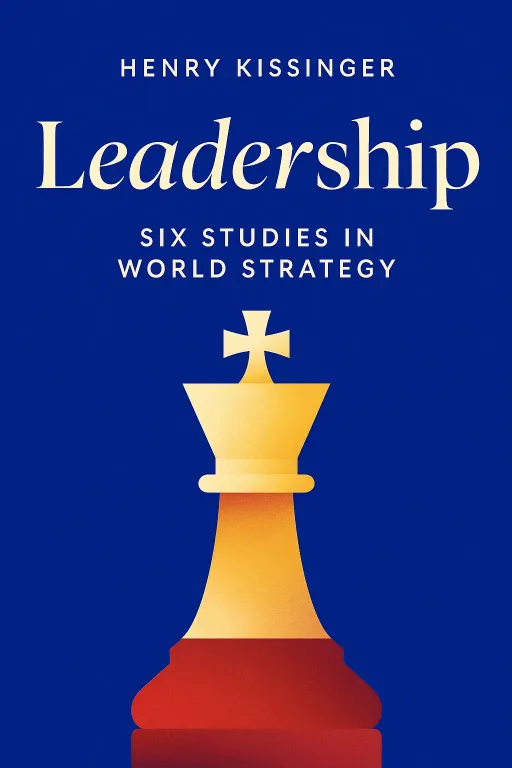
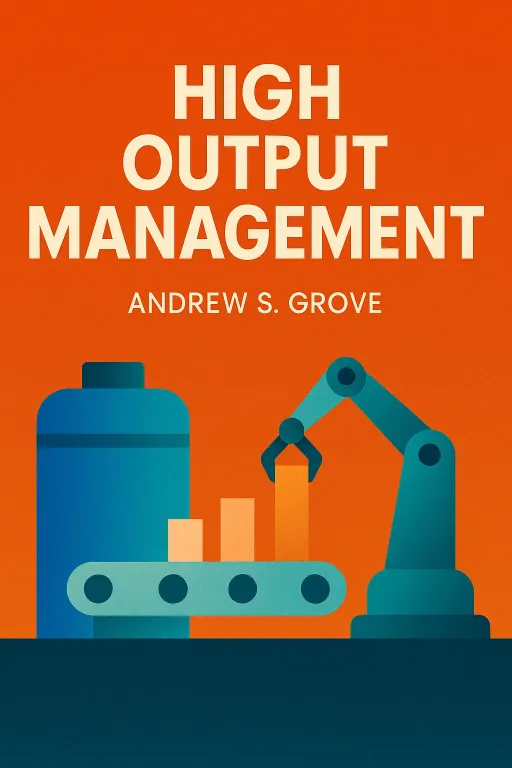
Atlas: Oh, I like that. So we're talking about universal principles applied to a very specific, crucial industry. That makes me wonder, are we going to be diving into Andrew S. Grove's and Eliyahu M. Goldratt’s today? Because those are classics for a reason.
Nova: You got it! And it's fascinating how Grove, who built Intel into a tech giant, really distilled management into an almost scientific discipline. His insights, born from the high-stakes, rapidly evolving semiconductor industry, are surprisingly potent for anyone building a complex system, whether it’s microchips or sustainable farming operations. It’s about leveraging human capital, not just physical resources.
Atlas: That’s a great way to put it. It’s like, the principles of managing complex systems don't care if it's silicon or soil. So, for our independent builders out there, the 'Strategic Cultivators' who are connecting the dots and empowering others, how does Grove's idea of 'high output management' specifically translate into their daily grind?
The Multiplier Effect of Management
SECTION
Nova: Well, Grove's core premise, the one that really shifts your perspective, is that a manager's output is the sum of their own output AND the output of those under their influence. Think about that for a second. It's not just about what accomplish; it's about how effectively you enable everyone else. For an agrarian architect, this means moving beyond being the chief farmer, chief mechanic, and chief salesperson all at once.
Atlas: Right, like, it’s not about just planting more seeds yourself, it's about making sure your entire team, your entire supply chain, is planting the right seeds, at the right time, with the right support. I can see how that would be a huge mindset shift for someone driven by independence, who might feel the urge to control every single variable.
Nova: Absolutely. Grove emphasizes three key multipliers: leverage, training, and decision-making processes. Let's take training. Many independent builders might see training as a cost or a time sink. But Grove would argue it's one of the highest leverage activities you can do. A single hour spent effectively training someone can save hundreds of hours of mistakes, rework, or missed opportunities down the line.
Atlas: That’s actually really inspiring. So, it's not just about 'delegating tasks,' it's about 'multiplying capability.' Like, if you teach someone how to properly maintain a piece of machinery, you're not just offloading a chore; you're ensuring that critical asset stays operational, which impacts every single step of your production. Can you give an example of how this plays out in a more practical scenario?
Nova: Of course. Imagine an independent farmer, let's call her Sarah, who's brilliant at crop management but struggles with logistics – getting her produce from the farm to multiple markets efficiently. She's doing all the driving herself, spending hours on the road, which takes away from her core expertise. Grove would say her output is limited by her own physical capacity.
Atlas: Oh, I’ve been there. That’s going to resonate with anyone who struggles with feeling like there aren’t enough hours in the day. So, what’s Sarah’s high-output move here?
Nova: Instead of just driving faster or sleeping less, Sarah needs to think about leverage. She could invest time in training a reliable logistics coordinator, or even a few part-time drivers. She creates a clear, documented process for route optimization, packaging, and delivery. That initial investment in training and process development might take a week or two, but suddenly, Sarah's own output – her ability to focus on crop yields, soil health, innovation – is multiplied because the logistics chain is now running efficiently without her direct, constant intervention.
Atlas: So you’re saying, by empowering someone else, she's actually empowering herself to focus on higher-value activities. It sounds like a shift from being a "doer" to an "enabler." That’s a powerful concept for growth-oriented individuals. It’s like building a self-sustaining ecosystem for your business, rather than a single plant that needs constant tending.
Nova: Precisely. And it extends to decision-making. Grove argues that decisions should be made at the lowest competent level. This isn't about abdicating responsibility; it's about pushing authority down to those closest to the information. In agriculture, that could mean empowering field managers to make on-the-spot decisions about irrigation or pest control, rather than waiting for approval from the top. It speeds things up and builds capability.
Atlas: That makes sense. It’s kind of like, the person who's actually out there in the rows, seeing the early signs of a problem, is probably the best person to make that call, rather than someone in an office looking at spreadsheets. It fosters ownership too, I imagine. But wait, Hold on. For someone who values their independence, giving up some of that direct control can feel… risky. How do you balance that need for independence with the idea of multiplying influence through others?
Nova: That's a crucial point, Atlas. The independence isn't lost; it's. Instead of being independent a system, you become independent a system you've masterfully designed and influenced. It's not about letting go of control entirely, but about controlling the of empowerment. You set the standards, you provide the training, you define the decision parameters. Your independence then comes from the freedom to innovate, to strategize, to explore new ventures, because the day-to-day operations are running smoothly thanks to the systems and empowered people you've put in place. It's a higher form of independence, actually.
Atlas: I can see how that would be… a level-up. It's not about being a lone wolf; it's about being the architect of a thriving pack. That’s a powerful distinction. And speaking of thriving, that naturally leads us to the second key idea we need to talk about, which often acts as a counterpoint to trying to optimize at once.
Optimizing Through Bottlenecks
SECTION
Nova: Indeed. This brings us to Eliyahu M. Goldratt’s and his Theory of Constraints. This book, famously a business novel, makes a profound point: in any system, there is always one, and only one, bottleneck, or "constraint," that limits the overall throughput. And trying to optimize anything than that bottleneck is often a waste of resources.
Atlas: That sounds a bit out there. My instinct, and I imagine many of our listeners' instincts, is to improve everything, all the time. Like, if my harvesting is slow, and my packing is slow, and my delivery is slow, I should fix all three, right? Goldratt is saying… don’t do that?
Nova: Exactly. Goldratt would argue that if you have three slow points, one of them is the. That slowest point dictates the pace of the entire system. Improving the other two won't make the system faster overall until you address the absolute slowest one. Think of a chain: its strength is determined by its weakest link. You don't try to strengthen every link equally; you find the weakest one and reinforce it.
Atlas: Oh, I like that analogy. So, in agricultural development, whether it's managing supply chains or development projects, this means pinpointing that single limiting factor. It could be logistics, market access, or maybe a specific piece of machinery?
Nova: Precisely. Let's take the example of a fruit farm. They have state-of-the-art orchards, efficient picking teams, but their cold storage facility is old and undersized. They can only process and store X amount of fruit per day before spoilage becomes an issue. No matter how fast they pick, if the cold storage can't handle it, the overall output of fruit is capped.
Atlas: So, pouring money into faster picking machines or larger orchards, in that scenario, would actually be inefficient because the bottleneck isn't there. The bottleneck is the cold storage. That makes me wonder, how do you even identify the true bottleneck? Because sometimes it feels like everything is a bottleneck.
Nova: That's the art and science of it, Atlas. Goldratt suggests a five-step focusing process:
Atlas: Wow, that’s kind of a counter-intuitive approach. It sounds almost radical to say, 'Slow down other parts of the process to serve the slowest part.' But I guess the alternative is just creating piles of wasted fruit, which is even worse. So, for our independent builders, the ones who are driven by growth and value efficiency, what's a 'tiny step' they could take this week to apply this?
Nova: The tiny step is to look at their entire agricultural process – from planting to market – and identify critical bottleneck. Just one. And then, brainstorm three ways, right now, to alleviate it this week. It could be as simple as reorganizing the packing station, or negotiating a slightly earlier pickup time, or even just scheduling maintenance for a frequently breaking machine.
Atlas: That’s a very concrete action. It’s not about grand overhauls, but about surgical precision. I think that really resonates with the 'Strategic Cultivator' mindset, someone who wants to make a precise, impactful change. It’s about being a problem-solver, not just a hard worker.
Synthesis & Takeaways
SECTION
Nova: Absolutely. What these two brilliant minds, Grove and Goldratt, ultimately give us is a blueprint for operational management that empowers sustainable growth. It’s about understanding that your agricultural venture isn't just a collection of tasks; it's a dynamic system. And your role as the Agrarian Architect is to optimize that system, not just individual components.
Atlas: Right, it’s not about working harder, it’s about working smarter, and strategically. It’s about leveraging your influence to multiply the output of your team, and then surgically identifying and eliminating the single biggest obstacle in your path. It’s about getting off the hamster wheel of trying to fix everything, and instead, finding that one domino that will knock over all the others.
Nova: Exactly. And the profound insight here is that true growth, especially in a demanding field like agriculture, isn't about endless expansion or relentless individual effort. It's about intelligent design and strategic intervention. It’s about trusting your vision enough to build systems that scale, and having the discipline to focus on the points of highest leverage.
Atlas: That's such a hopeful way to look at it. It means that even with limited resources, a single, well-placed effort can have exponential returns. It’s a powerful reminder that sometimes, the biggest breakthroughs come from the smallest, most targeted adjustments. So, identify that bottleneck, empower your team, and watch your vision truly take root and flourish.
Nova: This is Aibrary. Congratulations on your growth!