The Silent Killer: How Unspoken Assumptions Undermine Team Collaboration.
Golden Hook & Introduction
SECTION
Nova: Alright, Atlas, quick game. Rapid-fire word association. I say a word, you give me the first thing that pops into your head, no filter. Ready?
Atlas: Oh, I like that! My brain is always unfiltered, so this should be easy. Hit me.
Nova: "Team."
Atlas: "Meeting-that-could-have-been-an-email."
Nova: Perfect. Okay, "Deadline."
Atlas: "Panic-fueled-all-nighter."
Nova: "Feedback."
Atlas: "Vague-and-unhelpful."
Nova: Oh, I love these. Last one: "Trust."
Atlas: "Fragile-and-easily-broken."
Nova: Wow. Those are… illuminating, actually. And they perfectly set the stage for what we're diving into today: "The Silent Killer: How Unspoken Assumptions Undermine Team Collaboration." Because, Atlas, your responses, while witty, highlight a very real, very painful truth about so many workplaces.
Atlas: That makes me wonder, Nova, what exactly do you mean by "silent killer"? I imagine a lot of our listeners, especially those building and leading teams, feel like they're constantly communicating. Where do these assumptions sneak in?
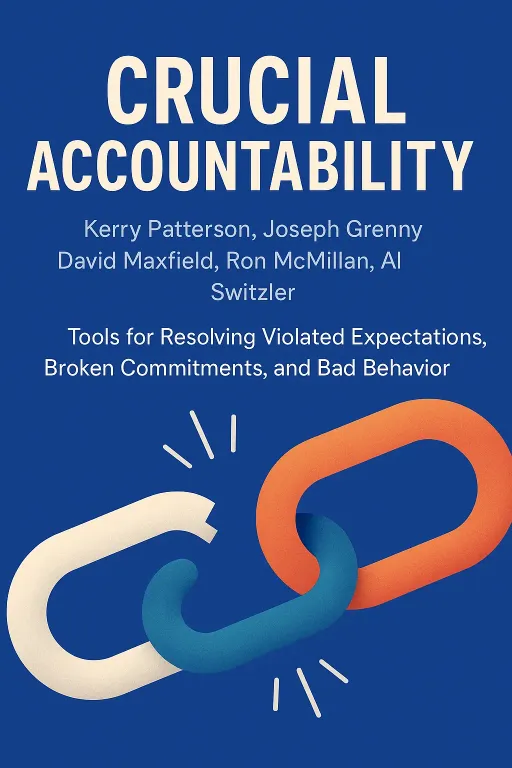
Nova: They sneak in precisely because we we're communicating. We assume shared understanding, shared context, shared priorities, when often, we have none of the above. And it's not just a minor annoyance; it’s a root cause for missed deadlines, fractured trust, and a breakdown in effective collaboration. Today, we're going to unpack this insidious problem and then arm ourselves with some powerful antidotes from two phenomenal books: "Crucial Accountability" by Kerry Patterson and his co-authors, and "The Five Dysfunctions of a Team" by Patrick Lencioni.
Atlas: I've heard of both of those! I’m curious, what’s a standout detail about Kerry Patterson's work?
Nova: Well, Patterson and his team came from a background of observing exactly these kinds of communication breakdowns in corporate training. They didn't just theorize; they meticulously studied what worked in high-stakes conversations. Their methodology for tackling difficult conversations evolved from years of dissecting corporate failures and successes, making their insights incredibly robust. And Lencioni, on the other hand, he’s known for his unique fable-style approach, making complex organizational dynamics incredibly accessible, which is probably why his work has been so widely adopted in leadership training globally.
Nova: Today we'll dive deep into this from two perspectives. First, we'll unravel the insidious nature of hidden expectations and their true cost. Then, we'll pivot to the powerful antidotes: how to build clarity, accountability, and unshakeable trust using insights from these pivotal books.
The Insidious Nature of Unspoken Assumptions & Compelling Case Study
SECTION
Nova: So let's start with that "silent killer." You said "fragile-and-easily-broken" for trust. That's a perfect lead-in. Imagine a software development team – let’s call them 'InnovateTech'. They're building a new feature, something complex that requires tight integration between the front-end and back-end teams.
Atlas: Oh, I’ve been there. High stakes, lots of moving parts.
Nova: Exactly. Now, the project manager, Sarah, had a meeting where she outlined the integration points. Everyone nodded. The front-end lead, David, thought the back-end team would handle all the data validation before sending it his way. The back-end lead, Emily, assumed David's team would implement some basic client-side validation first, to reduce server load. Both were confident in their 'understanding.'
Atlas: Wait, so they both just… assumed the other person was doing the critical work?
Nova: Precisely. It was an unspoken assumption, a vague expectation that festered in the silence. David’s team built their UI expecting clean data. Emily’s team built their API expecting pre-filtered data. When they finally tried to merge their work a week before launch, chaos erupted. Invalid user inputs crashed the system, data was corrupted, and the entire feature was unstable.
Atlas: Whoa. That’s actually really inspiring… no, wait, I mean heartbreaking. That's a mess. I can see how that would lead to a "panic-fueled-all-nighter," as I so eloquently put it. But how does this impact the "Empathetic Leader" who values harmony? Wouldn't bringing this up earlier feel like calling someone out?
Nova: That’s the core tension, isn't it? The desire for harmony can sometimes lead to an avoidance of clarity. In InnovateTech's case, the silence wasn't harmonious; it was destructive. The missed deadline wasn't just a technical failure; it was a trust fracture. David felt Emily's team had dropped the ball, and Emily felt David’s team hadn't done their part. They had to pull all-nighters, blame was flying, and the atmosphere was toxic. The cause was an unspoken assumption. The process was two teams working in silos based on those assumptions. The outcome was a critical bug, a missed launch, and a significant blow to team morale and trust.
Atlas: That’s a perfect example. I mean, we’re all trying to build strong, connected teams, and that sounds like the exact opposite. How could that specific scenario have been avoided proactively? It sounds like they both they were being clear.
Nova: Well, that's the thing. Clarity isn't just about speaking; it's about confirming understanding. The psychological roots of these assumptions are often our own biases—we project our understanding onto others. We desire to be agreeable, so we don't push for uncomfortable specificity. But as this case shows, clarity is your strongest tool. A simple check-in asking, "Just to be clear, who is responsible for the initial data validation, and what does that hand-off look like?" could have saved them weeks of pain and a lot of trust.
Building Clarity: Accountability and Trust as Antidotes & Illuminating Case Study
SECTION
Nova: That story highlights the of silence. But what if we could flip that script? What if we could equip teams to proactively clarify and hold each other accountable without resentment? That's where books like "Crucial Accountability" and "The Five Dysfunctions of a Team" become our blueprints.
Atlas: So basically you’re saying that the solution isn't just "talk more," it's "talk "?
Nova: Exactly! "Crucial Accountability" really zeros in on that "talk better" part. The authors present a clear, step-by-step framework for holding others accountable in a way that preserves relationships and gets results. For instance, they describe a situation where a sales manager, Mark, was consistently missing his quarterly targets. His team knew it, his boss knew it, but no one was addressing it directly. Everyone was making assumptions about Mark was underperforming and should address it.
Atlas: Okay, but isn't it risky to have these "difficult conversations"? Especially for leaders committed to building strong, connected teams? It feels like you're walking into a minefield.
Nova: That’s a common and valid concern, Atlas. And it touches on the user's "Mindset" growth recommendation: embracing the discomfort of difficult conversations. "Crucial Accountability" argues that avoiding these conversations is actually damaging to trust and harmony in the long run. They teach you to define the expectation clearly, describe the gap between expectation and reality, and then discuss the natural consequences, all while maintaining respect. Mark's boss, following the framework, sat down with him. They reviewed the targets, identified specific behaviors that were falling short, and collaboratively developed a plan with clear follow-up points. It wasn't an accusation; it was a clarification of expectations and a pathway to success.
Atlas: That’s a great way to put it – "clarification of expectations and a pathway to success." For someone who's a "Collaborative Architect" and needs immediate application, what's a core idea from Lencioni that builds on this, especially for preventing trust fractures in the first place?
Nova: Lencioni, in "The Five Dysfunctions of a Team," gives us a powerful hierarchy. He argues that the absence of accountability—what we've been talking about—is actually the dysfunction. It stems directly from a lack of commitment, which comes from a fear of conflict, which, at the very bottom, comes from an absence of trust.
Atlas: So it's like a pyramid, and the foundation is trust?
Nova: Precisely! Imagine a sports team. If the players don't trust each other, they'll avoid honest disagreements—they won't challenge each other's plays. If they avoid conflict, they won't fully commit to decisions because they haven't had a real say. If they don't commit, they won't hold each other accountable for performance. And if there's no accountability, you get poor results. Lencioni's insight is that you have to build from the ground up. You foster trust by encouraging vulnerability and open, healthy conflict. That then allows for true commitment and, subsequently, genuine accountability, where teammates call each other out not to criticize, but because they care about the team’s success.
Atlas: That’s actually really inspiring. It makes accountability feel less like punishment and more like collective ownership, which resonates with building strong, connected teams. So, the proactive clarification you mentioned earlier, that's key to fostering that initial trust?
Nova: Absolutely. My own take, drawing from both of these, is that proactive clarification of roles and expectations builds a foundation of respect and trust, preventing conflict before it starts. It’s about creating a culture where asking "What do you mean by that?" or "Who owns this piece?" is seen as a strength, not a weakness. It’s about choosing clarity over comfort.
Synthesis & Takeaways
SECTION
Nova: So, bringing it all together, we've seen how unspoken assumptions can quietly dismantle a team, but we also have powerful frameworks to counteract them. It comes down to this: radical clarity, built on a foundation of trust, is the ultimate defense against the silent killers of collaboration. It transforms potential conflict into productive dialogue and strengthens the bonds between team members.
Atlas: That gives me chills. For someone like me, who's driven by a need for harmony and effective human connection, it sounds like embracing these "difficult conversations" is actually the pathway to deeper trust, not away from it. What's the absolute smallest, most practical step a leader can take right now to start applying this?
Nova: The tiny step, the immediate application, is this: identify one recurring team misunderstanding—that nagging issue that keeps coming up—and initiate a direct conversation to clarify expectations with all involved parties. Don't wait for it to blow up. Just pick one. And when you have that conversation, practice active listening. Seek to understand, first. That simple act is the beginning of building that foundation.
Atlas: That makes sense. It's not about being confrontational, it's about being clear. And that's truly foundational for "Effective Conflict Resolution," which is a goal I know many of our listeners share.
Nova: Exactly. It's about transforming disagreements into strengths, building a team where trust isn't fragile, but resilient. This is the path to sustainable growth, both for your team and for yourself as a leader.
Nova: This is Aibrary. Congratulations on your growth!